João Fonseca regrets lost chances in defeat at Rio Open and focuses on doubles semifinal

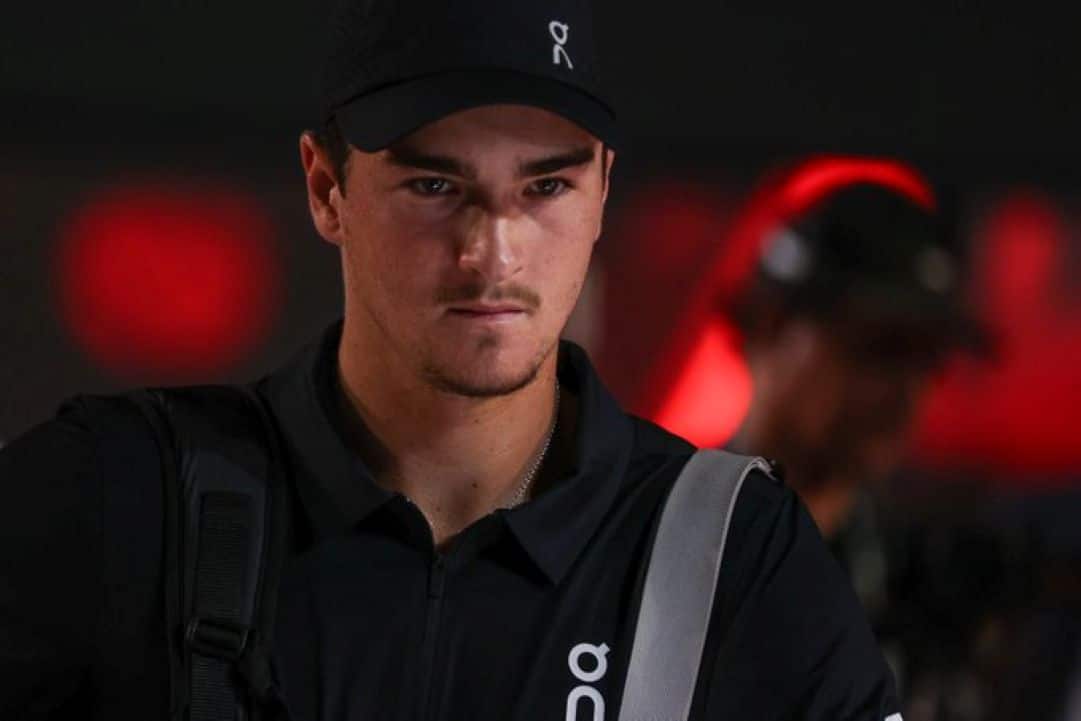
The Brazilian tennis player Durante the match, the 19-year-old faced difficulties in confirming decisive games and converting break opportunities that could have changed the course of the match. The result ends the participation of home tennis players in the individual category of this edition of the ATP 500 level tournament.
Visibly emotional and keeping his eyes down during the press conference, Fonseca did not hesitate to point out the technical flaws that sealed his fate in the Rio competition. The athlete highlighted that the inability to take advantage of crucial moments in the game was decisive for his opponent’s advancement. Mesmo with the solitary setback, the player’s calendar remains active in Rio of Janeiro, as he is still competing for the title in the doubles category. The mentality transition now becomes the main challenge for the tennis player in the next hours of competition.
Did you know❓
— Rio Open (@RioOpenOficial)February 20, 2026
🇧🇷
He faces Ignacio Buse for a place in the quarterfinals!#RioOpen pic.twitter.com/riTXiVmR58
Technical performance and wasted chances on center court
The confrontation against Ignacio Buse was marked by a series of opportunities not realized by the Brazilian, who had eight service break chances over the three sets played. Três of these opportunities arose in the opening game of the second half, a moment in which Fonseca could have consolidated a psychological and tactical advantage over the Peruvian. The lack of precision in these fundamental points allowed Buse to regain confidence and regain control of the actions at the back of the court.
In addition to the missed breaks, the volume of unforced errors was a major factor in Brasil’s drop from number one today. The official match statistics recorded 43 errors made by João Fonseca, a number considered high for clashes of this level of competitiveness. Essa oscilação técnica impediu que o brasileiro mantivesse a regularidade necessária para fechar os pontos nos momentos de maior pressão do jogo.
- Failed to convert eight break points during the match.
- Recorded 43 unforced errors over the three sets.
- Loss of strategic advantage at the beginning of the second set.
- Difficulty maintaining regularity in back-of-court rallies.
Athlete’s reaction and the maturation process on the circuit
In his post-game statements, João Fonseca used strong words to describe his own performance, classifying the loss of the chances created as “nonsense”. Ele acknowledged that, at the elite level of world tennis, wasting windows of opportunity rarely goes without severe punishment from opponents. The tennis player highlighted that the day was not favorable for his aggressive playing style, resulting in a disconnect between his strategy and practical execution.
Despite the evident frustration, the young player reiterated that episodes like this are part of his continuous process of professional evolution. Ele emphasized the need to continue working hard to minimize fluctuations and improve decision-making under stress. The maturity to view defeat as a learning stage is seen by his technical team as essential for his upward trajectory in the ATP rankings.
Brazilian farewell in the singles bracket and local records
With the fall of João Fonseca, Rio Open 2026 reaches the mark of 12 consecutive editions without a Brazilian tennis player managing to win the singles title. Este year was historic due to the number of national representatives in the main draw, totaling six athletes, a record for the event. However, the home resistance was short-lived, with Fonseca being the only one to advance to the second round of the competition.
The elimination of all Brazilian simplists reinforces the historical difficulty of local athletes in dominating the main tennis tournament held on national soil. The public, who turned out in force at Jockey Club to support the new promise of the sport, witnessed the early end of the dream of an individual title at home. Agora, the fans’ attention turns entirely to the doubles, where the country still has a real chance of lifting the trophy.
Expectations for the doubles semi-final with Marcelo Melo
João Fonseca’s schedule at Rio Open did not end with the stumble in the individual tournament, as he returns to Quadra 1 this Friday for a vital commitment. Alongside the experienced Marcelo Melo, the young man will compete for a place in the doubles grand final against the German partnership formed by Jakob Schnaitter and Mark Wallner. The match is scheduled to close the event’s secondary court schedule, attracting great expectations from fans.
The partnership with Marcelo Melo is seen as a strategic asset for Fonseca, given the 42-year-old Minas Gerais’ vast experience on the doubles circuit. Melo, who holds two Grand Slam titles and is the current Rio Open champion, acts as an on-court mentor for the young Rio native. Essa combination of youth and experience has proven effective in previous rounds, and the pair hope to maintain their high level to overcome the Germans.
Mental preparation for the tournament sequence at Jockey Club
The ability to “turn the page” after a painful defeat is one of the characteristics that João Fonseca seeks to consolidate in his professional routine. Ele stated that he will wake up with the same determination to face the challenge in doubles, leaving behind the haggard appearance of the previous night. Full focus on physical and mental recovery is the immediate priority so that he can fully contribute alongside Marcelo Melo in the decisive clash.
The training sessions held on Friday morning were aimed at fine adjustments to positioning in the network and rapport with the partner. Fonseca knows that success in doubles can serve as an excellent balm for the frustration experienced in singles, as well as adding important points for your career. The resilience demonstrated by the athlete will be tested under the heat of Rio and Janeiro and the pressure of being the last title hope for Brasil in the tournament.
Overview of the singles quarterfinals without favorites
The configuration of the Rio Open 2026 singles quarterfinals presents an atypical and highly balanced scenario by ATP 500 standards. For the first time in several editions, none of the eight classified players were among the top 50 in the world at the beginning of the week. Isso reflects the high level of competitiveness and the surprises that marked the initial rounds, with the premature fall of several seeded players.
Among the defined confrontations, the duel between the executioner of Fonseca, Ignacio Buse, and the experienced Italian Matteo Berrettini stands out. Outro The highlight is the strong Argentine presence, with representatives in three of the four decisive games, consolidating the tradition of the South American neighbors on clay courts. The absence of Brazilians at this stage changes the dynamics of the stands, but maintains technical interest due to the quality of the remaining players.
- Vit Kopriva (Republic Tcheca) faces Juan Manuel Cerúndolo (Argentina).
- Tomás Martín Etcheverry (Argentina) plays against Jaime Faria (Portugal).
- Ignacio Buse (Peru) meets Matteo Berrettini (Italy).
- Thiago Tirante (Argentina) faces Alejandro Tabilo (Chile).
Legacy and continuity of the clay season at América of Sul
João Fonseca’s performance at Rio Open, despite elimination in the round of 16, confirms his position as one of the central figures of the new generation of South American tennis. Sua’s meteoric rise in the rankings in recent months puts him in a prominent position for the next clay-court tournaments. The experience accumulated in playing under pressure in a 500-level tournament is essential for his preparation for the upcoming European tournaments on the calendar.
The organization of Rio Open celebrated the public success and engagement, even with the Brazilians leaving the singles bracket, highlighting the importance of Fonseca for the event’s marketing. The tennis player will continue to be closely monitored by experts, who predict a consistent entry into the top 30 if he maintains his pace of evolution. The immediate focus, however, remains on Rio’s clay, where each game in the doubles semifinal will be played as an opportunity for redemption.
João Fonseca demonstrated that he has the necessary technical arsenal to face big names on the circuit, but mental consistency appears as the next step to be climbed. The cold analysis of the mistakes made against Buse will serve as the basis for training in the coming weeks. Enquanto That’s it, Jockey Club Brasileiro is preparing for a weekend of strong emotions, with the fans placing their hopes on the young man’s talent and Marcelo Melo’s experience to keep the green and yellow flag alive in the competition.