
NASA detects organic molecules associated with prebiological chemistry on interstellar comet 3I/ATLAS

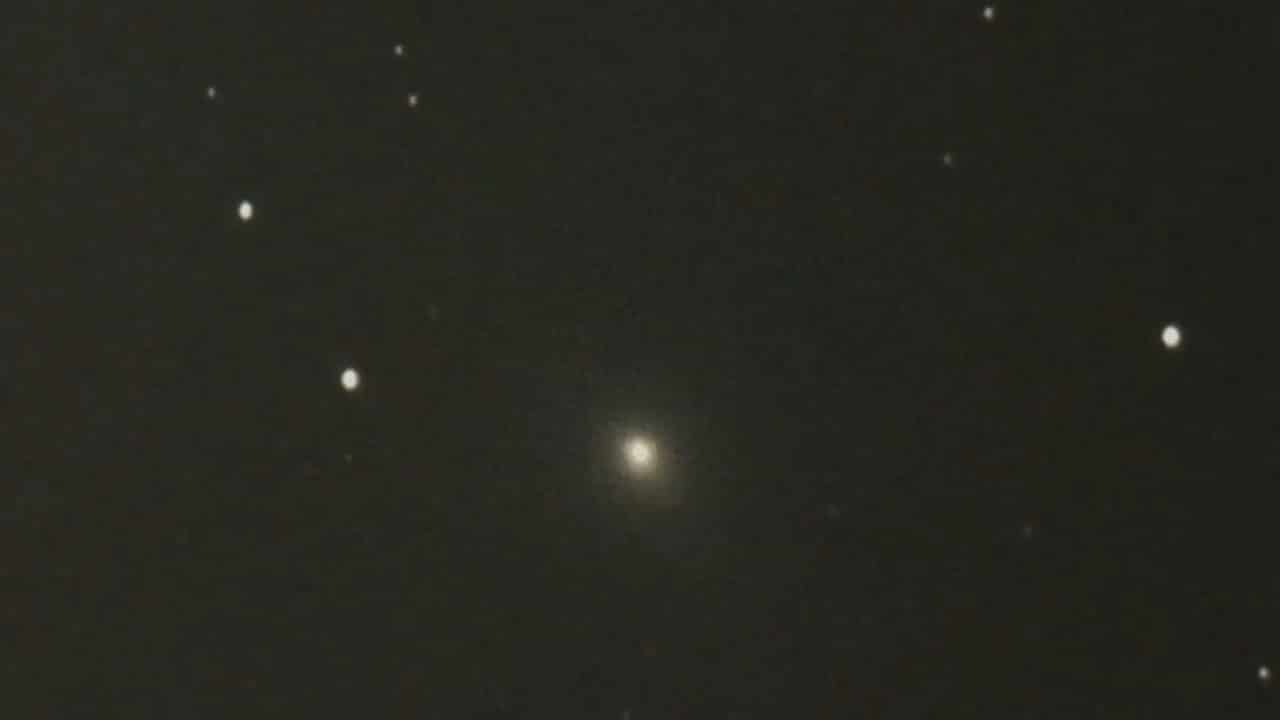
NASA’s SPHEREx space telescope recorded the release of complex organic compounds by comet 3I/ATLAS as the object left Sistema Solar. The measurements took place in mid-December 2025, a period when the comet was still exhibiting significant activity after its perihelion passage. Esses findings highlight the instrument’s ability to identify chemical signatures in interstellar visitors.
The data indicates that the comet expelled notable amounts of methanol and hydrogen cyanide, in addition to methane. Tais molecules participate in reactions that can form more complex structures in suitable environments. Especialistas consider these compounds to be essential ingredients in the chemistry that precedes the emergence of life.
Details of the chemical discovery
SPHEREx captured infrared spectra that revealed the emission lines of these compounds.
The observations occurred when the comet was already moving away from Sol and Terra.
The results complement data from other telescopes that monitored the object throughout 2025.
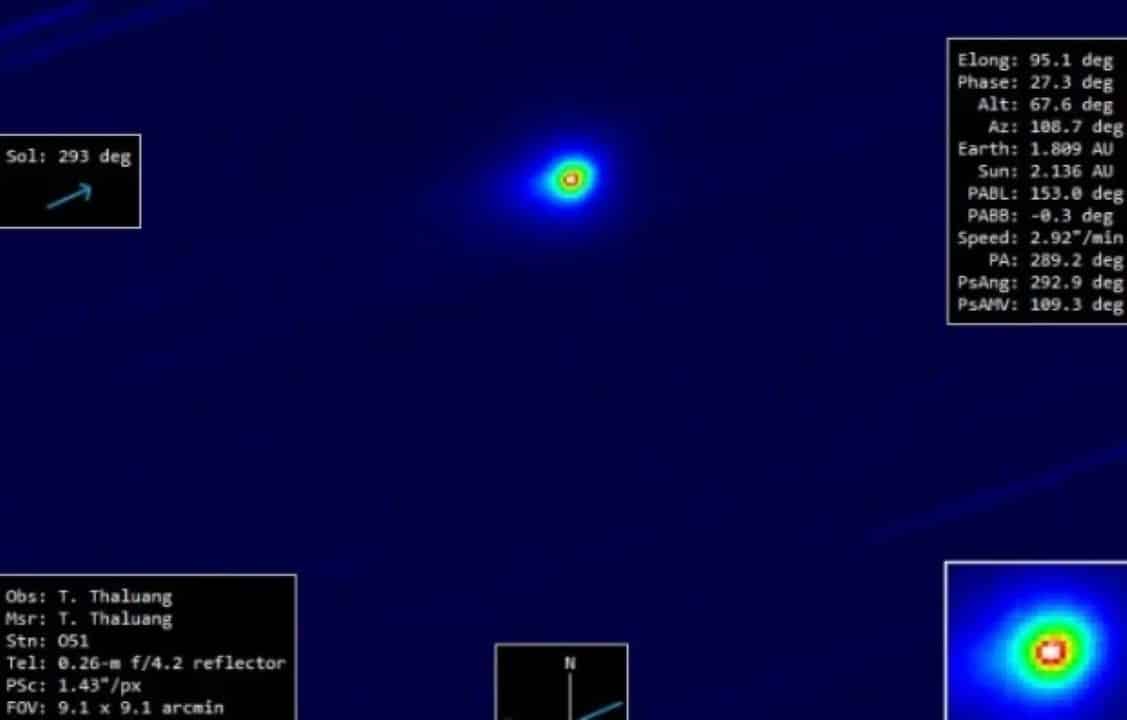
Unique composition of the interstellar comet
3I/ATLAS showed a release of carbon-rich and volatile material during its trajectory.
Its origin outside of Sistema Solar allows comparison with local comets.
The detection reinforces that complex organic matter exists in other stellar systems.
Supplemental Observations from NASA Missions
Other instruments, such as the Hubble and James Webb, have provided images and data on the size and structure of the nucleus.
The comet measured between about 440 meters and 5.6 kilometers in diameter in initial estimates.
These measurements helped contextualize the activity observed by SPHEREx.
Context of passing through Sistema Solar
The object was classified as interstellar shortly after discovery in July 2025.
It passed close to the orbit of Marte and Terra at different times of the year.
Its trajectory led it to definitively leave towards interstellar space after March 2026.
Importance for astrochemical studies
The analysis of these compounds expands the understanding of the distribution of organic molecules in the universe.
Research indicates that similar blocks may have been delivered to young planets by cometary impacts.
The case of 3I/ATLAS serves as a rare example of preserved primordial material.
Characteristics observed in coma
The cloud of gas and dust around the nucleus showed variations during the solar approach.
Hypervolatile compounds such as methane were released in significant quantities.
These releases occurred even after the peak of activity near Sol.
Comet 3I/ATLAS continues to be studied by astronomers at several institutions. Information obtained by SPHEREx and other missions contributes to models about the formation of distant planetary systems. The presence of these organic compounds broadens perspectives on the ubiquity of prebiotic chemistry in Via Láctea.



