
Partnership with AMD enables Valve desktop console with high performance and high graphics resolution

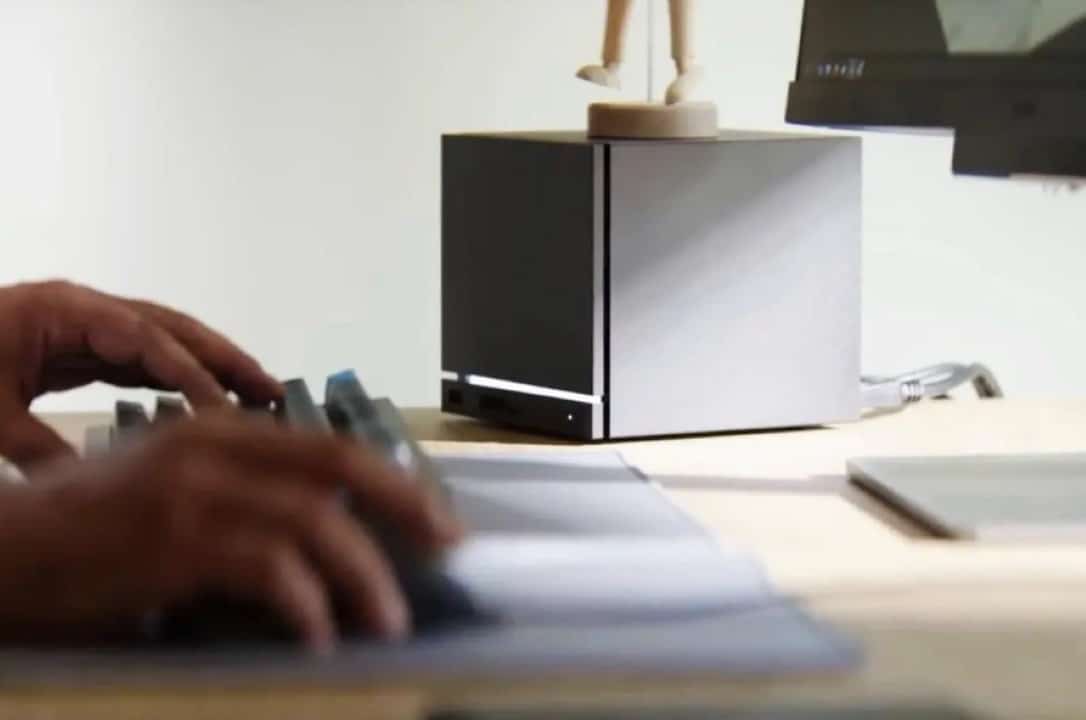
The gaming industry is closely watching Valve’s strategic return to the living room hardware segment, a move that has just received important technical validation. Testes recent labs confirmed that the company’s next device, designed to compete directly in the high-definition television space, has achieved its goal of running the majority of its library in 4K resolution at a stable rate of 60 frames per second. The positive result signals a significant advance in the engineering of the product, which is scheduled to be launched in the first half of 2026.
Success in performance testing is not only due to the raw capacity of the components, but fundamentally to the integration of advanced software. Close collaboration with semiconductor manufacturer AMD has enabled deep implementation of FidelityFX Super Resolution (FSR). Esta upscaling technology is the key piece that enables high visual fidelity without requiring disproportionate energy consumption, keeping the equipment within acceptable thermal parameters for a home console.

The company’s engineers managed to balance the complex equation between manufacturing cost and performance delivery. Mesmo Faced with a global scenario where the acquisition of cutting-edge components faces logistical challenges, the goals established at the beginning of the project were maintained. The system’s architecture was designed to ensure that modern titles run smoothly, also using variable refresh rate (VRR) to eliminate visual imperfections and flickering.
Technical specifications and firepower
The processing core of the new equipment is based on AMD’s Zen 4 architecture, configured with six cores and 12 threads. Esta technical choice demonstrates a clear focus on multitasking and the ability to handle complex physics calculations required by today’s games. Diferente of mobile devices that need to prioritize battery life at any cost, this processor operates at higher frequencies, ensuring that the system does not suffer from bottlenecks in moments of greater intensity.
Regarding graphics processing, the unit based on RDNA 3 represents a significant generational leap. Trata features a semi-custom GPU, optimized to deliver maximum rendering within a compact chassis. The company’s internal estimates indicate that this set of hardware delivers approximately six times greater performance than the Steam Deck, enabling ultra-resolution textures and advanced global illumination effects.
The hardware configuration follows strict standards to ensure device longevity:
- NVMe SSD storage drive with high transfer speeds and 512GB and 2TB options.
- Native hardware-accelerated Ray Tracing support for realistic lighting.
- Next-generation connectivity with support for Wi-Fi 6E and HDMI 2.1 ports.
- Refrigeration system designed for silent operation in residential environments.
The decisive role of upscaling in the 4K experience
The commercial and technical viability of running 4K games on this new hardware intrinsically depends on the intelligent use of FSR. The technique allows the system to render graphics internally at lower resolutions, such as 1080p or 1440p, drastically reducing the load on the graphics processing unit. Posteriormente, sophisticated algorithms reconstruct the image to final television resolution, delivering sharpness and detail without the native computational cost.
During tests with games rated AAA, which demand intensive resources, it became clear that FSR is the difference in maintaining stability at 60 frames. Sem With the help of this technology, achieving the same visual quality would require considerably more expensive components and a more robust cooling system, which would undermine the compact and accessible design that the company seeks to offer the end consumer.
Valve maintains a direct channel with game developers to ensure FSR implementation is optimized. Atualizações Driver and software settings are designed to refine image quality and minimize visual artifacts, ensuring the big-screen experience is immersive and free from technical distractions.
Industrial context and availability
The device’s development faced significant obstacles related to the global supply chain. The high demand for memory components and NAND chips, driven by the growth of the artificial intelligence sector, has impacted deadlines and costs across the technology industry. However, logistical adjustments and early negotiations allowed the company to hold the necessary inventory to meet the 2026 launch window.
The pricing strategy, although not yet officially announced, should follow the aggressiveness seen in the brand’s previous launches. Analistas suggest that the goal is to create an attractive entry point into the living room PC ecosystem, possibly subsidizing some of the value of the hardware with the expectation of financial recovery through the sale of software and services on the Steam platform.
Open platform philosophy and customization
Maintaining user freedom remains a central pillar of the project. Mesmo adopting a desktop console format, the device allows easy access to internal components, such as SSD storage, which can be replaced with higher capacity models without the need for proprietary tools or breach of warranty. Essa feature reinforces the hybrid nature of the product, which is positioned between the convenience of a console and the versatility of a computer.
In addition to functional modifications, aesthetic customization was also included. The company authorized partner manufacturers to develop customizable panels and accessories, allowing the device to integrate with different decor styles. The operating system interface, adapted for large screens, completes the package, offering fluid navigation and improved readability for use with remote controls.



