
Recent data indicates a high chance of a lunar impact by an asteroid capable of creating a giant crater

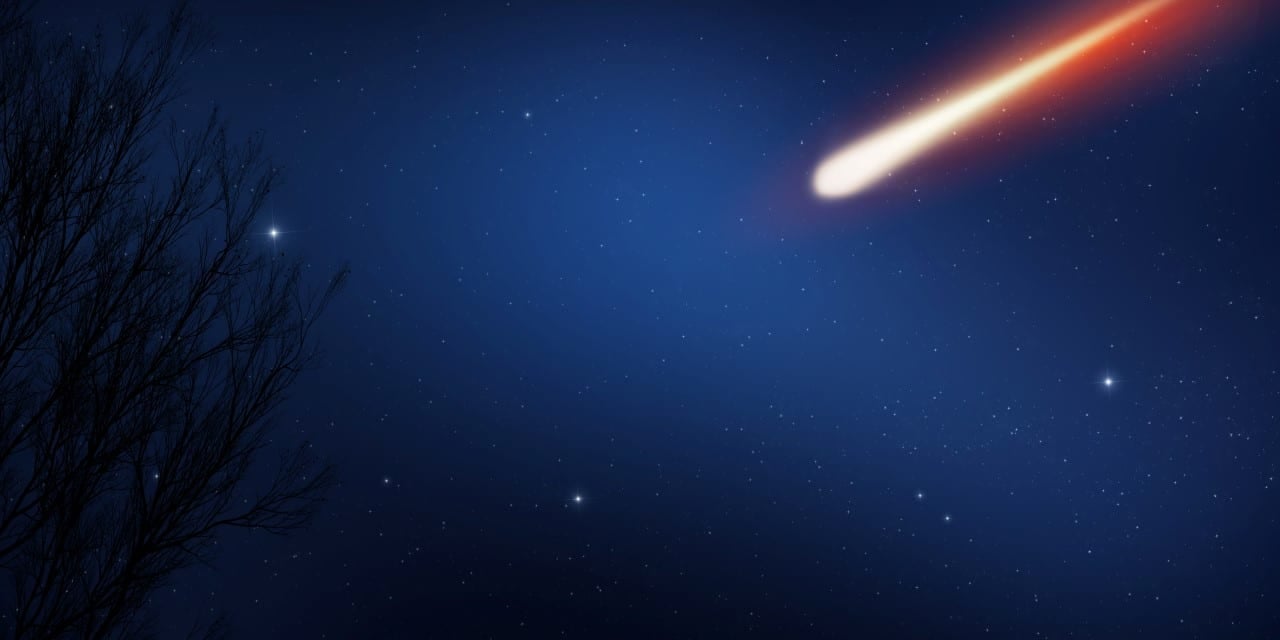
New trajectory analyzes carried out by the main international space agencies have redefined the focus of monitoring a celestial body that transits in the vicinity of Terra. The object, identified as 2024 YR4, underwent a rigorous optical and infrared tracking process that ruled out any risk of direct collision with our planet, but significantly increased the likelihood of a collision with the surface of Lua in the next decade.
The most precise observations, consolidated after intensive campaigns using Telescópio Espacial James Webb, allowed scientists to refine the asteroid’s orbital calculations. With an estimated diameter of around 60 meters, the rocky body has dimensions comparable to a tall building and belongs to the Tipo S category of asteroids, characterized by a composition rich in silicates and metals, which gives it considerable density.
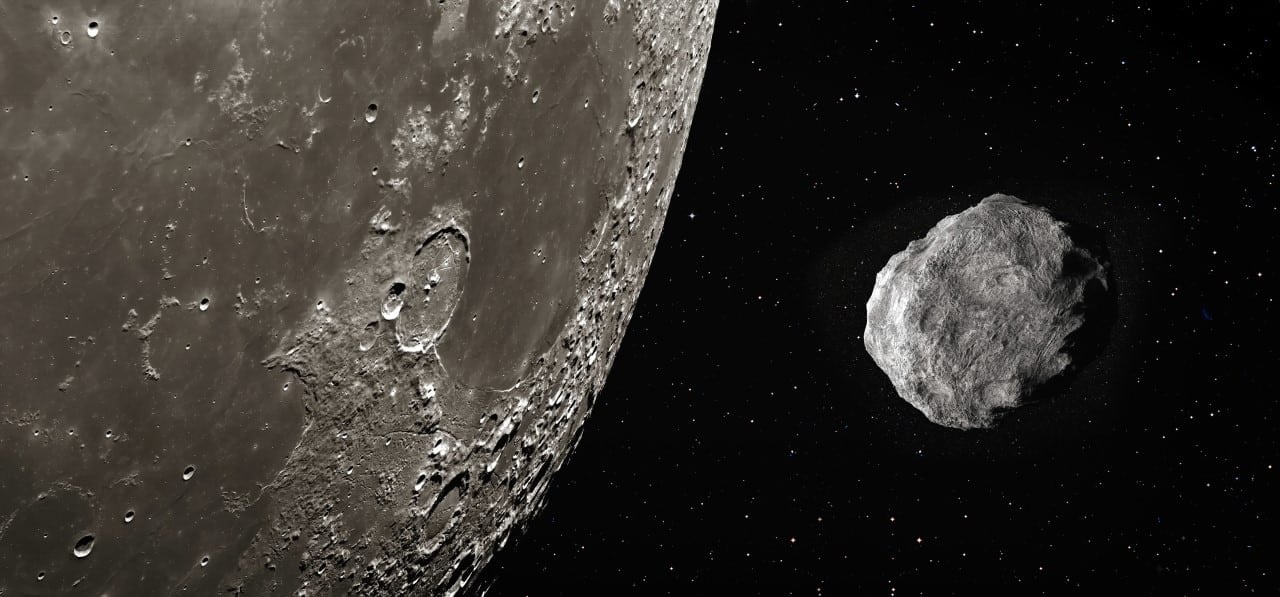
The current scenario points to a major astronomical event expected to occur on December 22, 2032. Segundo the mathematical models applied, the impact would occur at around 3:19 pm (UTC), generating a release of massive kinetic energy. The scientific community remains alert for the final validation of these data, which depend on future observation windows to confirm the exact location and magnitude of the event.
Monitoring indicates a significant increase in the probability of collision with the natural satellite
Evolution of orbital data has transformed understanding of the fate of 2024 YR4. Inicialmente, shortly after its discovery in late 2024 by the ATLAS system on Chile, there was a preliminary concern of a 4% chance of impact with Terra. However, the refinement of astrometry has completely eliminated this possibility, eliminating the risk to humanity in terms of direct impact.
On the other hand, the probability of the asteroid reaching Lua has increased dramatically, now approaching 20%. Essa change in statistics is a direct result of the superior quality of images and measurements obtained by space observatories, which managed to reduce the margin of uncertainty about the future position of the object by millions of kilometers.
Experts from NASA and Agência Espacial Europeia (ESA) work together to keep forecast models up to date. The integration of data from different observatories made it possible to draw a much narrower “risk corridor”, indicating that the gravitational attraction of the Terra-Moon system will play a fundamental role in the object’s final trajectory in the coming years.
Energy released in the explosion would be equivalent to hundreds of megatons of TNT
If the collision occurs, the effects on the lunar surface will be catastrophic on a local scale and visible to the naked eye from Terra. The estimated impact speed is approximately 14 kilometers per second, which would result in an explosion with an estimated force of 650 megatons of TNT. Para For comparison purposes, this energy vastly surpasses that of conventional nuclear weapons.
Computer simulations indicate the following immediate consequences of the shock:
- Formation of a complex crater with an estimated diameter of 1 kilometer;
- Generation of an intense bright flash, with a magnitude between -2.5 and -3, visible from Terra even during the day for a few seconds;
- Seismic shock to the lunar structure, allowing in-depth geological studies using seismographs installed on past or future missions;
- Ejection of tons of material from the lunar subsurface into space.
The brightness resulting from the impact would rival the luminosity of the brightest stars in the night sky. Astrônomos amateurs and professionals across the hemisphere facing Lua at the time of the shock would have a unique opportunity to record a phenomenon of planetary geological transformation in real time, something rarely observed of such magnitude in recent history.
Ejected debris can reach Earth’s atmosphere in the form of meteor showers
One of the most interesting secondary consequences of the possible impact would be the interaction of lunar debris with Terra. The force of the explosion would throw fragments of rock and dust (ejecta) out of the lunar gravity. Parte of this material would enter an orbit that would intersect our planet’s path days or weeks after the main event.
There is, however, no reason to be alarmed regarding the safety of the population. Orbital dynamics models suggest that these fragments would be small enough to completely disintegrate upon entering Earth’s atmosphere. The visual result would be an artificial meteor shower, possibly intense, created by the remains of the asteroid’s collision with Lua.
Spectral analysis of these meteors would provide valuable data on the internal composition of the lunar subsurface, functioning as an indirect sample return mission. Cientistas are already preparing protocols to collect and analyze the light emitted by these “lunar meteors”, which could reveal details about the geological history of our natural satellite without the need to land a probe there.
Next crucial observation window will only occur in mid-2028
Despite the accuracy of current data, celestial mechanics require patience. Asteroid 2024 YR4 is currently in an unfavorable position for detailed observations from Terra or nearby orbiting telescopes. Ele is obscured by sunlight or too far away for high-precision measurements to be made with current technology.
The next critical period for the final definition of the trajectory will be in June 2028. Nessa date, the asteroid will become visible again under ideal conditions, allowing astronomers to confirm whether the impact is inevitable or whether the object will scrape the lunar surface. Até there, the 20% probability remains the most solid estimate.
Planetary defense agencies use this interval to test the readiness of their communications and response networks. The case of 2024 YR4 serves as a practical exercise in long-term monitoring, essential for preparing against future threats that may have Terra as a real target. Transparency in data disclosure and global collaboration have been hallmarks of this continuous monitoring.




