
Stellantis plans to revive V8 engine in Jeep Grand Cherokee to regain lost market

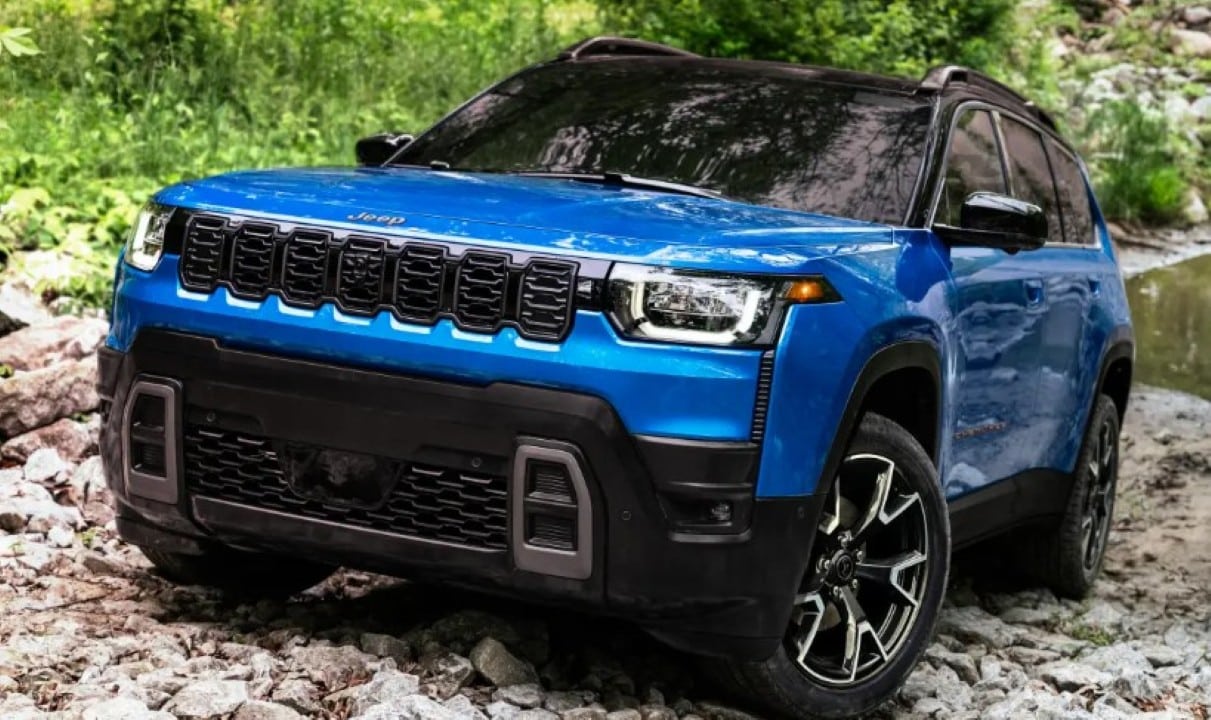
Automotive giant Stellantis has begun a strategic review process that could mark a significant turnaround in the trajectory of its most iconic sports utility vehicle brand. Diante Due to a lukewarm market response to the recent engine changes, the corporation is technically and commercially evaluating the reintroduction of eight-cylinder engines in the Grand Cherokee line. The measure comes as a direct response to pressure exerted by North American dealers and the loyal customer base, who expressed dissatisfaction with the replacement of traditional Hemi blocks with smaller, turbocharged options.
This move represents a tacit recognition that the aggressive “downsizing” strategy implemented in recent years may have alienated a crucial portion of the brand’s traditional buyers. The company’s engineering team is already working behind the scenes to verify the feasibility of re-accommodating the large engines in the WL platform vault, the modern architecture that supports the current generation of the SUV. The objective is to stop the loss of market share to direct competitors who have maintained high-displacement options in their catalogues.

The 2026 automotive scenario shows that, despite the advancement of electrification, there is resistance and persistent demand for conventional engines in specific segments, especially among large vehicles aimed at towing and severe use. Jeep’s decision to phase out the V8 early created a vacuum that was quickly filled by rivals like General Motors and Ford, who continued to offer their V8s in models like the
Sources linked to the industry point out that the transition to six-cylinder in-line engines, known as the Hurricane family, although technically competent and more efficient, failed to replicate the emotional experience and perception of robustness that Jeep customers associated with previous models. The possible return of the V8 would not mean the end of new engines, but rather an expansion of the range of choices, positioning the eight-cylinder as a premium and high-capacity alternative within the range.
Technical challenges and adaptation of the WL platform
The task of reintegrating a V8 engine into the current generation Grand Cherokee is not without engineering complexities. The WL platform was optimized with electrification and in-line six-cylinder engines in mind, which requires in-depth studies on component packaging. Development teams are focused on ensuring that the transmission, cooling system and peripherals can be adjusted without compromising the structural integrity or safety of the vehicle, while maintaining required quality standards.
In addition to the physical issues of space, there is the challenge of emissions and fuel consumption, factors that motivated the original withdrawal of these propellants. Para mitigate these impacts, it is likely that, if the return is approved, engineers will opt for a modern calibration or even the implementation of mild-hybrid systems coupled to the V8. Isso would allow maintaining the torque and power delivery desired by purists, while at the same time meeting current environmental standards, which remain rigorous.
Stellantis’s internal analysis also considers the supply chain and manufacturing. Como the production of Hemi engines was discontinued or drastically reduced in several plants, reactivating this logistics line would require investments and negotiations with suppliers. However, the basic infrastructure still exists, mainly due to the ongoing production of components for the Ram pickup line, which could facilitate and accelerate the process of reintroducing the Jeep SUV.
Impact on sales and market positioning
The drop in sales figures for Grand Cherokee in recent quarters raised a warning signal in the management of Stellantis. Analysis of market data revealed that many longtime customers chose not to renew their vehicles or switched to other brands, specifically citing the absence of the V8 engine as a deciding factor. The perception that a six-cylinder turbo engine works under greater stress to move a vehicle of this size, especially in towing situations, is still strong among the conservative public.
The return of the V8 would act as an image and loyalty tool. Mesmo Although the sales volume of these specific models is not massive compared to the entry-level versions, they serve as “halo cars”, models that attract attention to the line and reinforce the brand’s credibility in the off-road and luxury segment. The Jeep built its reputation on unquestionable capability, and the V8 engine has always been an integral part of that narrative of power and freedom.
Dealers have reported that inventory of models equipped only with the V6 Pentastar engine or the new Hurricane twin-turbo engine has been turning over more slowly than expected. The feedback coming from the shop floor is unanimous: there is a buyer willing to pay more for the V8 configuration, and the absence of this option is leaving money on the table. The strategy of offering the V8 as a top-of-the-line option would allow Jeep to increase its profit margins per unit, something essential in the current economic scenario.
Comparison with competition and future trends
When observing the competitive landscape, it is clear that Jeep’s decision to abandon the V8 was a solitary movement among the large American manufacturers of traditional SUVs. The Chevrolet and GMC, for example, kept their 5.3- and 6.2-liter V8s, updating them technologically but preserving the basic architecture. Isso guaranteed them an immediate competitive advantage, attracting consumers who seek mechanical simplicity and ease of long-term maintenance, characteristics valued outside large urban centers.
The Hurricane technology, despite its impressive power and torque numbers that often surpass old V8s, faces the challenge of complexity. Motores twin-turbo engines have more moving parts, generate more heat and require more complex cooling systems. Para the user who plans to keep the vehicle for many years or use it in remote regions, the perceived reliability of a large displacement aspirated engine is still a powerful selling point that the competition has been able to exploit.
The possible reversal of Stellantis also signals an adaptation to the reality of the energy transition. The market has understood that total electrification will not happen overnight in all segments. Veículos plug-in hybrids, such as the Grand Cherokee 4xe, have their audience, but they do not completely replace the demand for traditional combustion engines in heavy-duty applications. The coexistence of multiple propulsion technologies appears to be the most sensible path to maintaining profitability and customer satisfaction over the next decade.
Enthusiast reaction and brand perspective
The news that Stellantis is reconsidering its position was met with enthusiasm on forums and Jeep owners’ clubs. The community of enthusiasts, who often act as brand ambassadors, felt heard for the first time in years. The emotional connection with the sound and feeling of driving a V8 is an intangible asset that Jeep was in danger of losing permanently. Recuperar this connection is vital to keep the brand’s soul alive in an increasingly pasteurized market.
Experts suggest that, if confirmed, the return of the V8 should initially occur in the more expensive versions, such as the Summit or the Overland, and possibly in a reissue of sporty variants or those focused on off-road performance. Isso would create a clear hierarchy within the Grand Cherokee line, where the V8 occupies the top of the desirability pyramid, justifying higher prices and reinforcing the model’s premium status compared to European and Asian competitors.
The move also reflects operational flexibility needed in 2026. Automakers are learning that dictating what consumers should buy, based solely on emissions targets and efficiency spreadsheets, can be a fatal business error. The balance between meeting government regulations and satisfying consumer desires is a delicate one, and the V8’s return to the Jeep Grand Cherokee may be the perfect example of how to find that pragmatic middle ground.
Finally, Stellantis engineering has the challenge of proving that it is possible to look into the past without going backwards technologically. A new V8 for the Grand Cherokee would not just be the rescue of an old engine, but the application of modern technologies to an established architecture. If well executed, this strategy could not only recover lost sales, but also reaffirm Jeep’s position as the undisputed leader in the SUV segment that combines luxury, real capacity and mechanical charisma.



