
Total eclipse of the blood moon in March: nocturnal phenomenon promises almost an hour of spectacle

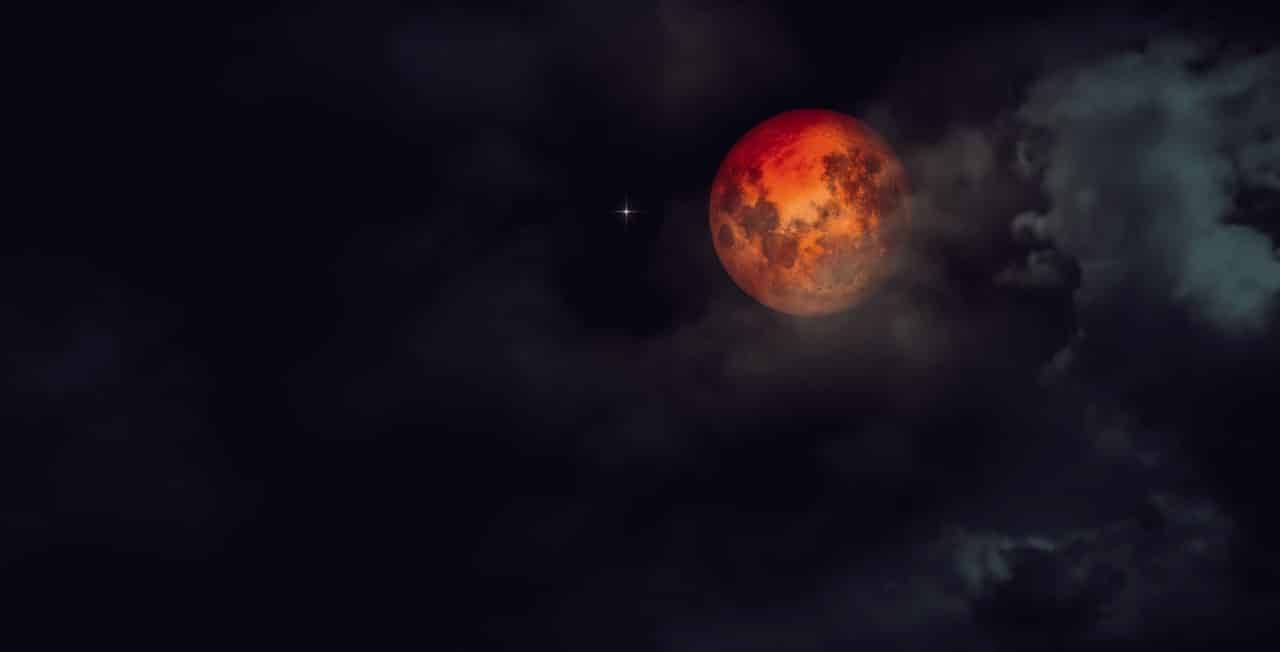
A long-awaited astronomical spectacle promises to transform the sky in the early hours of March 3rd. Lua, our natural satellite, will undergo a total lunar eclipse, an event that will make it acquire an impressive reddish hue, popularly known as a “blood moon”.
This phenomenon occurs when the Terra is positioned directly between the Sol and the Lua, projecting its shadow onto the star. The totality phase of the eclipse is expected to last about 58 minutes, offering a unique opportunity for observers.
Visibility, however, will depend on local weather conditions and the position of Lua on the horizon during the early hours of the morning, allowing part of Brasil to follow this beautiful celestial show with the naked eye.
The science behind the phenomenon
The designation “blood moon” does not have a mystical connotation, but rather a purely scientific explanation, based on the physics of light. Durante a total lunar eclipse, sunlight, when crossing the Earth’s atmosphere, undergoes a dispersion phenomenon. Isso causes shorter wavelengths, such as blue and violet, to be scattered throughout the atmosphere, while longer wavelengths, such as reddish and orange tones, are able to penetrate and, consequently, illuminate the lunar surface.
The exact intensity of the reddish color that Lua takes on can vary significantly with each eclipse. Essa variation is influenced by several environmental factors present in the atmosphere of Terra at the time of the event, including the amount of dust, pollution and the presence of clouds or volcanic particles, which directly affect how light is filtered and refracted before reaching Lua.
Observation times and event phases
The total lunar eclipse will follow a precise chronology throughout the dawn and morning of March 3, with its times published based on the time of Brasília, allowing enthusiasts to plan themselves so as not to miss any details of the celestial spectacle.
The penumbral phase, which marks the subtle beginning of the event, is scheduled to begin at 3:44 am. In the Neste stage, Lua enters the outermost and diffuse shadow of Terra, causing only slight darkening that is often imperceptible to the naked eye.
Then, at 4:50 am, the partial phase begins. Durante this period, the darkest and sharpest shadow of Terra, known as the umbra, begins to progressively cover the lunar disk, making the progression of the eclipse visibly more evident to observers.
The most anticipated moment, totality, when Lua will be completely immersed in the umbra, is scheduled to begin at 6:04 am and should last until approximately 7:03 am. It is during this interval that Lua acquires its characteristic reddish color, the height of the “blood moon”. The complete phenomenon, including the final penumbral and partial phases, will end around 9:23 am, after the partial eclipse ends at 8:17 am.
Visibility in the national territory
The ability to observe the total lunar eclipse on Brasil will depend on crucial factors, mainly the weather conditions prevailing in the early hours of March 3 and the position of the natural satellite in the sky during dawn. With the full phase occurring in the early morning hours, the brightness of the nascent Sol may impact viewing clarity in some areas.
In regions where the sky is clear and without obstructions on the horizon, observers will have the opportunity to follow at least part of the eclipse phases with the naked eye. Locais with lower levels of light pollution tend to offer a superior observation experience, especially during the initial and partial phases of the phenomenon.
However, the presence of dense clouds or rain can completely compromise viewing, regardless of geographic location. Recomenda Therefore, those interested should check the weather forecast for their location and look for areas with the least possible light interference to maximize the chances of seeing the “blood moon”.
Safety and tips for following the blood moon
Unlike solar eclipses, which require strict precautions and the use of specific protective equipment to avoid eye damage, the total lunar eclipse can be observed completely safely with the naked eye. Não there is a need for special glasses, filters or any other equipment to protect vision.
For those who wish to enhance the observation experience, binoculars or telescopes can be used. Estes optical instruments have the ability to magnify the details of the lunar surface, revealing craters and other features that are not visible to the naked eye, but are not essential for appreciating the phenomenon.
Astronomy experts advise choosing locations that have little artificial lighting. Ambientes away from large urban centers, where light pollution is reduced, they provide a clearer and more impactful view of the celestial event. It is equally important to consult the local weather forecast for March 3rd, ensuring that weather conditions are favorable for observation. The phenomenon is natural, periodic and has no known impacts on infrastructures such as electrical networks, satellites, internet or communication systems.
Astronomical curiosities and popular myths
The “blood moon” has always captured the human imagination, generating throughout history a rich tapestry of myths and legends in diverse cultures around the world. In ancient times, the satellite’s reddish color was often associated with dark omens, catastrophic events or divine interventions, causing fear and fascination. Civilizações ancient times, observing the sky, tried to decipher the mysteries behind celestial changes, and the lunar eclipse, in particular, was seen as a powerful sign. Hoje, science has uncovered the mechanism behind this coloration, but the cultural impact and public interest persist, demonstrating how natural phenomena continue to connect us with the past. The recurrence of these eclipses, although not daily, allows successive generations to witness and study the cosmic dance between Sol, Terra and Lua, consolidating astronomy as a bridge between knowledge and wonder.
Preparations for night observation
To make the most of the lunar eclipse, which promises a memorable dawn on March 3, simple preparation can make all the difference. Escolher the right location is essential; look for open areas, with minimal light interference, away from lampposts and tall buildings that could block the view of the horizon.
Even if the event does not require special equipment, a blanket or beach chair can increase comfort during viewing hours, especially if the night is cold. Ter a watch to monitor the phases of the eclipse, according to the published times, can also enrich the experience, allowing you to identify the beginning of the penumbra, partiality and, of course, the peak of totality.
The importance of celestial events
Events like the total lunar eclipse go beyond mere curiosity, serving as a powerful tool for education and popularization of science. Eles offer a tangible opportunity for the general public to connect with the universe and understand the complex celestial movements that govern our solar system.




