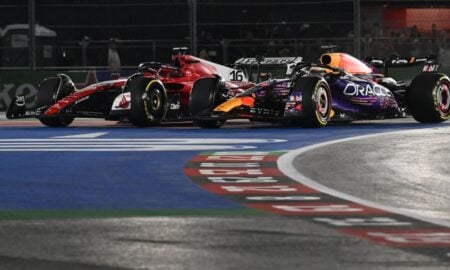
Audi tests indicate that the new generation of cars will have unstable handling and greater physical demands


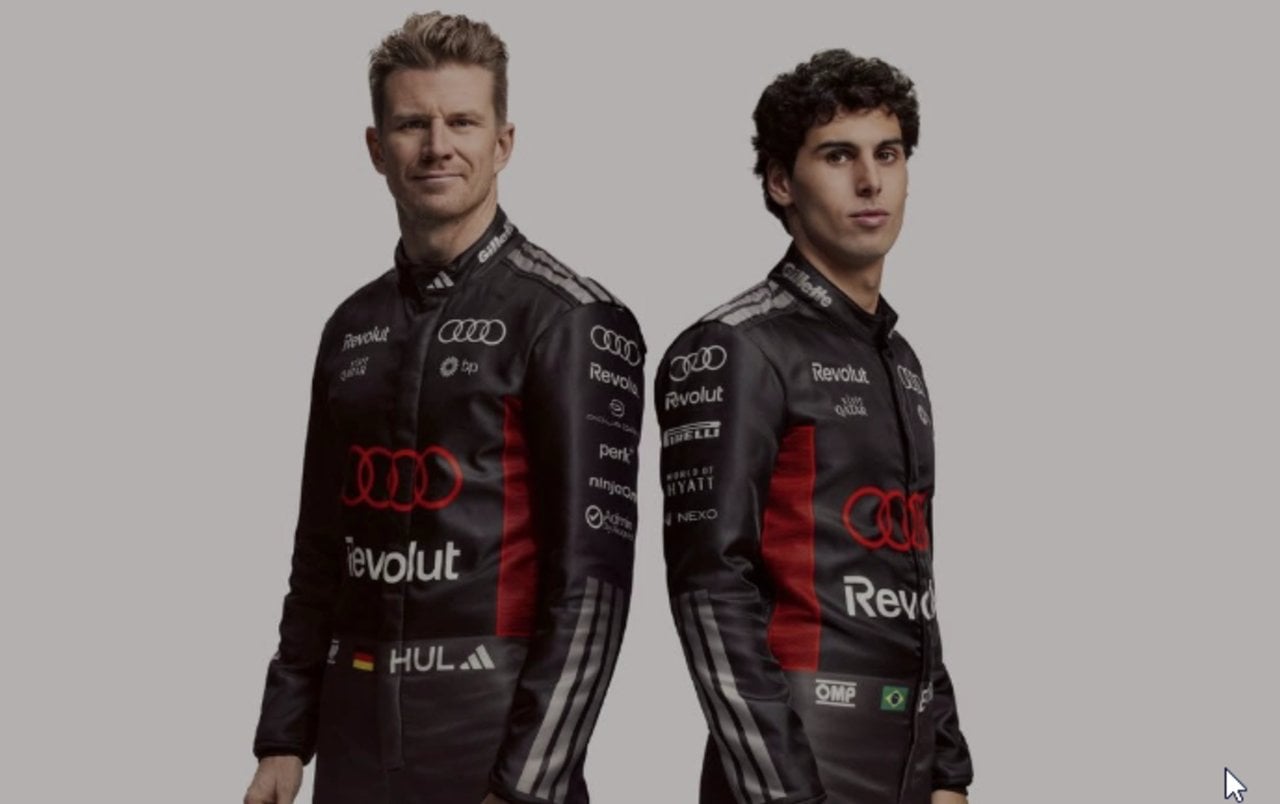
The next era of the main category of world motorsport promises to revolutionize the dynamics on the tracks, bringing machines that challenge the skills of competitors in unprecedented ways. Impressões initial data collected in simulators from large teams reveal that the characteristic stability of current models will give way to much more risky and unpredictable behavior. Gabriel Bortoleto, a key player in the development of the Audi project for the competition, highlighted that the new vehicles will require a brutal level of adaptation, both mental and muscular, on the part of the drivers who make up the grid.
During testing sessions held at the Neuburg facility, it became clear that the combination of new power units with mobile aerodynamics systems has radically transformed drivability. The management of electrical energy, which will now correspond to approximately half of the engine’s total power, delivers immediate torque that compromises traction when exiting curves. Além Furthermore, the configuration focused on reaching high final speeds drastically reduces the aerodynamic load on the straights, leaving the car “light” and requiring continuous steering wheel corrections to maintain the trajectory.
Programmed instability and active aerodynamics
The concept introduced by the new technical guidelines aims to make overtaking easier by reducing turbulence for those behind, but the cost of this change is significantly more nervous driving. Unlike models from recent seasons, which maintained a stable aerodynamic platform, the new cars will change their configuration on the fly. Isso creates operational windows where the vehicle behaves differently depending on the sector of the circuit, forcing the driver to recalibrate his reflexes with each braking.
The implementation of active aerodynamics, with wings that adjust to reduce drag or increase ground pressure, generates grip transitions that can be abrupt. Bortoleto points out that this feature will make cars appear to always be on the limit, especially in zones of strong deceleration after long straights. The feeling of security provided by the current aerodynamic “rail” will be replaced by a constant struggle with the steering to avoid losing control.
Engineers and drivers work symbiotically to try to mitigate these effects before the cars touch the real asphalt. The work on the simulator has been exhaustive in the search for a base setting that offers a minimum of predictability, but the nature of the rules suggests that the show will be marked by more slips and visible corrections. Para the public, this means seeing the athletes working much harder inside the cockpit, reminiscent of past eras in the category where driving was more visceral.
Impact on physical and mental preparation
With the change in the dynamic behavior of the car, the physiological demands on athletes also change. Instability on straight lines and the need for sudden corrections increase muscle tension in the arms, shoulders and neck in a different way than usual. Traditional preparation, which is heavily focused on cardiovascular endurance and neck strength versus G-force when cornering, will need to incorporate specific reflex and isometric strength training to deal with a steering wheel that reacts unpredictably.
Mental fatigue emerges as another formidable opponent in this new scenario. Gerenciar the energy strategy for attack and defense, activating the active aerodynamics systems and, simultaneously, controlling a car that tends to detract with the electric torque, will require extreme cognitive processing capacity. The margin for error will be minimal, and consistency during a long race will be the big difference between the champions and the rest of the field.
Technological race and engine development
The entry of Audi as an official team brought a new dynamic to the market and technical development. The transition from the previous structure to the German automaker’s factory operation involved massive investments in infrastructure and personnel. The development of the power unit, carried out entirely “in-house”, is the heart of the project. The ability to integrate this complex new engine with the chassis, ensuring that power delivery is smooth enough to be controllable, is the engineering team’s biggest challenge.
The data collected by development pilots in the simulator is critical to refining engine mapping. Human feedback on how power is delivered, whether it is too aggressive or whether there is a delay in response, allows engineers to fine-tune the control software. Essa translating the sensations of the virtual track into lines of code will define the car’s behavior in reality. The team knows that, at the beginning of this new regulatory era, drivability can be worth as much as raw power.
Internal competition between engine manufacturers promises to be fierce. With the simplification of some parts of the combustion engine and the emphasis on the electrical part, efficiency in the recovery and use of energy will be vital. The search is not just for horsepower, but for efficient thermal management, ensuring that the system does not overheat during intense battles for position, which could compromise both performance and safety.
Expectations for the future of the competition
The racing community waits with bated breath to see how these predictions will translate into reality on the track. If the data from the simulators is correct, the new era will bring races where human error will once again be a frequent protagonist. Isso could end the absolute dominance of perfect cars and put individual talent back in the spotlight. Para fans, the prospect of seeing cars that are more difficult to drive is promising, suggesting an increase in wheel-to-wheel disputes and a greater variety of winners.
Those who adapt most quickly to this “controlled disorder” will have a significant advantage in the championship. The era of surgical precision could give way to an era of improvisation and damage control, where whoever knows best how to interpret the chaotic rhythm dictated by new machines will win. The future of the category is noisy, fast and, above all, extremely challenging for whoever is behind the wheel.