
Chinese automaker confirms full production of Song Pro in Bahia with flex engine and new vacancies


The Brazilian industrial scenario is going through a decisive moment with the consolidation of automotive manufacturing operations in Camaçari. The plant, which previously belonged to Ford, now under the management of the Asian giant, is no longer just assembling imported kits but is now undertaking the complete manufacturing cycle. Essa paradigm shift involves the implementation of complex processes, such as stamping, welding and painting, marking the unit’s productive independence at Bahia.
Efforts focused on modernizing the complex aim to prepare the assembly line for the Song Pro model, an SUV that hits the market with the promise of combining energy efficiency with flex hybrid technology. The strategy focuses on meeting the specificities of local consumers, who value the versatility of ethanol combined with electrification.
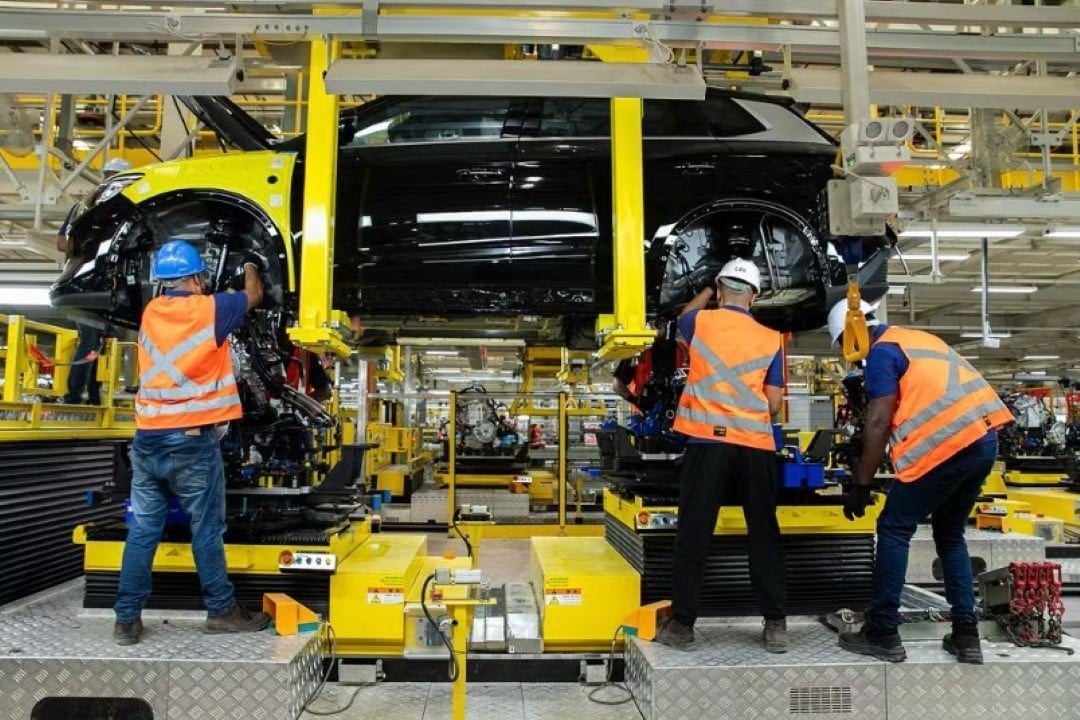
Company executives reinforce that the work and adaptation schedule strictly follows what was planned for the second half of the year. The internal expectation is that the factory will reach its maximum operational capacity in record time, responding to the growing demand for electrified vehicles in the country.
Robust investments support this transformation, signaling a long-term commitment to national technological development and reducing dependence on imports.
Billionaire investment and infrastructure
Financial resources of around R$5.5 billion are being applied to the physical and technological restructuring of the manufacturing unit. The amount is intended for the acquisition of cutting-edge machinery and the adaptation of facilities to support the complete manufacture of bodies, a fundamental step for any automaker that wishes to permanently establish itself in the country.
Since the beginning of partial operations, the factory has been responsible for delivering more than 25 thousand units, but the nationalization of processes raises the standard of quality and control. The internalization of the painting and printing stages allows for more rigorous monitoring of each vehicle that leaves the production line.
This industrial autonomy directly reflects on the brand’s competitiveness, shielding the operation against excessive exchange rate fluctuations and high international logistics costs.
Song Pro technical specifications
Running and calibration tests are being carried out intensively by engineering teams in various regions of the Brasil. The objective is to ensure that the Song Pro’s plug-in hybrid system delivers the expected performance when fueled with Brazilian vegetable fuel.
Preliminary data points to a mechanical package that prioritizes both power and fuel economy, essential characteristics for the medium SUV segment. The technical specifications designed for the national model include:
- Combined power that should reach 223 hp.
- Robust torque estimated at 40.8 kgfm for safe overtaking.
- Battery with 18 kWh capacity adjusted for tropical climate.
- Range in pure electric mode exceeding 100 km.
The configuration allows the driver to use electric mode for daily urban journeys, reserving the combustion engine for longer journeys, eliminating anxiety about charging points on highways.
Diversification of the national portfolio
The automaker’s strategic planning is not limited to just Song Pro. Outros globally successful models, such as the King sedan and the compact Dolphin Mini, are also on the priority list for full nationalization.
This expansion of the locally produced catalog is a direct response to the movement of traditional competitors, who are also seeking to update their lines with electrified options.
Having a varied range of products manufactured at Bahia strengthens the brand’s presence in different price ranges, democratizing access to hybrid and electric technology.
Impact on the local production chain
The activation of the complete manufacturing cycle generates a multiplier effect on the economy of Região Metropolitana of Salvador. The demand for specialized inputs and services drives the creation of thousands of jobs, both directly on the assembly line and indirectly in support sectors.
Auto parts suppliers are being attracted to the surroundings of the industrial complex, with the goal of reaching a component nationalization rate close to 50% by the end of the fiscal year.
The state government is closely monitoring the development of the hub, recognizing the importance of Camaçari as a reference center for sustainable automotive technology for the entire América Latina.
Logistics, maintenance and general service companies also benefit from the economic boom, creating a renewed and dynamic industrial ecosystem around the new factory.



