
Comet 3I/ATLAS data indicates trillions of interstellar objects hidden in the Oort Cloud

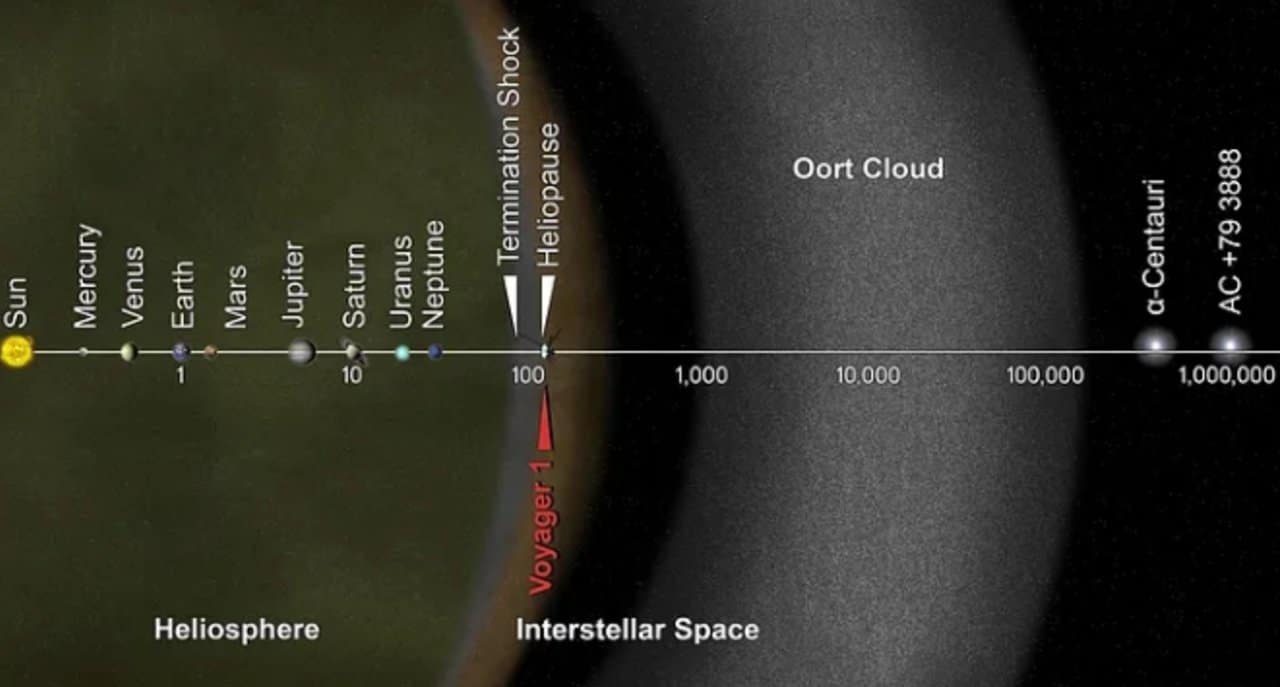
A recent astronomical investigation has redefined the understanding of the composition of the boundaries of Sistema Solar, suggesting that the neighborhood of Terra is much busier than previous models predicted. Pesquisadores concluded that the outermost region of our system may harbor a massive population of celestial bodies originating from other stars, challenging current theories about planetary formation and the dynamics of interplanetary space.
The study is based on detailed analyzes of the 3I/ATLAS object, formally identified in mid-2025, which served as a starting point for new mathematical extrapolations. The presence of such a large number of cosmic visitors on the periphery of the system raises fundamental questions about how matter is distributed throughout the Via Láctea and how different star systems exchange material over billions of years.
The scientific community is now focusing its efforts on determining the exact nature of this celestial body, seeking to differentiate whether it is a common comet ejected from another system or whether it has anomalous characteristics. Essa distinction is crucial, as validating the properties of 3I/ATLAS could rewrite the understanding of the evolution of planetary systems and gravitational interaction in the galactic environment.
Detection challenges and physical characteristics
The celestial body was initially tracked by the ATLAS asteroid warning system and subsequently subjected to close scrutiny by Telescópio Espacial Hubble. The most recent measurements estimate that its core has a radius of approximately 1.3 kilometers, with a total mass calculated at around 5 billion tons, considering a typical average density for objects of this nature.
Visually identifying these interstellar travelers remains a significant technical hurdle for contemporary astronomers. Almost all of the light captured by the instruments, around 99%, comes from the coma — the cloud of gas and dust that forms around the nucleus when the object approaches solar heat. Corpos that do not develop this characteristic activity when crossing the orbit of Júpiter become practically invisible, which suggests that the actual object count may be substantially higher than direct observations can confirm.
The icy frontier as a cosmic reservoir
The Nuvem of Oort is considered the final limit of the gravitational influence of the Nessa remote region, the solar attraction force becomes extremely weak, competing directly with the galaxy’s tidal forces and the influence of neighboring stars.
This delicate balance of forces turns the region into a gigantic dynamic deposit. The area not only houses debris left over from the formation of our own system, but also acts as a capture and transit zone for errant objects from deep space, functioning as a historical archive of galactic movement.
Mathematical projections and the future of observation
The estimate that trillions of interstellar objects inhabit this peripheral region results from statistical calculations based on the frequency of detection within the orbit of Júpiter. By projecting the probability of finding bodies with the dimensions of 3I/ATLAS into such a vast three-dimensional volume, scientists came to the conclusion that local interstellar space is densely populated.
These data indicate that the total mass of icy rocks ejected by planetary systems during their formation may be much greater than the mass retained for the creation of planets. If this ratio proves to be the norm in the galaxy, each star may have contributed massive amounts of material to the interstellar medium, enriching the cosmos with building blocks for future generations of celestial bodies.
Definitive confirmation of whether objects like 3I/ATLAS represent isolated events or constant traffic depends on the next generation of observation technologies. The Observatório Vera C. Rubin is touted as one of the main hopes for mapping this hidden population, allowing scientists to distinguish between rare visitors and a constant presence of exotic debris in our cosmic backyard.



