
Battery component defect triggers recall of nearly 90,000 BYD hybrid vehicles in China


BYD, recognized as one of the world’s largest new energy vehicle manufacturers, announced a large-scale safety procedure involving one of its most popular models in the Chinese market. The automaker called on owners of the Qin Plus DM-i plug-in hybrid sedan for a recall covering 87,762 units, after identifying technical faults that could compromise the integrity of the power system. The measure aims to mitigate operational risks and ensure the protection of occupants and third parties.
The official statement, supervised by the regulatory authorities of China, details that the affected vehicles were manufactured in a specific period, comprising units produced between the beginning of 2021 and the end of 2023. The preventive action highlights the company’s concern in maintaining quality standards amid the exponential growth of its global sales and leadership in the electrification sector.
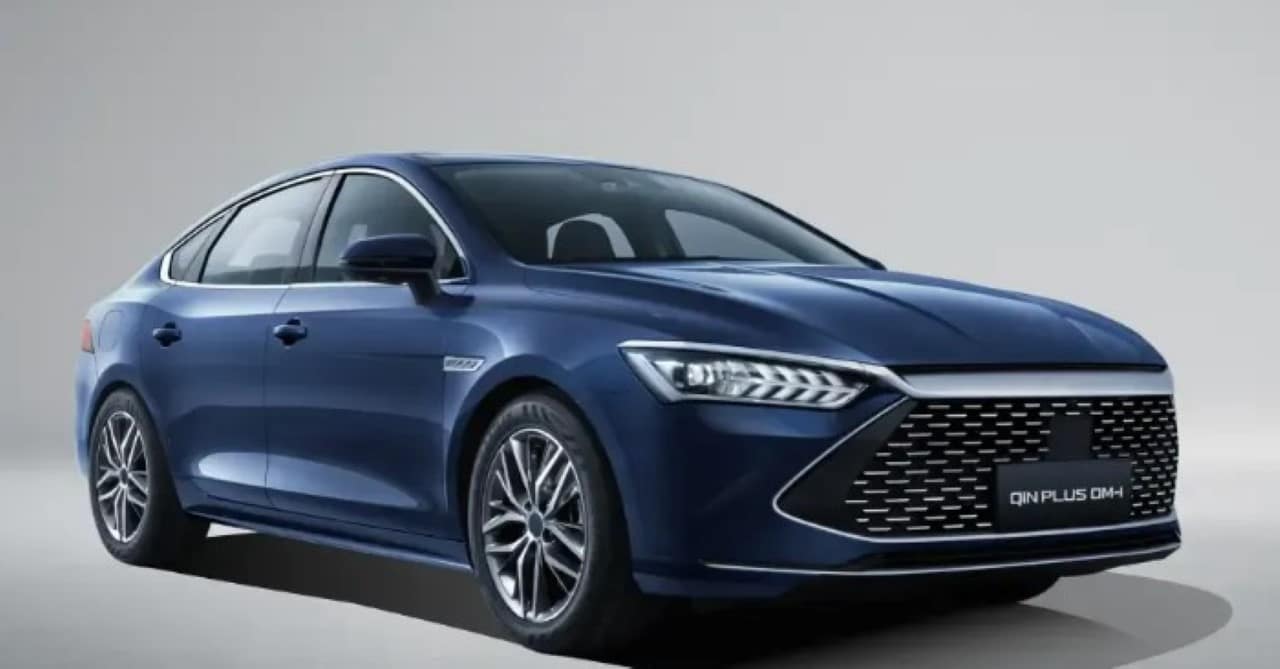
Technical investigations indicated that the source of the problem is located in the manufacturing process of the battery management system controller. Foi found that the capacitors present in this component may have microcracks, an irregularity that, although microscopic, has the potential to trigger serious failures in the vehicle’s operation.
These cracks in the capacitors can lead to overheating of the internal circuits, creating conditions conducive to thermal incidents. In extreme situations, failure to manage energy can result in a sudden loss of power while driving or, in the worst case scenario, trigger a combustion process in the battery pack, requiring immediate intervention to prevent further damage.
Technical details of the failure and risks involved
Administração Estatal of Regulação of Mercado (SAMR) of China provided clear guidance on the nature of the defect. The battery management system (BMS) is the electronic brain responsible for monitoring the health, temperature and voltage of power cells. Quando the capacitors of this system fail due to the identified cracks, the BMS’s ability to regulate the electrical current is compromised.
Without adequate system supervision, voltage fluctuations may go unnoticed, generating a cascade effect within the power module. The risk of fire, although statistically low in relation to the total volume of cars, is an unacceptable variable in the modern automotive industry, which justifies the massive recall for repairs. The safety of lithium batteries is a sensitive and priority issue for maintaining consumer confidence in electric and hybrid vehicle technology.
Patch strategy via remote update
To solve the problem efficiently and minimize inconvenience to owners, BYD chose to use Over-the-Air (OTA) technology. Esta approach allows the vehicle’s software to be updated remotely, without the initial need for the car to be physically taken to a dealership. The update aims to recalibrate the safety parameters of the battery management system.
The new software installed via OTA will have the ability to detect anomalies in the functioning of capacitors with greater precision. Caso the system identifies any irregularity that indicates the presence of microcracks or risk of failure, an alert message will be immediately displayed on the instrument panel, instructing the driver to seek authorized technical assistance.
In cases where the software diagnoses the physical defect, the automaker has committed to carrying out a complete replacement of the battery management system controller at no cost to the customer. Esta hybrid strategy, which combines digital monitoring with physical intervention when necessary, reflects the evolution of after-sales services in the era of connected cars.
Context of recalls and market expansion
This is not an isolated incident in the brand’s recent expansion trajectory. Meses Before the announcement regarding the Qin Plus DM-i, the automaker had already carried out similar procedures involving other models in its portfolio, such as the Dolphin and the Yuan Plus. On Naquela occasion, almost 97 thousand units were recalled due to concerns about components of the electric steering system, demonstrating that the rigor in quality inspection extends to several vehicle subsystems.
Additionally, models like the Tang DM-i have also come under scrutiny previously due to battery pack issues. The accumulation of recalls, although generating negative headlines in the short term, is often interpreted by industry analysts as a sign of maturing quality control and transparency mechanisms in the Chinese automotive industry, which seeks to consolidate its reputation in demanding international markets.
The company’s quick response and cooperation with regulatory bodies like SAMR are key to maintaining credibility. In a market where security is a decisive pillar for purchasing, transparent crisis management and the guarantee of lifetime product support are differentiators that automakers need to sustain.
Impact on sales and global leadership
Despite the technical challenges faced with the recall, BYD’s business performance remains robust. Recent Dados indicate that the company continues to break monthly sales records. In October, for example, the brand surpassed the barrier of 300 thousand vehicles sold, with a notable emphasis on plug-in hybrid models, which represent a significant share of this volume.
Growth in sales of 100% electric vehicles also follows an upward trajectory, consolidating the brand’s position as a leader in the new energy segment. The capacity for large-scale production and the verticalization of the supply chain — BYD manufactures its own batteries and semiconductors — allow for an agility in response that few competitors can match.
The market is closely watching how the Chinese giant balances the need for mass production to meet global demand with the obligation to maintain standards of engineering excellence. The recall of the Qin Plus DM-i serves as a reminder that in the race to electrification, the safety and reliability of electronic components are as important as autonomy and design.



