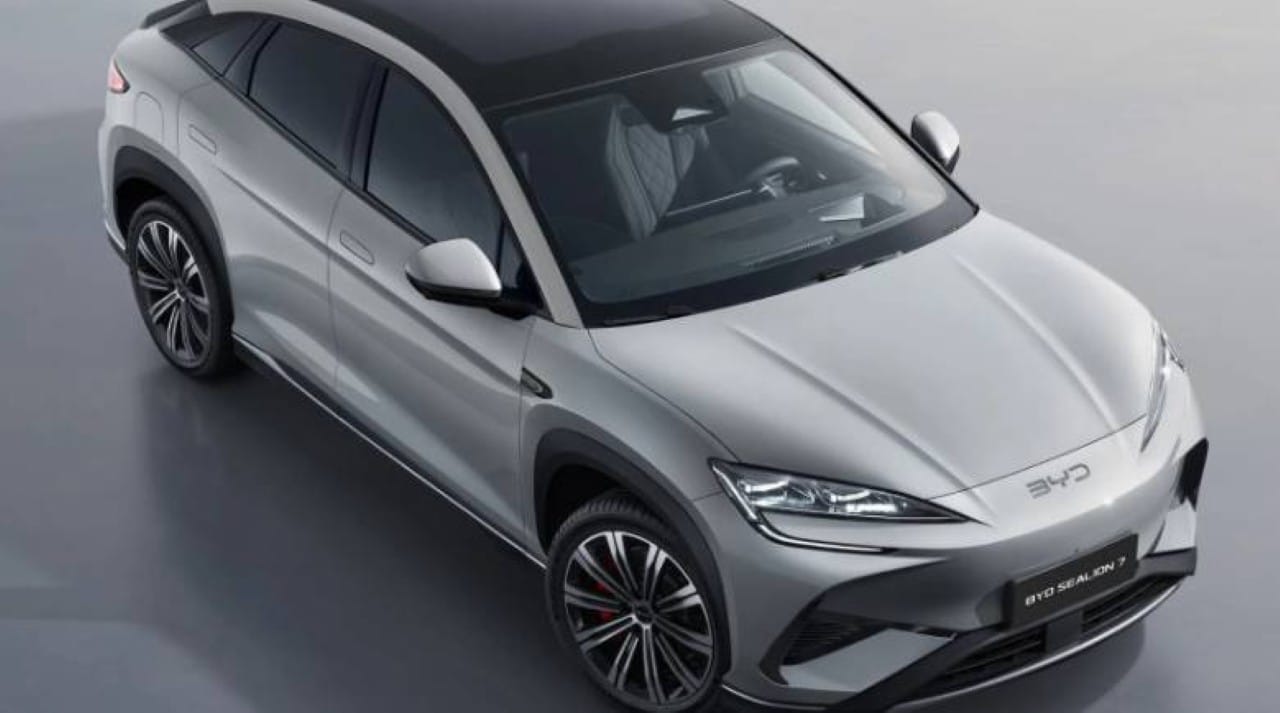
BYD introduced the Sealion 6 as its first plug-in hybrid vehicle in the Japanese market, marking a significant expansion in sustainable model offerings. The launch took place in December 2025, with deliveries starting in January 2026 for the front-wheel drive version. Esse medium SUV combines a 1.5-liter gasoline engine with an electrical system, achieving a combined range of up to 1200 kilometers in ideal conditions with a full tank and charged battery.
The model stands out for its efficiency, with hybrid consumption of 22.4 km/l in the WLTC cycle and a pure electric range of 100 km. The FWD version generates 98 PS from the thermal engine and 197 PS from the electric engine, prioritizing series hybrid mode to maximize electric propulsion. No Japão, the price starts from 3.982 million yen, positioning it as a more affordable option compared to local competitors such as the Toyota Harrier PHEV and the Mitsubishi Outlander PHEV.
BYD’s strategy reflects the company’s global growth, which surpassed Tesla in electric vehicle sales in 2025, with 2.25 million units compared to the rival’s 1.64 million. No Japão, the Sealion 6 join a lineup that already includes EVs such as the Atto 3 and Dolphin, aiming to capture a share of the new energy vehicle market. The AWD version, with deliveries starting in March 2026, adds a rear engine for better performance in a variety of conditions.
dm-i hybrid system in detail
BYD’s DM-i system operates primarily as a series hybrid, where the 1.5-liter gasoline engine acts as a generator to recharge the 18.3 kWh battery. Essa configuration allows the vehicle to prioritize electric traction, reducing emissions and consumption on urban journeys. At constant cruising speeds, the heat engine can couple directly to the wheels to optimize efficiency.
The battery uses lithium iron phosphate chemistry, known for its stability and durability, contributing to the electric range of 100 km. Testes indicate that the Sealion 6 maintains low noise and vibration, specifically tuned for the Japanese market, with a focus on comfort for rear passengers.

Performance and adaptations for Japan
The Sealion 6 FWD delivers 300 Nm torque to the electric motor, ensuring smooth acceleration and quick responses in traffic. The AWD version increases performance with all-wheel drive, ideal for regions with frequent snow or rain in the Japão. Medidas’s 4,775 mm length and 2,765 mm wheelbase provide ample internal space, with capacity for five occupants and luggage.
Local adaptations include recalibrated suspension to reduce vibrations and improve sound insulation, meeting Japanese consumer preferences. The vehicle supports charging at public stations, with an estimated full recharge time in a few hours via a domestic wallbox.
The exterior design adopts aerodynamic lines, with an optimized drag coefficient to aid energy efficiency. Internamente, the digital dashboard and central infotainment screen integrate navigation and connectivity functions, compatible with local traffic systems.
Equipment and safety included
The model is offered in a single configuration in the Japão, with a complete equipment package without additional options. Isso includes adaptive LED headlights, alloy wheels and a premium audio system, all for less than 4 million yen in the base version. Assistentes driving features such as automatic emergency braking and blind spot monitoring come standard, raising the level of safety.
Compared to rivals, the Sealion 6 offers more technological features for a lower price, with a difference of up to 1.5 million yen compared to equivalent Japanese PHEVs. The warranty covers hybrid components for extended periods, reinforcing the brand’s reliability.
BYD Global Market and Expansion
BYD recorded global sales of around 4.6 million vehicles in 2025, with half being PHEVs, demonstrating the focus on hybrid technologies. No Japão, the launch of the Sealion 6 represents the first step into PHEVs, following success with pure EVs. The company tuned the vehicle to local emissions and safety standards, ensuring compliance with strict regulations.
In other markets, such as the Austrália and China, similar variants of the Sealion 6 or Seal 06 DM-i have achieved popularity for efficiency and value for money. Na Austrália, the model drove a 100% increase in PHEV sales by 2025, competing with Mitsubishi Outlander.
Comparisons with local competitors
In the Japão, the Toyota Harrier PHEV costs significantly more, starting from values above 5 million yen, with lower hybrid autonomy. The Sealion 6 excels in combined range and price, attracting buyers sensitive to operating costs. The Mitsubishi Outlander PHEV, another direct rival, offers AWD traction, but with a smaller battery and less efficient hybrid consumption.
Independent testing highlights the smoothness of BYD’s DM-i system, with seamless transitions between electric and hybrid modes. Consumidores report real savings close to WLTC values, especially in mixed urban and highway use.
The price difference allows the Sealion 6 to access government subsidies for low-emission vehicles, although BYD positions the model as affordable regardless of incentives. Essa approach attracts corporate fleets and families looking for sustainability without a high premium.
Experts point out that the launch strengthens the Chinese presence in the Japanese market, traditionally dominated by local brands. BYD invests in dealer network and after-sales support to build trust.
Outlook for the automotive sector
PHEV adoption grows in the Japão, driven by CO2 reduction targets by 2030. The Sealion 6 contributes to this transition, offering a versatile option for those hesitant about pure EVs due to charging infrastructure. With regular fuel, the vehicle reduces dependence on premium gasoline, making daily operation cheaper.
Data indicates that PHEVs will represent a growing share of sales by 2025, with BYD leading the way globally. No Japão, the model can capture a 5% market share in average PHEVs in the coming years, according to analyst projections.
Efficiency in real tests
In evaluations of 300 km, the Sealion 6 demonstrated an average consumption of 25 km/l in hybrid mode, exceeding expectations. The 18.3 kWh battery allows daily electric journeys, with nightly recharging via a regular socket. Motoristas note linear acceleration and stability when cornering, thanks to the low center of gravity.
The interior accommodates comfortably, with adjustable seats and rear seat legroom. Recursos dual-zone air conditioning and wireless connectivity elevate the experience, in line with premium standards at no extra cost.
Maintenance is simplified, with extended intervals for hybrid components. BYD offers on-site technical support, including over-the-air updates for software.
The vehicle supports high cruising speeds without significant loss of efficiency, ideal for long journeys in the Japanese archipelago.
Pricing and accessibility strategy
The aggressive pricing of the Sealion 6 reflects BYD’s production scale, with reduced costs on proprietary batteries. No Japão, FWD at 3.982 million yen is equivalent to about 105 thousand Malaysian ringgit in conversion, but adjusted for local purchasing power, it represents savings of 150 thousand yen annually in fuel for average users. The absence of extra options simplifies the purchase, with everything included from the basics.
Comparatively, Japanese PHEVs require additional packages for similar equipment, increasing the total cost. BYD targets young, urban buyers, promoting the model via demonstrations at dealerships.
Innovation in batteries and motors
BYD’s Blade battery, integrated into the Sealion 6, offers high energy density and improved fire safety. The 197 PS electric motor provides instant torque, improving handling when climbing and overtaking. The system intelligently manages energy, prioritizing EV at low speeds.
Future updates may include variants with larger batteries, expanding range. BYD researches integrations with smart grids to optimize charging.
Environmental impact and sustainability
The Sealion 6 reduces emissions by up to 50% compared to equivalent gasoline SUVs, according to WLTC cycles. No Japão, where renewable energy grows, electrical use amplifies environmental benefits. Manufacturing adopts sustainable practices, with component recycling.
Consumers choose the model to align with carbon neutral policies, contributing to national goals.