
Punch leaves stuffed animals aside and starts socializing with other monkeys at Japanese Ichikawa Zoo

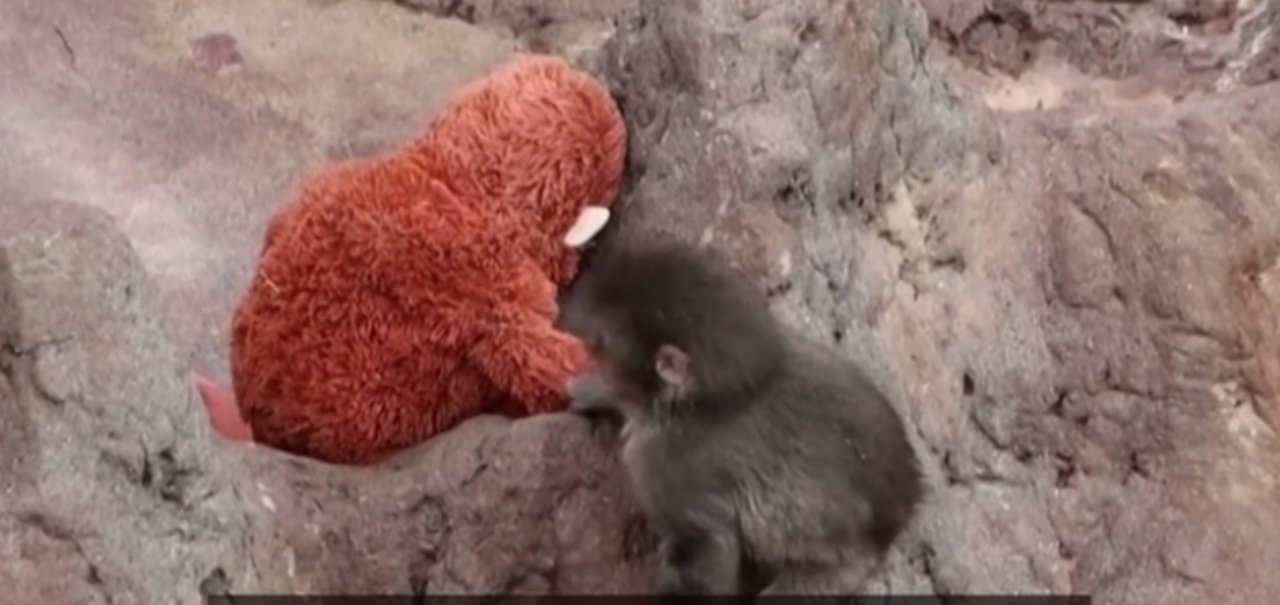
Zoológico of Ichikawa, located in the province of Chiba, has recorded significant advances in the behavior of Após a critical period of maternal rejection and social isolation, the primate began to show clear signs of integration with the rest of the group, overcoming behavioral barriers that worried the institution’s specialists.
Recent observations carried out by the technical team indicate a change in the animal’s routine, which began to interact physically with other members of the group. The transition from attachment to inanimate objects to contact with their peers is considered a vital milestone for the survival and mental health of the species in captivity.
Among the new behaviors documented by keepers, the following stand out actions that are fundamental to the primate hierarchy:
- Participation in “mutual cleaning” (grooming) sessions with other individuals;
- Acceptance of physical contact, including hugs from adult monkeys;
- Gradual reduction in the time dedicated exclusively to the stuffed orangutan;
- Appropriate responses to group vocalizations and gestures.
The evolution of the condition is monitored daily, as late socialization in snow monkeys presents a risk of permanent rejection. Punch’s ability to establish real bonds suggests that the gradual approach strategies adopted by the zoo are having the desired effect, allowing him to develop the social skills necessary for community life.
Rejection history and human support
Punch’s trajectory was initially marked by maternal abandonment shortly after birth, which required direct intervention from human caregivers to guarantee her nutrition and physical survival. Sem the maternal figure to offer protection and social learning, the cub developed an excessive attachment to a stuffed orangutan, using it as a source of thermal and psychological comfort.
The object worked as a transition item, reducing the animal’s stress in the absence of body contact, something essential for infant primates. However, experts warned that prolonged dependence on the toy could compromise the acquisition of intraspecific communication skills, making the monkey unable to interpret the complex social signals of its group.
Expert analysis on integration
Punch’s change in behavior had international repercussions, attracting the attention of primatologists such as Matt Lovatt, director of Trentham Monkey Forest, at Reino Unido. Segundo analyzes by experts in the field, the act of picking lice and dirt from the fur of other monkeys is not just a hygiene measure, but the main political and social tool within a group of Japanese monkeys.
By allowing other monkeys to approach and reciprocating care, Punch signals submission and a desire to belong, reducing the aggressiveness of dominant adults. Acceptance by an adult, who hugged the puppy, is interpreted as a green light for it to remain in the social nucleus, reducing the need for direct human intervention.
Challenges of managing primates in captivity
Reintegrating animals rejected by their mothers is one of the biggest challenges faced by modern zoos focused on animal welfare. The speciesFuscata monkeyIt has a rigid and hierarchical social structure, where individuals without allies or family ties are often marginalized or attacked, which requires meticulous work on environmental enrichment and controlled approach.
The success in the case of Punch serves as a reference for management protocols in preservation institutions. The balance between artificial support, represented by the plush and handlers, and the encouragement of natural instincts demonstrates the complexity of maintaining the psychological health of sentient animals under human care.



