
Record snowfall due to nor’easter suspends flights and transport on the east coast of the USA this Monday

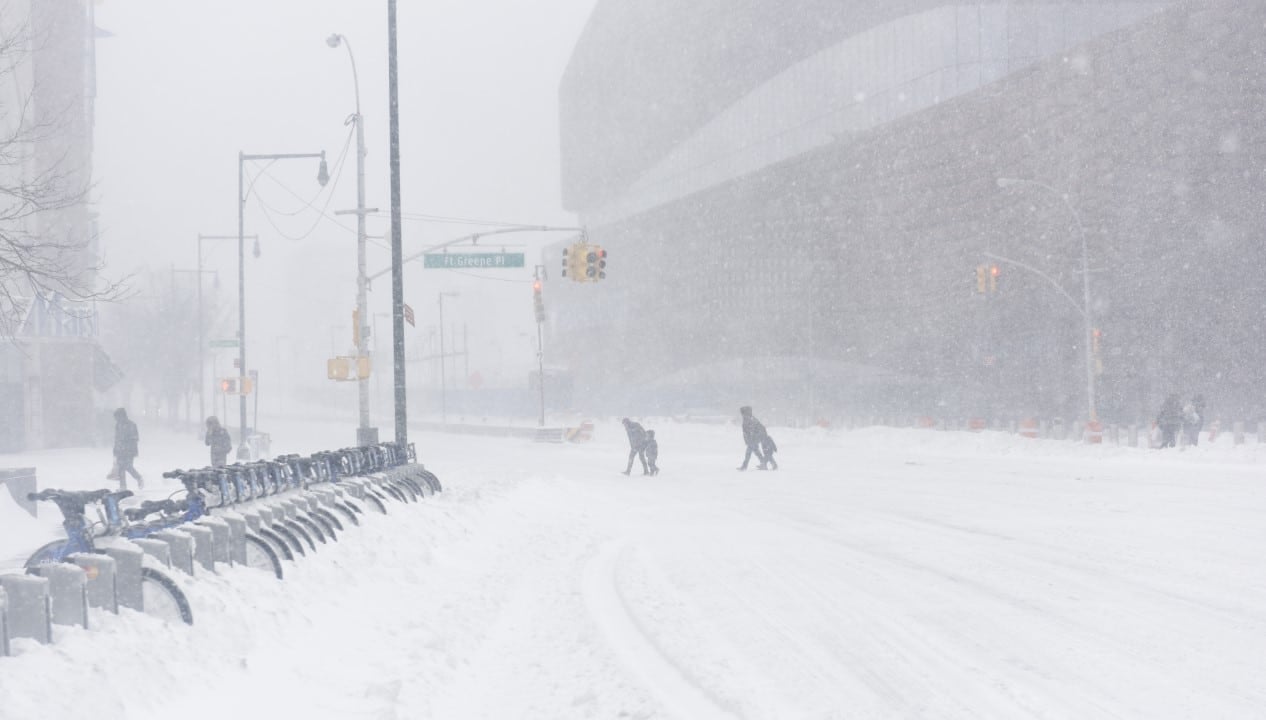
A strong nor’easter storm hit the east coast of the Estados Unidos on Monday, bringing blizzard conditions, accumulated snow exceeding 55 centimeters in some areas and intense winds that caused widespread outages. The meteorological phenomenon affected states such as Nova York, Nova Jersey, Connecticut, Massachusetts, Delaware and
Millions of people faced direct impacts, with more than 5,000 flights canceled and public transport services suspended in several cities. Autoridades locals reported downed trees and power lines, worsening conditions for residents and emergency crews working to restore normalcy.
The storm began to intensify overnight, with snow falling steadily and reducing visibility to less than 150 meters in critical spots. The Serviço Nacional of Meteorologia issued winter warnings that extended from the Carolina of the
- Power outages affected hundreds of thousands of homes, with Massachusetts recording more than 224,000 cases.
- Flight cancellations occurred at airports such as Nova York and Boston, also impacting international connections from Reino Unido.
- School closures have hit hundreds of institutions in at least six states.
- Travel bans have been imposed in cities such as Hoboken and Rhode Island to prevent accidents.
Transport impacts
Urban and interurban mobility has suffered large-scale paralysis due to snow accumulation and strong winds. Em Nova York, Departamento of
Airports reported delays and cancellations extending into Tuesday, affecting international passengers. Serviços trains and buses, such as those operated by Autoridade Metropolitana of Transporte of Nova York, operated with reduced capacity and without articulated buses to avoid risks.
In Nova Jersey, NJ Transit suspended all operations, while in Connecticut and Massachusetts public transportation systems limited routes. Authorities emphasized the need for caution on roads, where fallen trees blocked access and damaged parked vehicles.
Here’s a look at Westerleigh on Staten Island as New York City deals with more than a foot of snow that has accumulated overnight.
—Spectrum News NY1 (@NY1)February 23, 2026
Snowfall is forecast to continue until 9 a.m. todaypic.twitter.com/QpodULONXK
Power Outages and Emergency Responses
Hundreds of thousands of homes were left without electricity as a result of the winds and the weight of snow on transmission lines. Em Massachusetts, more than 224 thousand customers were affected, followed by Nova Jersey with 137 thousand and Delaware with 75 thousand registered cases.
Governors of impacted states declared states of emergency to mobilize federal and local resources. Equipes utilities worked in adverse conditions to restore supply, but forecasts indicated increased outages due to persistent winds.
Weather conditions and forecasts
The nor’easter, characterized by low pressure systems that form on the east coast, brought fluffy and voluminous snow to coastal areas, where temperatures close to freezing facilitated the formation of larger flakes. Regiões like Aeroporto of Atlantic City, in Nova Jersey, accumulated 37 centimeters, while Trenton recorded 40 centimeters.
Serviço Nacional of Meteorologia warned of up to 60 centimeters in isolated spots, with winds that increased the risk of broken branches. Especialistas explained that heavier snow on the coasts poses greater dangers to trees and infrastructure.
Reports from residents and tourists
Residents of Nova York described empty, silent streets, with knee-deep snow in parks like Central Park, which accumulated more than 38 centimeters. One longtime resident compared the event to historic blizzards from the 1960s and 1990s, highlighting the unusual intensity for the region.
British tourists stuck in the city reported canceled flights and the need to extend stays, but some enjoyed the picturesque scenery despite the inconveniences. Em Brooklyn, people were seen skiing on snowy streets, while others repeatedly cleared sidewalks to keep access clear.
Local news crews captured images of low visibility and fallen trees, illustrating the challenges for pedestrians and vehicles. Visitantes from other parts of the US, such as from Carolina from Norte, noted similarities with past events but emphasized the current scale.
Security measures adopted
City and state officials have implemented strict protocols to mitigate risks, including closing parks like Madison Square in Nova York due to the weight of snow on trees. Pelo minus 20 trees fell in the city, causing street blockages and property damage.
Governors like Connecticut reported around 20,000 homes without power in the early morning, predicting worsening with the winds. Proibições of commercial vehicles were maintained in several states to prioritize the cleaning of main roads.
In Rhode Island, the governor maintained a state of emergency and travel restrictions, with utility crews facing extreme winds during repairs. Recomendações included preparing emergency kits with flashlights and batteries for possible prolonged outages.
Extension to Canadá and international impacts
The storm was not limited to the US, with winter weather warnings issued for the east from Canadá, where similar snow and wind conditions affected communities. Voos of British airports such as Heathrow in Londres have been canceled for destinations such as Boston and
Passengers on Dublin, Manchester and Edimburgo have faced similar disruptions, with arrivals still suspended. Global connectivity has highlighted dependence on East Coast air routes, impacting commercial and personal travel.
Additional risks and precautions
In addition to power outages, the storm increased dangers such as hypothermia and accidents on slippery roads, leading authorities to advise staying home whenever possible. Em Hoboken,
The governor of Nova Jersey expressed concern about trees posing threats to roads and utilities, while in Massachusetts preparations for power outages were strengthened. The combination of wet snow and strong winds exacerbated these risks, with larger flakes facilitating rapid accumulations.
Details about snow accumulations
Official measurements revealed regional variations in accumulation, with Mount Holly, at Nova Jersey, recording 49 centimeters, and Filadélfia, at Pensilvânia, at 35 centimeters. Wilmington, in Carolina of Norte, accumulated 21 centimeters, while Allentown, also in Pensilvânia, had 13 centimeters.
This data from Serviço Nacional and Meteorologia helped map the most affected areas, guiding resource allocation for cleanup. Previsões indicated a gradual decrease in intensity, but with persistence of freezing conditions on the following nights.
Initial recovery efforts
Sanitation teams in Nova York began operating on Monday morning, cleaning main avenues such as Fifth Avenue in the Flatiron district. The city’s mayor lifted the travel ban at midday, but warned of icy surfaces and urged caution for drivers.
In other states, such as Delaware and Pensilvânia, bus services have been suspended entirely, with gradual resumption expected as conditions improve. Coordination between federal and local agencies accelerated the response, prioritizing power restoration in vulnerable areas. The nor’easter storm that struck the east coast of the Estados Unidos demonstrated the region’s vulnerability to intense weather events, with impacts that ranged from daily outages to risks to infrastructure. Autoridades mobilized resources to clear roads and restore essential services, while residents dealt with snow drifts that turned cities into silent, white landscapes.
Canceled flights affected thousands, including international connections, highlighting global interconnectedness. Previsões indicated gradual improvement, but with warnings for persistent ice. Equipes emergency services continued to monitor falling trees, which caused damage to vehicles and blockages on residential streets. Governadores emphasized preparation for possible worsening, with states of emergency facilitating federal support. The first snowfall in nine years in Nova York served as a reminder of variable weather patterns, driving discussions about urban resilience.



