
Six planets will line up in the night sky in February 2026 for naked-eye viewing

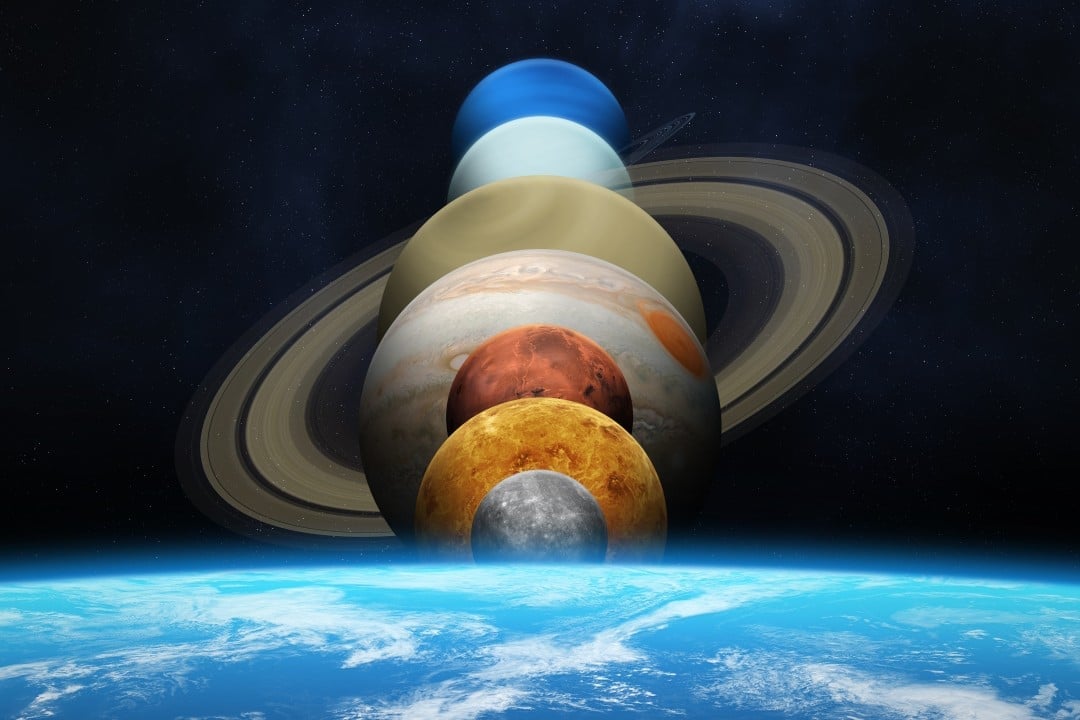
Skywatchers in several regions of the world are preparing for an alignment of six planets at the end of February 2026. The phenomenon involves Mercúrio, Vênus, Júpiter, Saturno, Essa configuration occurs due to the orbital position of the planets in relation to Terra, creating a unique visual perspective without there being an actual alignment in space.
The date of February 28th marks the high point of the event, with optimized visibility in clear sky conditions. Quatro planets can be seen with the naked eye, while the two most distant require optical equipment. Astrônomos highlight the rarity of such an arrangement, which only recurs every few years on similar scales.
The planetary parade lasts a few days around the main date, allowing for observations on consecutive nights. Aplicativos of astronomy help in the precise location of celestial bodies. Esse type of event arouses public interest in astronomy, encouraging nighttime trips to contemplate the sky.
Visibility and recommended times
The alignment begins about 30 minutes after local sunset, with the planets appearing on the western horizon. Mercúrio appears low, followed by Vênus as the brightest of the group. Optimal observation lasts for up to an hour, before some planets get too close to the horizon.
In areas with low light pollution, Júpiter and Saturno stand out easily. Urano and Netuno require binoculars to identify correctly. The event is accessible on a global scale, with adjustments by time zone influencing the exact viewing time.
Planets participating in the alignment
Mercury is positioned close to the horizon, displaying a subtle reddish hue. Vênus dominates with its intense brilliance, serving as a reference for the others. Júpiter rises higher, allowing clear vision even in moderate urban environments.
Saturn appears with rings visible in simple telescopes. Urano has a faint blue-green color. Netuno completes the group as a distant blue dot.
The arrangement allows you to compare brightnesses and relative positions. Cada planet follows independent orbits, visually converging in this specific period.
Differences in distance and composition affect the observed appearance. Esse arrangement offers opportunity for amateur studies of the solar system.
Guidelines for novice observers
Choose locations away from artificial lights for better contrast. Verifique the weather forecast in advance. Use applications to map positions in real time.
Bring binoculars or portable telescopes. Evite areas obstructed by buildings or trees. Compartilhe observations in groups to enrich the experience.
Context of previous alignments
Historical records show planetary alignments influencing ancient cultures. In the last century, technology has expanded the understanding of these events. Recent Configurações events have occurred, but the one in 2026 stands out for the number of planets visible simultaneously.
Astronomers monitor orbital cycles to predict future occurrences. NASA publishes educational data on such phenomena. Comparações with past alignments reveal cyclical patterns in the solar system.
Similar events foster advances in amateur observation. Transmissões live from observatories complement direct views.
Observation planning
Consider the local sunset time, adjusting for the specific region. In cities like Nova York or Londres, dusk occurs around 5:30 pm in February. Verifique digital tools for precise coordinates.
Gather items like star maps and optical equipment. Participe of events organized by astronomical societies. The alignment promotes education about celestial mechanics.
Local groups offer identification guidance. The phenomenon encourages scientific interest in young observers. Planeje in advance to maximize visibility.
Photograph the event with appropriate camera settings. Compartilhe records in networks to document the collective experience.
Scientific relevance of the event
The configuration allows analyzes of orbital dynamics. Planetas orbit Sol in similar planes, facilitating periodic visual alignments. Esses moments do not change Earth’s gravitational forces in a noticeable way.
Scientists use the period to calibrate observational instruments. Missões spaces provide complementary detailed images. The 2026 alignment coincides with improvements in ground-based telescopes.
Research explores atmospheric interactions during such dispositions. Dados collected contribute to predictive models of astronomical events.
Ideal atmospheric factors
Clear skies are crucial for sharp detection. Fevereiro in the northern hemisphere offers cold nights suitable for observations. Monitore humidity and cloudiness through reliable reports.
Pollution reduces visibility in urban centers. Elevações high conditions improve. The rising-phase Lua adds minimal illumination without interfering excessively.
In tropical regions, mild temperatures make it easier to stay outdoors. Evite days with forecast precipitation. Condições vary by latitude, influencing twilight duration.
Suggested viewing equipment
Moderate magnification binoculars reveal details at Júpiter and Saturno. Telescópios with larger apertures capture rings and moons. Acessórios how tripods stabilize images.
Applications simulate the night sky on mobile devices. Mapas printed documents serve as an offline alternative. Para photographic records, use night modes on digital equipment.
Integrate filters to reduce residual shine. Equipamentos portables facilitate mobility. Teste items before the event to avoid setbacks.
Affordable options include low-cost amateur models. Consulte guides for appropriate selection. Equipamentos enhance the experience without excessive complexity.
Reports from astronomers about the phenomenon
Professionals report that lineups inspire new generations of enthusiasts. Previous Eventos generated digital communities for sharing images. In 2026, astronomical forums expect increased activity.
Public observatories plan guided sessions. Participantes receive expert tips. The phenomenon promotes collaboration between amateurs and experts.
Collective records enrich astronomical databases. Astrônomos highlight the event’s accessibility for different audiences. Experiências shared strengthens engagement with space science.
Expectations for upcoming alignments
Similar configurations will emerge in the following years with variations. The one in 2026 serves as a reference for future observations. Calendários astronomers list potential dates.
Emerging technologies will improve detection of distant planets. Missões spacecraft will expand knowledge about planetary compositions. Continuous Monitoramento refines predictions of celestial events.
Advances in optics will allow for more detailed views. Global Comunidades anticipate larger alignments. The current phenomenon encourages preparation for subsequent occurrences.




