
Asus officially cuts the price of the Rog Ally and the portable console now costs 499 dollars at retail


Asus has implemented an aggressive new strategy to consolidate its presence in the portable console market, confirming the official price reduction of the ROG Ally base model to $499. The move positions the device equipped with the Ryzen Z1 chip as a direct and financially accessible competitor to intermediate versions of the Steam Deck, Valve. The decision reflects the growth in the portable hardware sector, which has gone from being a niche to becoming one of the most sought-after segments of the electronic games industry, requiring manufacturers to quickly adjust their pricing policies to attract the end consumer.
The new retail value applies to the entry-level version of the device, which differs from the “Extreme” model mainly due to its processing. By pricing below the psychological barrier of $500, the Taiwanese manufacturer seeks to capture a market share that prioritizes value for money, but still wants access to a library of games based on Windows. Especialistas from the sector point out that this reduction is not just promotional, but a tactical repositioning to maintain the relevance of the hardware in the face of the continuous launch of new technologies and Chinese competitors that have flooded the global market.
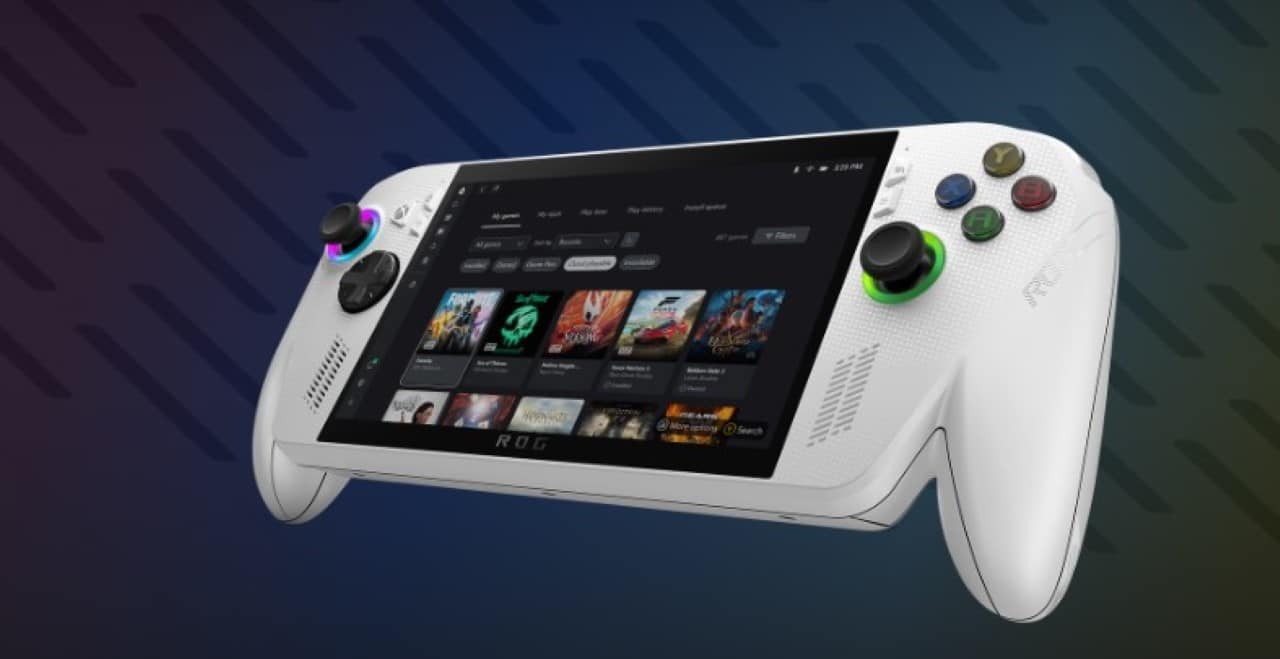
This change in the price list puts the device on a direct collision course with the competition’s average storage options, offering, in return, a screen with higher resolution and higher refresh rates. The dispute now transcends brand loyalty and focuses on the raw technical specifications that each dollar invested can deliver, signaling a favorable period for technology enthusiasts who have been waiting for an opportunity to acquire a handheld PC capable of running modern titles.
The immediate availability of the product at the new price in the main international retail chains suggests that Asus has prepared its distribution channels for an increase in demand. With the saturation of options in the market, price has become the deciding factor, and the company appears willing to sacrifice unit profit margins in favor of a larger installed base, which, in the long term, can generate recurring revenue through services and accessories within the ROG ecosystem.
Technical specifications and the Ryzen Z1 chip
The heart of the model that received the price cut is the Ryzen Z1 processor, a custom APU developed by AMD specifically for this type of compact chassis. Diferente from its more powerful brother, the Z1 Extreme, this version has a slightly more modest configuration of cores and threads, balancing performance and energy efficiency. The Zen 4 architecture, combined with RDNA 3 graphics, allows the console to run recent AAA games, although it requires adjustments to graphics settings to maintain fluidity in more demanding titles.
The engineering behind the device maintains 16 GB of LPDDR5 RAM, an essential standard to ensure that the Windows 11 operating system and modern games run without choking due to lack of volatile memory. The speed of this memory is crucial, as in APUs, system RAM is shared with the graphics chip as video memory. Essa High bandwidth ensures that textures and game data transfer occurs efficiently, minimizing stuttering during intense action scenes.
In terms of storage, the console is equipped with a 512 GB NVMe SSD, using the PCIe Gen 4 bus. Half a terabyte capacity is considered the acceptable standard for today’s industry, where individual games can easily surpass the 100GB mark. Além Furthermore, the possibility of expansion via microSD UHS-II slot offers a fast track for users who need more space without opening the console.
Screen differences and visual experience
One of the biggest assets of the Asus’s hardware, even in this cheaper version, remains its display. The 7-inch panel offers an Full HD (1920×1080) resolution, surpassing the 800p resolution found in its main rival. Essa extra pixel density results in sharper images, more readable text in complex user interfaces, and overall higher visual quality, especially noticeable in games with lots of graphical and artistic detail.
The refresh rate of 120 Hz is another point that makes the product stand out in the entry-level segment. Enquanto Most portable devices operate at 60 Hz or 90 Hz, the fluidity provided by 120 Para competitive titles or platform games that require precision, this technical feature offers a tangible advantage to the player.
To complement the high refresh rate, AMD FreeSync Premium technology is integrated into the panel. Esse feature is vital for eliminating “tearing” (tears in the image) and smoothing the perception of frame drops, something common in portable hardware that fluctuates in performance depending on the complexity of the rendered scene. The maximum brightness of 500 nits also ensures that the console can be used in environments with varied lighting, maintaining visibility and color fidelity.
Operating system and software compatibility
The choice of Windows 11 Home as the native operating system is a double-edged sword that Asus decided to wield. On the one hand, it offers full and unrestricted compatibility with virtually any PC game ever released. Isso means that the user is not tied to a single store; it is possible to natively install Steam, Epic Games Store, Ubisoft Connect, GOG Galaxy and Battle.net without the need for workarounds or complex compatibility layers based on
The big competitive differentiator, however, is native support for the Game Pass PC from Microsoft. With Windows, service subscribers can download and play catalog titles directly on their hardware, taking advantage of cloud saves and the achievements of the Xbox ecosystem. Para many players, access to this vast library without additional costs of purchasing individual games justifies the choice of the Asus device over competitors based on proprietary systems.
Asus also invested in the development of Armoury Crate SE, a software interface that acts as a centralizing hub. Reconhecendo While Windows is not optimized for small screens and gamepad controls, this software layer allows you to organize your game library, adjust performance profiles, configure RGB lighting, and map buttons intuitively. Essa solution seeks to mitigate the navigation difficulties of the Microsoft operating system in a portable format.
Ergonomics and cooling system
The chassis design has been sculpted with a focus on ergonomics for long gaming sessions. Pesando approximately 608 grams, the device is distributed in such a way as not to tire the user’s wrists. The texture on the back and the angle of the triggers are designed to provide a firm, comfortable grip, reducing the risk of accidental slippage during use. The layout of the buttons follows the asymmetric control pattern of Xbox, familiar to the vast majority of Western players.
The thermal system, called “Zero Gravity”, uses dual fans and high-efficiency heatsinks to keep temperatures under control. Internal engineering allows the cooling system to work effectively regardless of the device’s orientation, whether playing lying down, sitting down or with the console resting on a table. Isso is essential to avoid “thermal throttling”, where the processor reduces speed to avoid overheating, ensuring that performance remains stable.
In addition to efficiency, noise level was a priority. Mesmo under maximum load, the fans operate silently compared to traditional gaming laptops. Isso allows audio from the front speakers, which support Dolby Atmos, to be heard clearly without the interference of the constant hum of the refrigeration, creating a more immersive sound immersion without the mandatory need for headphones.
Autonomy and mobility challenges
Despite robust specifications, battery life remains the main challenge for devices in this category. The 40Wh battery equipped in the console needs to power a high-resolution screen and a complex x86 processor. In modern AAA games, battery life can be limited to a few hours, requiring the user to always be close to an outlet or carry a power bank compatible with PD fast charging (Power Delivery).
Power management is flexible, allowing the user to switch between operating modes such as “Silent”, “Performance” and “Turbo”. In 10W or 15W mode, it is possible to significantly extend game time in indie titles or emulators, but to get the most out of the hardware, energy consumption rises drastically. The Asus continues to release firmware and BIOS updates to optimize this consumption curve, seeking to extract every possible minute from the energy cell.
Portability, therefore, is relative to the usage profile. Para short trips or home use away from the TV, the device works perfectly. Contudo, for long periods disconnected from the electrical grid, energy planning becomes part of the user’s routine. The inclusion of a fast charger in the box mitigates part of this problem, allowing you to recover a considerable charge in a short break.
The current competitive landscape
Priced at $499, the portable PC market enters a new phase of maturity. The financial entry barrier, which previously required investments close to a thousand dollars for niche devices, has been broken down. Competition between large manufacturers such as Asus, Lenovo, MSI and Valve directly benefits the consumer, who now has varied options that suit different budgets and technical needs.
The market response to this price cut will be closely monitored. If Asus’s strategy is successful in increasing the user base, it is likely that we will see similar moves from other brands, or even the launch of new entry models focused on cost-benefit. The pressure is now on software optimization, as the hardware has reached a very attractive level of quality and price.
For consumers who were undecided, the equation changed. The possibility of having a complete PC, with Windows 11, a 120 Hz screen and access to all game libraries for a price lower than that of many mid-range smartphones, makes the Asus console one of the strongest value propositions of the year in the entertainment technology segment.



