Hubble images reveal complex dynamics and oscillation in interstellar comet gas jets
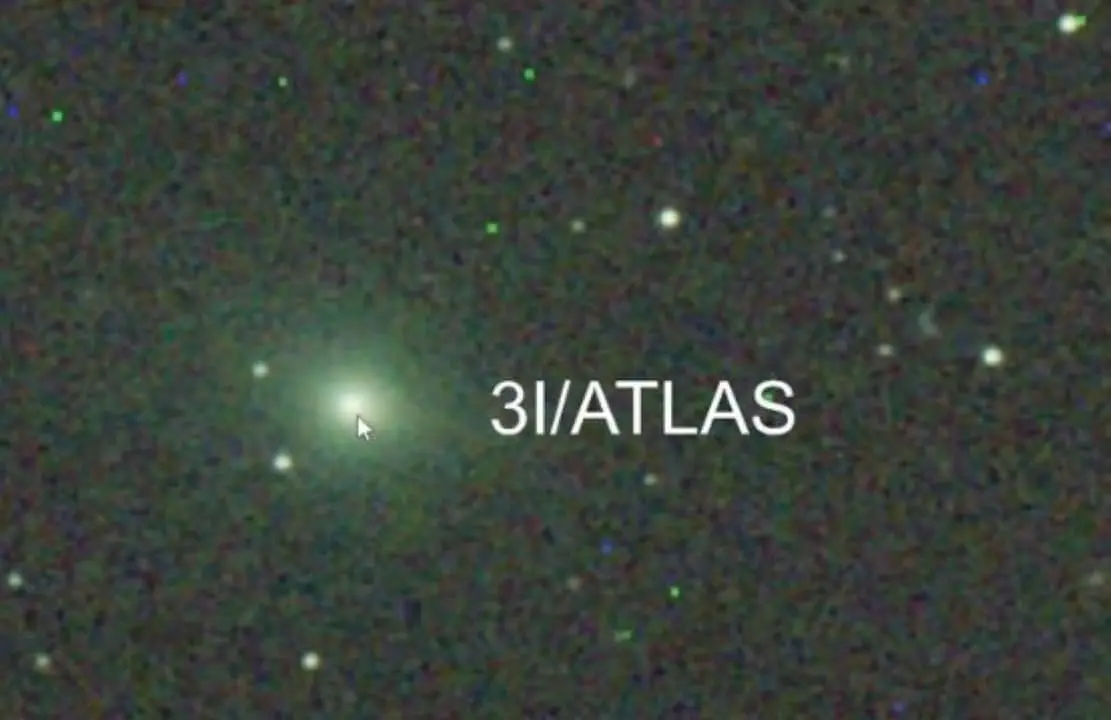
Recent data captured by Telescópio Espacial Hubble has brought to light unprecedented details about the behavior of the interstellar object 3I/ATLAS, challenging previous understandings about the dynamics of celestial bodies coming from outside Sistema Solar. The observations, carried out after the object passed through perihelion at the end of 2025, identified that the release of volatile material does not occur in a chaotic manner, but follows a strictly synchronized pattern. Essa discovery suggests a direct correlation between the core’s rotational instability and the rhythmic ejection of gases, offering scientists a rare opportunity to study the inner physics of these distant visitors.
The most striking phenomenon identified in the images is the presence of three distinct jets that operate in harmony, demonstrating intense physical activity in the comet’s heart. The jet positioned in the opposite direction to Sol exhibits a technical angular movement known as a “wobble”, which covers a variation of approximately 20 degrees.
More on this story: New interstellar comet 3I/ATLAS reignites Stephen Hawking’s warnings about alien life
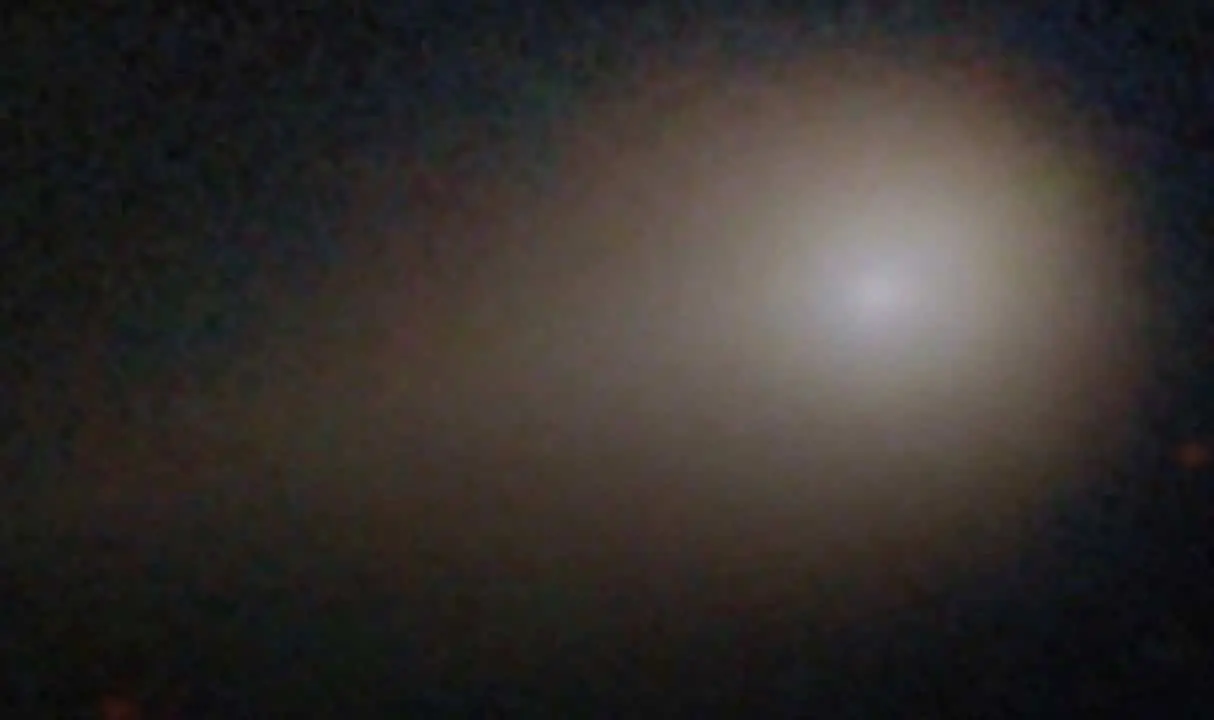
This oscillatory behavior has a well-defined cycle of about 7.20 hours, demonstrating the object’s lack of rotational balance as it travels through space.
Luminous instability and physical characteristics
The total luminosity of 3I/ATLAS follows this frenetic pace, presenting changes in brightness that intrigue the astronomical community. Monitoramentos indicate 30% fluctuations in light intensity over a period of 7.136 hours, which reinforces the connection between jet activity and core mechanics. Essa variation suggests that the internal structure of the celestial body directly influences the scattering of light in ejected materials.
Learn more: NASA’s Hubble Telescope observes comet with unprecedented inverted rotation
Among the crucial data collected by the analyses, the dimensions and alignment of the object stand out. The core has an estimated diameter of 2.6 kilometers, and the axis of rotation remains aligned close to the solar direction, with a margin of 20 degrees. Outro A relevant point is that only 1% of the light captured by the instruments comes from reflection from the solid surface, with the vast majority resulting from cometary activity.
See Also



Emission geometry and spatial alignment
The scientific explanation for the observed patterns lies in physical phenomena of precession or nutation in the attitude of the nucleus. Existe a fundamental misalignment between the object’s axis of rotation and its main axes of symmetry, which generates the characteristic movement recorded by the telescope. Essa specific configuration favors the stability of gas and dust structures, allowing precise mapping of the geometry of emissions.
Detailed morphological analysis allowed mapping the position of each of the three identified jets. The first has a position angle of 55 degrees, while the third has an angle of 170 degrees. The second jet, projected in the solar direction at 290 degrees, demonstrates the greatest range of movement among the structures, alternating between collimated and fan shapes depending on the rotation phase.
On the same topic: Telescopes capture the rare interstellar comet 3I/ATLAS in the process of disintegration by the extreme heat of the Sun
The three-jet system maintains a projected separation of 120 degrees, highlighting the complexity of the internal dynamics of this rare visitor.
The periodicity of 7.1 hours is intrinsically linked to the rotation of the misaligned nucleus, confirming the consistency of the data obtained.