
Ring of fire phenomenon appears in Antarctica this Tuesday and attracts attention from research centers

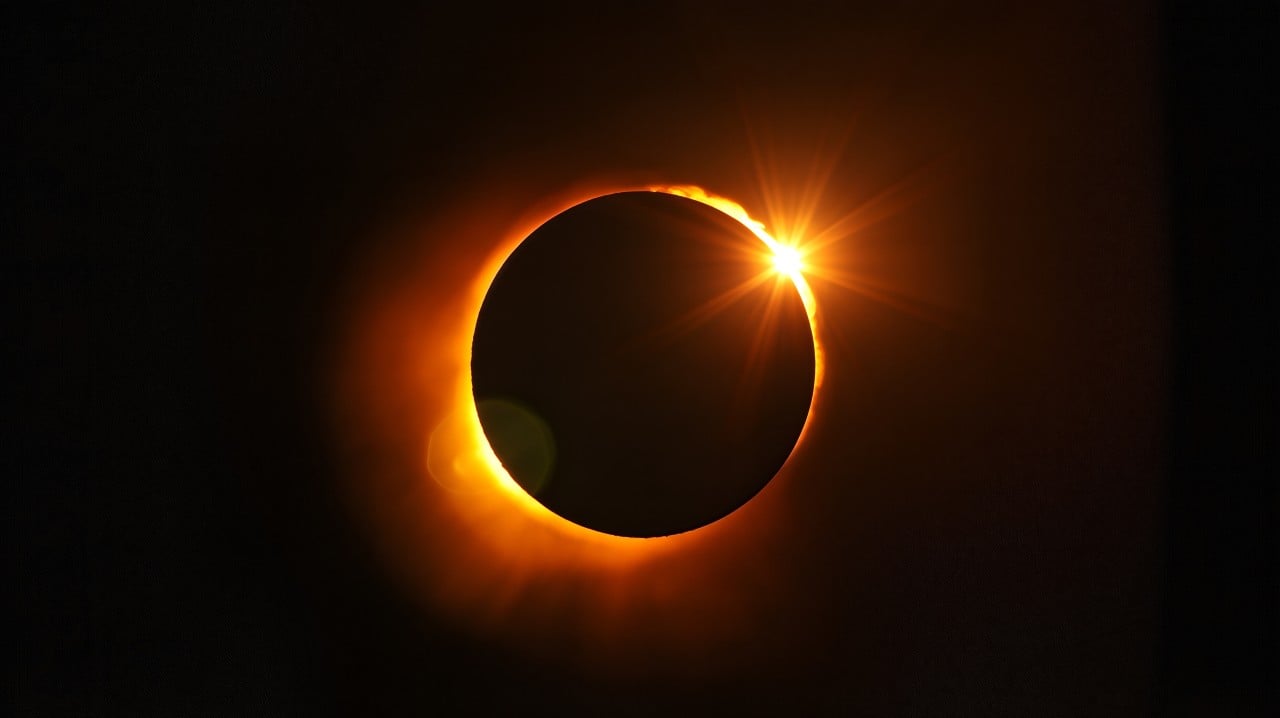
A specific geometric configuration in the solar system changes the celestial landscape over the Antarctic continent this Tuesday, February 17th. Lua, when transiting between Terra and Sol, projects its shadow over the polar region, but cannot completely hide the solar disk due to its position at apogee. Esse maximum distance from our planet makes the satellite appear smaller than the star, resulting in the formation of a characteristic luminous circle.
The event, technically known as an annular eclipse, arouses the interest of astronomers and scientific institutions around the globe, although its full viewing is restricted to an inhospitable and narrow range. Enquanto the maximum annularity occurs over the Antarctic ice, observers located at extreme latitudes in the southern hemisphere, such as in the south of Chile,

In Brasil, the country’s geographic position leaves the territory outside the twilight zone, preventing direct observation of this specific alignment. Contudo, the occurrence serves as a basis for studies on celestial mechanics and calibration of instruments in observatories that monitor solar activity, taking advantage of the window of opportunity generated by the passage of Lua.
Orbital mechanics and cycle of Saros
The mathematical precision required for an annular eclipse to occur involves the exact coordination of the orbits of the three celestial bodies. Diferente of total eclipses, which generate momentary complete darkness, the annularity preserves the solar photosphere visible at the edges. The current phenomenon belongs to the Saros 131 cycle, a periodic series that repeats every 18 years and 11 days, allowing scientists to predict with millimeter accuracy where and when the shadow will touch the Earth’s surface.
During the peak of the event at Antártida, solar radiation suffers an abrupt drop, which directly impacts the local atmosphere. The ambient temperature tends to decrease, and the incidence of ultraviolet rays is reduced in the center of the shade. Essas changes provide valuable data for meteorologists and physicists, who analyze the response of the ionosphere and wind currents to sudden changes in thermal energy.
Essential observation precautions
Eye safety is the most critical aspect during any event involving solar observation, regardless of whether it is total or null. The intense brightness of the remaining ring of light is of sufficient magnitude to cause irreversible damage to retinal cells in a matter of seconds. Oftalmologistas warn that the absence of immediate pain does not mean the absence of injury, characterizing solar retinopathy as a silent and permanent risk.
To ensure vision integrity, strict protocols must be followed by anyone in the partial or annular visibility zone:
- Exclusive use of glasses with filters certified by the international standard ISO 12312-2.
- Immediately discard home methods such as x-rays, tinted glass or common sunglasses.
- Use of solar filters attached to the front of camera lenses, binoculars and telescopes.
- Adoption of indirect projection techniques for those who do not have adequate protective equipment.
Importance for polar research
The research stations installed at Antártida become privileged laboratories during the eclipse. The rarefied atmosphere and low light pollution of the polar region favor the capture of high-definition images of the solar chromosphere. Esses records help the scientific community better understand solar storms and the star’s magnetic dynamics, phenomena that can affect satellites and communication networks on Terra.
In addition to astronomy, the event boosts climate studies. The momentary interruption of sunlight allows us to analyze how the polar ice cap retains heat and how the atmosphere reacts to sudden darkness. Collaboration between international bases ensures that data is shared in real time, overcoming the logistical difficulties imposed by the extreme climate and strong winds characteristic of the frozen continent.
Sequence of events on the calendar
This week’s lineup launches an intense season of astronomical phenomena predicted for 2026. The calendar continues with the expectation of other significant events, keeping the sky as the protagonist in the coming months. The regularity of these cycles reinforces the predictability of the solar system and provides ongoing opportunities for science communication and space education.
Later this year, on August 12, a total solar eclipse will cross the northern hemisphere, covering areas of Europa such as Espanha and Islândia. Diferente of the Antarctic event, this next phenomenon will be visible to millions of people and should boost astronomical tourism. Antes Furthermore, on March 3, a total lunar eclipse, known as Lua of Sangue, can be observed on Américas, completing a cycle of celestial activities that connects observers from different continents.



