
Space mission proposal envisages flyby of interstellar comet 3I/ATLAS between 2070 and 2085 with Oberth maneuver after Jupiter

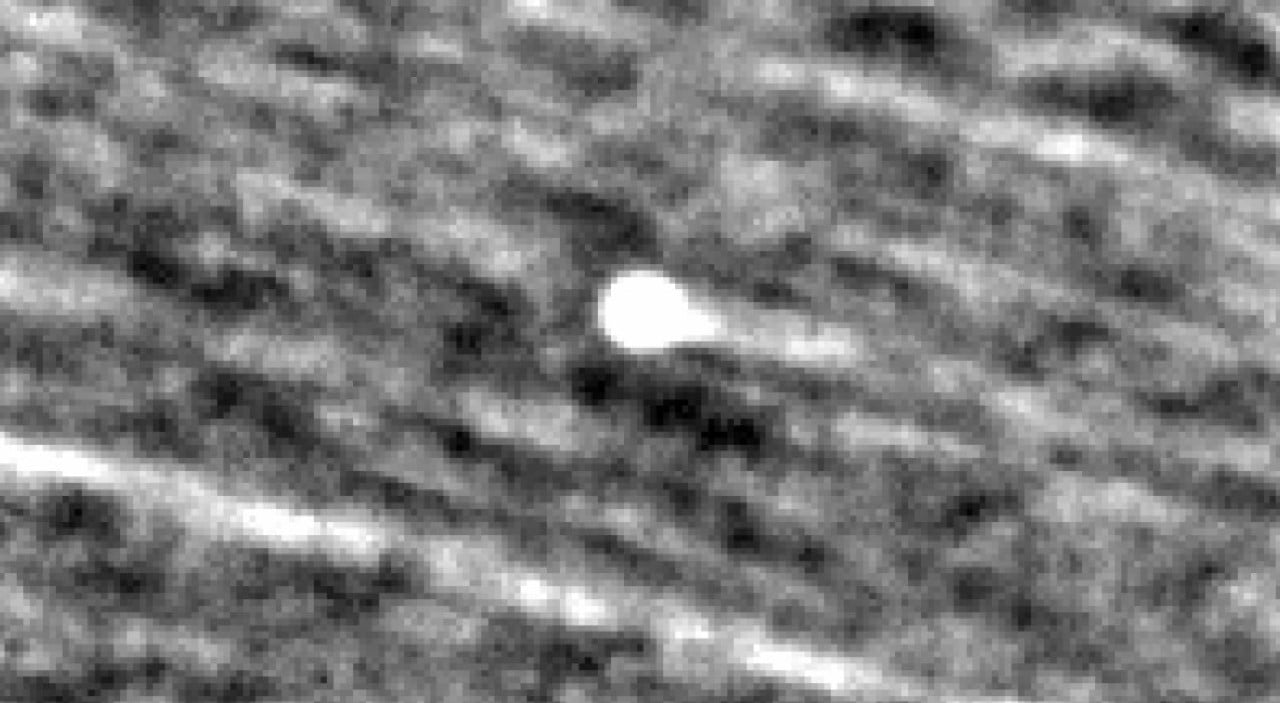
Scientists are evaluating a strategy to reach the interstellar object 3I/ATLAS, the third interstellar visitor confirmed in Sistema Solar. The hyperbolic velocity exceeding 60 km/s and the highly inclined orbit preclude any direct interception or orbital docking with current launch technologies. The only approach considered viable is a high-speed flyby, in which the spacecraft would collect scientific data during a close pass to the comet. The plan relies on a precise sequence of gravitational and propulsive maneuvers to align trajectories over decades.
3I/ATLAS was detected in July 2025 by the ATLAS system in the southern hemisphere and passed perihelion in October of the same year, approximately 1.4 AU from Sol. Observações carried out by ground-based and space telescopes revealed intense cometary activity after the solar passage, with significant release of carbon dioxide, methane and water vapor. Esses records helped refine orbital parameters and confirmed typical characteristics of objects originating in another star system. The most favorable launch window identified occurs in 2035, taking advantage of specific planetary alignments.
Main elements of the proposed trajectory
- Launch of the spacecraft from Terra towards Júpiter for initial gravitational assistance.
- Overflight of Júpiter that redirects the trajectory towards Sol and increases the heliocentric speed.
- Dive close to Sol followed by main engine burn at perihelion to maximize the Oberth effect.
- Escape trajectory that intercepts 3I/ATLAS in a fast flyby between 2070 and 2085.
- Need for millimeter precision in the dates of passage through Júpiter and Sol to avoid missing the meeting.
Thermal challenges during solar approach
Passing close to Sol exposes the spacecraft to extreme temperatures that require a high-performance heat shield. Esse component protects electronic systems and scientific instruments, but considerably increases the probe’s total mass. The mass limitation reduces the volume available for propellant and science payload, forcing stringent choices between thermal protection and observation capability.

Mass-constrained scientific instrumentation
Despite the limitations, the mission would allow carrying high-resolution cameras, infrared and ultraviolet spectrometers, as well as dust and particle detectors. Esses instruments would operate in short windows during the flyby, capturing data on chemical composition, surface structure and emission of volatile material.
Automatic observation sequences and redundant systems guarantee collection even in the event of partial failures. The data obtained would directly compare interstellar material with local comets and asteroids.
Flight time and durability requirements
The study calculates a total duration of 35 to 50 years for the most efficient trajectory, with interception between 2070 and 2085. Missões with shorter periods cannot overcome the difference in relative speed. Hardware designed to operate for decades requires materials resistant to cosmic radiation and long-lasting power systems. Financiamento Continuing and preserving scientific knowledge across generations represent significant organizational challenges.
Scientific importance of the flyby
A close encounter with 3I/ATLAS would reveal chemical and physical processes occurring in another star system. The composition rich in volatiles and the activity observed post-perihelion indicate origin in a region distinct from the primitive solar nebula.
Even a brief flyby would significantly expand understanding of the diversity of small interstellar bodies.
Current monitoring refines orbital calculations
Continuous observations with telescopes like Nórdico Óptico and space instruments refine the object’s position and speed. Esses data reduces margins of error in trajectory simulations and increases the reliability of the launch window in 2035. Periodic Atualizações allows fine adjustments in mission planning.



