Carlos Alcaraz reaches 326 million reais in prizes after winning the title in Doha
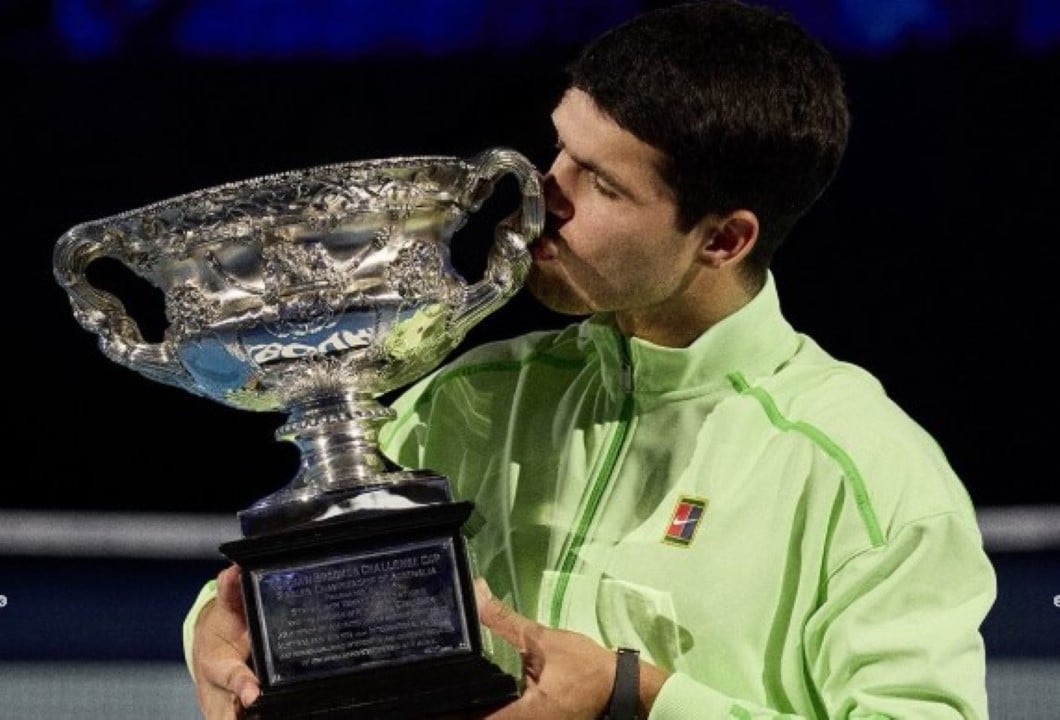
Spanish tennis player Carlos Alcaraz, current number one in the world, consolidated his prominent position on the global sporting scene by reaching the historic mark of 63 million dollars in official prizes from Este amount, which in current conversion exceeds 326 million reais, reflects the upward trajectory of the athlete who has led the world rankings for 15 consecutive weeks and maintains technical hegemony in the main tournaments on the circuit. The updated values occurred shortly after winning the ATP 500 tournament of Doha, held at Catar, where the 22-year-old demonstrated solidity to overcome opponents of a high technical level.
Alcaraz’s financial trajectory is impressive due to the speed with which the amounts have been accumulated since the beginning of his professional career, highlighting the precocity of his results on the court. Last Sunday, February 22, 2026, the Spaniard guaranteed an addition of 529.9 thousand dollars to his sporting assets, which is equivalent to approximately 2.7 million reais, after defeating the Italian Jannik Sinner in the decision. The confrontation between the leader and vice-leader of the world ranking reaffirmed the rivalry that dominates contemporary tennis, attracting the attention of investors and sponsors who seek to associate their brands with the financial and technical success of the European athlete.
—Carlos Alcaraz (@carlosalcaraz)February 21, 2026
Evolution of awards since the beginning of a professional career
The beginning of Carlos Alcaraz’s journey on the professional circuit was marked by modest amounts that contrast drastically with the millionaire figures recorded in the 2026 season. In February 2018, at the age of 14, the tennis player received his first official prize worth 438 dollars, an amount that corresponded to around 2,255 reais at the exchange rate at the time. Esse initial milestone serves as a reference point for sports analysts who follow the exponential growth of the athlete, who in just eight years multiplied his initial earnings in an unprecedented way in the open era of men’s tennis.
The consistency shown in tournaments of different scoring levels allowed the Spaniard to build a solid financial base even before reaching the top of the ATP rankings. Throughout this process, Alcaraz accumulated 26 professional titles, nine of which occurred during his adolescence, placing him as the sixth man with the most titles at this stage of his life. Career planning focused on major sporting events ensured that the majority of his income came from elite tournaments, where prize pools are significantly higher than smaller events.
- The first professional title earned less than three thousand reais in 2018.
- The achievement in Doha added 2.7 million reais to the total amount.
- The athlete has 26 official titles counted by the international association.
- The leadership of the world ranking is maintained uninterruptedly for 15 weeks.
Technical dominance and historical records in major tournaments
The financial success of Carlos Alcaraz is directly linked to its performance in the four main tournaments in the world, known as Grand Slams, where the prizes are the highest in the sport. At the beginning of February 2026, the tennis player achieved a historic feat by winning the Australian Open title, defeating Novak Djokovic in a final decided on technical and physical details. With this victory in Melbourne, he became the youngest player in history to complete “Career Grand Slam”, having won at least once the US Open, Roland Garros, Wimbledon and, finally, the Aberto of
In addition to Grand Slam’s titles, Alcaraz’s ability to beat the biggest names in the history of the sport in a row raised his status and market value globally and immediately. Ele holds the record for being the youngest tennis player to defeat two members of the so-called “Big Three”, composed of Rafael Nadal and Novak Djokovic, on consecutive days during a competition. Esse performance took place during the Masters 1000 of
The values reported by the ATP strictly consider what is paid in prizes for performance on official tournament courts that are worth ranking points. Isso means that winnings from exhibition matches, such as the duel against the Brazilian João Fonseca in December 2025, are not included in the sum of 326 million reais. Essas exhibitions usually pay very high fixed fees for the participation of stars of the size of
The victory in Doha over Jannik Sinner also served to increase Alcaraz’s advantage at the top of the leaderboard, ensuring peace of mind for the next few weeks of the calendar. The tournament at Catar is known for offering luxurious infrastructure and attractive prizes, serving as fundamental preparation for the fast court season. The Spaniard’s efficiency in decisive moments in the finals of ATP 500 tournaments reinforces his ability to monetize his talent in events that require constant high physical and psychological intensity.
Performance of Brazilian tennis on the international financial scene
While the world stage is led by Alcaraz, Brazilian tennis also presents relevant numbers of financial growth with the young Rio native João Fonseca, the country’s main name today. In his second year as a professional, Fonseca has already surpassed the mark of 2.8 million dollars in accumulated prizes, which represents more than 14.5 million reais at the current market price. The Brazilian’s advancement in the doubles and singles rankings shows a constant evolution that attracts new sponsors to the sport in the Brasil and increases the visibility of local tournaments, such as the Rio Open.
The rise of João Fonseca is seen as a positive sign for the development of the sport in the country, especially after he surpassed more than 2,500 tennis players in the doubles ranking in a short period. The comparison with the numbers of Alcaraz serves as a parameter of excellence, although the athletes are at different stages of maturity and experience on the ATP professional circuit. The financial success of Fonseca demonstrates that the Brazilian market is reacting positively to the results on the court, creating a favorable environment for the emergence of new talents and structural investments on national courts.
Prize structure and impact on the world ranking
The distribution of prizes in professional tennis follows a logic of merit where each advanced round guarantees a fixed amount, with the largest share going exclusively to the event champion. In Doha’s ATP 500, the financial structure allowed Alcaraz to receive the full amount allocated to the winner, in addition to points that further distance him from Sinner and Djokovic in the fight for the top. Esse rewards system encourages the participation of the best players in tournaments around the world, ensuring that the technical level of competitions remains high throughout the 2026 annual calendar.
Maintaining the lead for 15 consecutive weeks is a factor that influences not only the athlete’s bank account, but also his priority in draws for keys to major tournaments. Ser the number one seed avoids early clashes with other players from the top 10, theoretically facilitating the path to the final stages, where the prizes are exponentially larger. Essa dynamics create a virtuous cycle of victories and financial gains that Alcaraz has harnessed with surgical precision since taking over as number one in the world at the end of 2025.
- The Masters 1000 and Grand Slams tournaments represent the largest source of direct income.
- The current classification protects the Spaniard in draws for major competitive brackets.
- Players eliminated in early rounds receive significantly lower amounts.
- The 2026 ranking shows a concentration of titles among the three best in the world.
Financial data reveals that tennis has become one of the most profitable individual sports for athletes who manage to remain at the top of the global competitive pyramid. Carlos Alcaraz, by managing his career with a focus on high-impact results, transformed his talent into a financial operation that generates millions of reais each new week of official competition. The continuous monitoring of these statistics by the ATP allows the public to understand the economic magnitude that the sport has reached, equating its main stars with celebrities from other mass sports.
The recent victory in Catar symbolizes the maturity of a player who, despite his young age, already has a history of achievements worthy of established veterans in the sport. With the clay season approaching on the European calendar, the expectation is that the Spaniard will continue to expand his winning margin, as this is one of his favorite surfaces to play professionally. The ability to adapt to different playing conditions is what guarantees Alcaraz the maintenance of its financial income at such high and constant levels on different continents.
Impact of career management on economic results
The technical team surrounding Carlos Alcaraz plays a fundamental role in choosing the tournaments that offer the best return between physical effort and financial prizes available on the circuit. By prioritizing events such as Doha and Australian Open, tennis players maximize their gains without overloading their physical condition, which allows for greater longevity at a high level of competition. Essa professional strategy is what differentiates great champions from players who play many matches, but are unable to convert the volume of play into titles of great economic significance and prestige.
Detailed planning also involves travel and training logistics, ensuring that the Spaniard reaches the finals fully equipped to fight for the maximum prizes offered by the organizations. The victory over Sinner in Catar was a clear example of how mental and physical preparation results in direct financial benefits, consolidating the Alcaraz brand as a synonym for sporting profitability. Cada dollar accumulated in the Spaniard’s career is the result of a rigorous training process that began in the youth categories and now reaches its financial peak on the world stage in 2026.
Investments in infrastructure and multidisciplinary team are covered by the awards themselves, allowing the athlete to continue evolving technically without significant budget restrictions in their professional routine. The financial independence achieved at the age of 22 gives Alcaraz the freedom to focus exclusively on breaking historical records and increasing his trophy collection around the planet. Monitoring these values is a barometer of the financial health of the professional circuit, which continues to grow and attract global audiences interested in the performance of the phenomena on the court.