
Four planets Venus Mercury Saturn Jupiter visible to the naked eye in the Brazilian sky in the last week of February 2026 how to observe


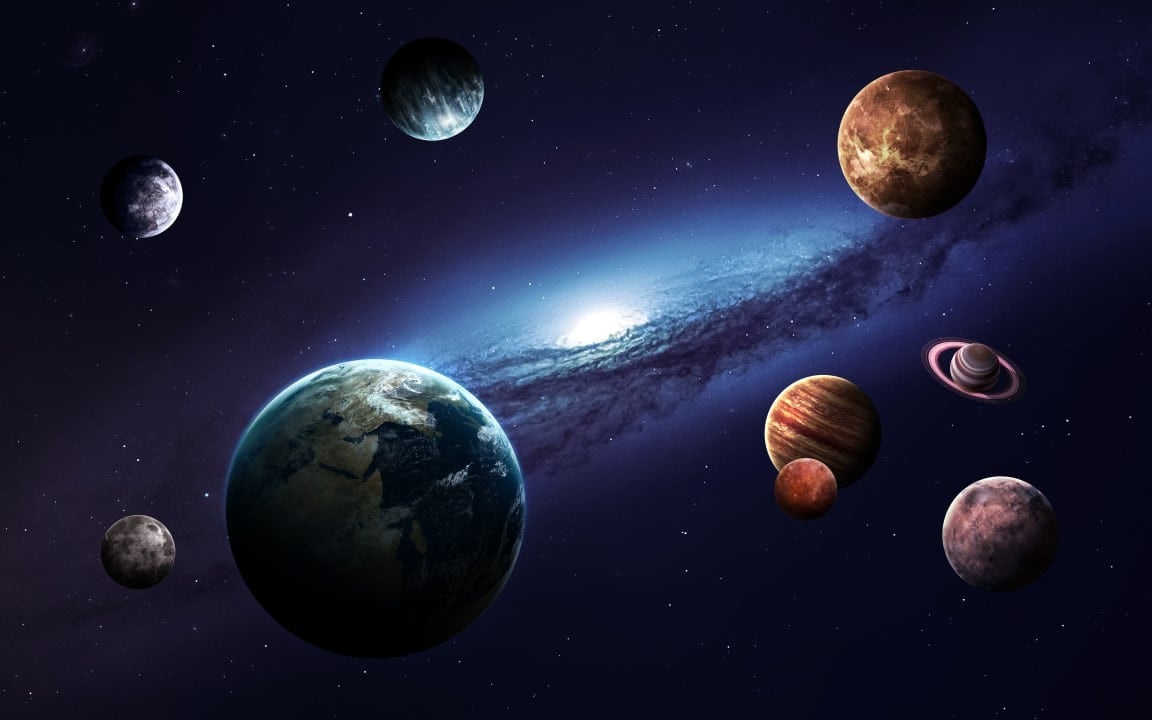
Four planets can be observed with the naked eye in the Brasil sky this last week of February. The phenomenon began on the 18th and continues until the 28th of 2026 throughout the national territory. The configuration brings together Vênus, Mercúrio, Saturno and Júpiter that appear shortly after sunset.
Neptune and Urano also occupy the same celestial region. Esses two planets require a telescope because their light reaches Terra very weakly. The event takes place regardless of the city as long as the sky is clear and dark enough.
The appearance of proximity results from perspective from Terra. The planets orbit Sol in a common plane called the ecliptic. Essa arrangement creates the visual effect without them being aligned in a straight line in space.
How to observe the planets on the western horizon
Observers need to choose a point with a clear view to the west. Light pollution from large urban centers reduces the visibility of fainter stars. The recommended time is around 7 pm local time when twilight allows you to identify the points of light.
Venus and Mercúrio sit low near the horizon. Saturno appears a little higher in the same direction. Júpiter draws attention due to its stronger brightness, which makes it easier to locate the group initially.
Positioning of the planets in the night sky
Vênus stands out as the brightest star in the group. Mercúrio appears close to Venus but requires very clear skies because it is closer to Sol. Saturno and Júpiter complete the quartet with distinct brightnesses that change slightly as the days progress.
Visual concentration reaches its maximum point on February 28th. Lua can help with reference on some nights by staying close to the group. The planets maintain predictable relative positions throughout the week.
Astronomy apps show the exact position in real time. Eles use the cell phone camera to superimpose labels on the sky. Essa functionality confirms which luminous point corresponds to each planet.
The current configuration does not represent true alignment in space. Experts explain that celestial bodies remain separated by millions of kilometers. The illusion arises exclusively from the terrestrial line of sight.
Practical tips for better viewing of the stars
The choice of location determines the success of the observation. Áreas away from artificial lights offers better conditions for seeing Mercúrio and Saturno. Using optional binoculars helps you distinguish the planets from the starry background.
The sky needs to be cloudless for the entire phenomenon. Observation lasts about an hour after total darkness. The horizon should be free of buildings or mountains that block the low view.
Digital tools complement the live experience. Interactive maps prepare the viewer before leaving home. Practice increases accuracy in identifying the four planets.
Patience allows you to follow the subtle movement of the stars. Júpiter remains visible longer than Mercúrio. Repeating the activity on different nights reinforces learning about the night sky.
Digital tools to identify stars
Free platforms like Stellarium generate accurate sky simulations. The user enters date, time and location to view the exact positioning of the planets. The software includes labels and trajectories that make it easier to understand the current event.
Applications like Star Walk 2 recognize the stars when pointing the cell phone upwards. The technology combines GPS sensors with updated astronomical databases. Essa interaction makes the process accessible even for those observing it for the first time.
Night Sky Map offers quick queries on visibility and magnitude. The app indicates the best time for each planet during the week. Features work offline after the maps are initially downloaded.
Integration with augmented reality overlays information on the real environment. Users adjust filters to highlight only the planets in the group. The tool reduces confusion with nearby bright stars.
Jupiter stands out for its intense brightness in its current configuration
Jupiter presents the most intense brightness among the four visible planets. The giant planet reflects a large amount of sunlight, which allows it to be identified even in late twilight. Sua slightly higher position in the sky makes the starting point easier to locate the others.
Saturn appears moderately luminous next to Júpiter. The star maintains stable visibility until around 8 pm local time. The combination of the two highest planets forms a clear reference for beginning observers.
Vênus appears as a very bright point near the western horizon. Mercúrio is close to Venus but requires extra attention because it disappears earlier as the night progresses. The sequence of planets from low to high helps memorize the visual pattern.
Mercury and Vênus appear closer to the horizon
Mercury and Vênus occupy low positions in the sky just after sunset. Proximity to the horizon requires a completely free horizon for effective observation. Esses two planets disappear first as the night progresses and the sky grows darker.
Venus maintains superior brightness that allows you to see it even with some residual daylight. Mercúrio presents greater challenge because of the smaller apparent size and lower position. Observing these two requires special attention in the first minutes of visibility.
The configuration varies subtly each day until the 28th. The relative orbital motion of the planets changes the angular distances between them. Observers who watch several nights notice the gradual changes in the grouping.
The ecliptic defines the apparent path that everyone follows in the Earth’s sky. Essa imaginary band concentrates the planets in specific periods of the year. The current event perfectly exemplifies this periodic visual alignment without implying risk or actual orbital change.
Neptune and Urano complete the group of six planets
Neptune and Urano are part of the celestial formation but only appear with the help of a telescope. The great distance from Terra drastically reduces the light that reaches us. Equipamentos medium-sized amateurs can identify these two distant planets during the same period.
The news was based on updated information from reliable astronomy sources. The phenomenon remains visible throughout Brasil without the need for travel or a specific location. The observation reinforces public interest in accessible celestial events.




