
Referee Daiane Muniz is the target of questions in Paulistão and receives official support from entities

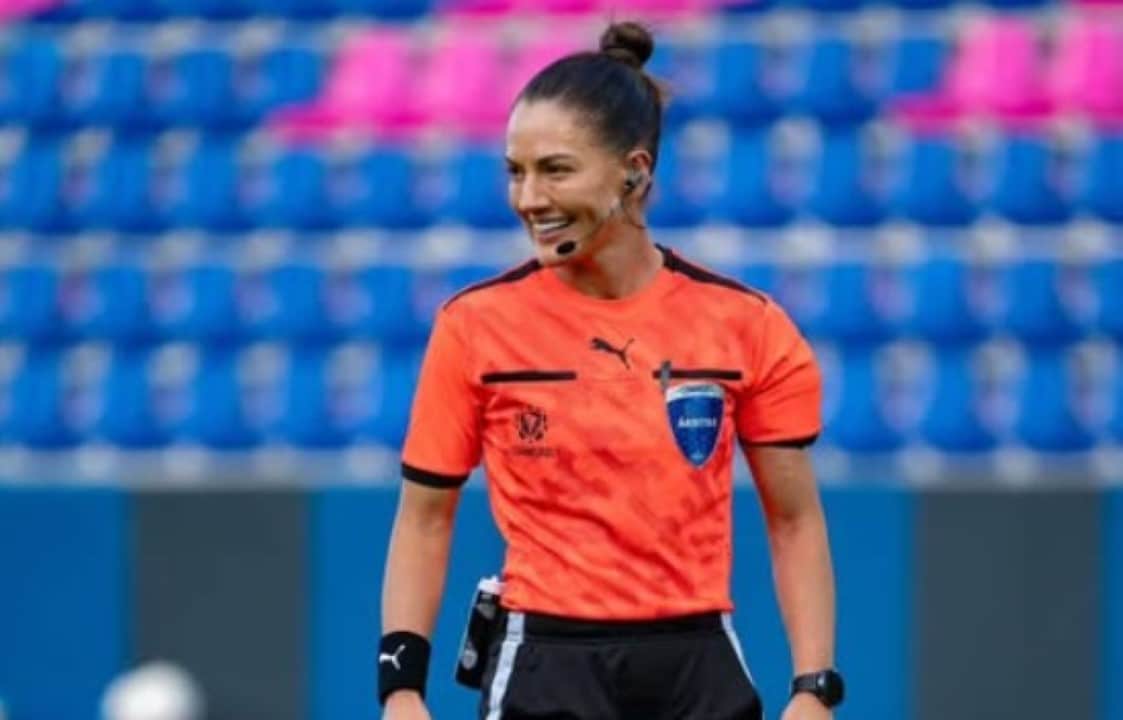
The Campeonato Paulista quarter-final match, held on February 20, 2026, marked not only the elimination of Red Bull Bragantino against São Paulo, but also a controversial episode involving refereeing. The performance of referee Daiane Muniz, aged 37, became the center of a heated debate following statements by defender Gustavo Marques. The defender of the Bragança Paulista team publicly questioned the professional’s lineup for a high-level decisive clash, suggesting that she would not be fit to lead the match, which triggered a series of immediate institutional reactions on the national sporting scene.
The case gained instant repercussion on social media and behind the scenes in football, once again raising the discussion about the resistance faced by women in positions of authority in men’s sports. The athlete’s speech was interpreted by several entities as a discriminatory act, ignoring the referee’s international CV.
Given the seriousness of the statements, government and sports bodies mobilized to repudiate the player’s conduct. The episode transcended the four lines, becoming a case of legal and behavioral analysis within the guidelines that govern current Brazilian football.
Institutional reactions and disciplinary measures
Ministério of Mulheres and Ministério of Esporte issued official notes in solidarity with the referee, emphasizing the urgent need to combat structural machismo in the sporting environment. The statements highlighted that questions based on gender harm professional advancement and equity in football, reinforcing that technical competence must be the only evaluation criterion. Federação Paulista of Futebol (FPF) forwarded the case to Tribunal of
Red Bull Bragantino’s response was administrative and financial. The club imposed a fine corresponding to 50% of the salary of Gustavo Marques, an amount that will be allocated to an Organização Não Governamental (NGO) aimed at supporting women in vulnerable situations in the city of Além of the financial sanction, the athlete was removed from the subsequent match, a measure that aims to reinforce internal zero-tolerance policies against discrimination and demonstrate alignment with global guidelines for respect in sport.
Trajectory and consolidation in the elite
Born in Três Lagoas, in Mato Grosso of Sul, Since 2018, she has played in tournaments organized by FIFA and CONMEBOL, accumulating assignments for major events. The referee was responsible for conducting the final of Copa of Mundo Feminina Sub-17, a feat that attests to her precision and ability to perform under pressure in decisive moments of world championships.
In 2023, during Copa of Mundo Feminina based in Austrália and Nova Zelândia, Muniz was part of the refereeing team in crucial games, consolidating its international reputation. Além In addition, she made history by becoming the first woman to act as a VAR official in a CONMEBOL club tournament, demonstrating adaptation to new technologies that help decisions on the field. Sua routine involves rigorous physical training and constant updates on the rules, combining refereeing with her training as a teacher.
Scenario of female arbitration at Brasil
The presence of women in charge of men’s games has grown, although it still faces cultural barriers. Relatórios recent CONMEBOL reports indicate a 30% increase in female participation in qualification courses since 2020.
Sports law experts point out that exemplary punishments, such as those applied in the recent case of Paulistão, are fundamental to changing culture. The visibility of referees like Daiane in competitions like Campeonato Saudita and intercontinental tournaments serves as an inspiration for new generations, but also exposes the ongoing need for institutional protection against harassment and prejudice in the exercise of the profession.



