
Study reveals that carbon found on Mars exceeds limits explainable by geological processes


Researchers linked to the North American space agency recently released findings that question the current understanding of the chemical composition of Planeta Vermelho. A study published in February in the scientific journal
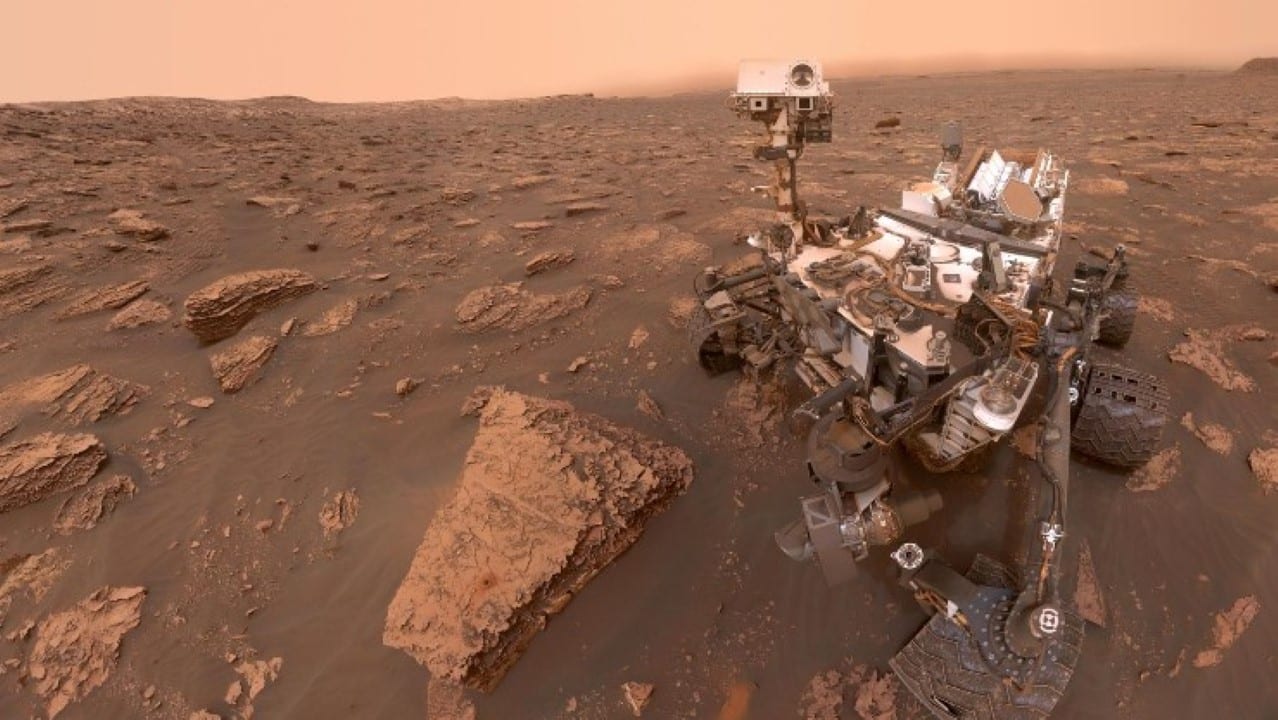
The data was collected by the rover’s mobile laboratory
The complexity of these compounds has raised the hypothesis that ancient biological sources may be a plausible explanation for the origin of these materials. Traditional geological mechanisms, according to the applied mathematical models, would produce significantly smaller volumes of these substances, which opens up new perspectives for astrobiology.
Radiation analysis and preservation
To validate the discovery, the scientific team carried out complex simulations of the Martian environment, applying doses of radiation equivalent to millions of years of exposure on the surface. The main objective was to go back in geological time and calculate the original concentration of the compounds before the natural degradation caused by cosmic rays, estimating that the rock analyzed was exposed for around 80 million years.
The results indicated that the initial raw material was far more abundant than any standard geological process could spontaneously deposit or create. Esse preservation factor, even under adverse conditions that would normally destroy organic matter, makes the remaining amount found by the rover even more intriguing to experts in the field.
Details about the molecules found
The protagonist molecules of this study belong to the class of long-chain alkanes, chemical structures that in Terra are often associated with biological processes and cell membranes. The identification of these elements in Marte, even in parts per billion, represents a considerable technical advance in planetary exploration.
It is believed that these molecules may be fragments of ancient fatty acids that were preserved in the clay and have resisted time. The rover’s analysis process, which involves heating samples to release volatiles, may have broken down even larger structures, resulting in the alkanes detected by the sensors.
This possibility reinforces the theory that the chemical complexity of Marte may have been much higher in the remote past. The presence of these compounds suggests that the environment had rich chemical conditions, differing substantially from the barren desert observed today.
Limitations of geological theories
Before suggesting any biological origin, scientists exhausted the possibilities of known abiotic sources. The first hypothesis evaluated was the contribution of organic material via meteorite impacts, frequent events on the planet’s geological time scale.
However, calculations demonstrated that the contribution of these celestial bodies would be insufficient to explain the high density of these long chains in the specific sample. The amount of exogenous material does not correspond to the concentrated volume found in Cratera Gale.
Another path investigated was spontaneous chemical reactions in the atmosphere or on the surface of Marte. While these processes are capable of generating simple organic molecules, they rarely produce complex and long structures such as dodecane in abundance.
Hydrothermal processes, which occur in underground sources of hot water, were also considered. Embora are environments favorable to prebiotic chemistry, current models still cannot fully explain the high levels found only through this route.
Perspectives for future missions
The discovery of these long-chain alkanes directs the next steps in space exploration, generating a growing consensus that the search for signs of life should focus on protected environments, such as deep underground or specific sedimentary rocks. Future Missões, like Mars Sample Return, aim to bring physical samples from



