
Dust from the Sahara desert crosses the ocean and impacts air quality in the North and Northeast of the country

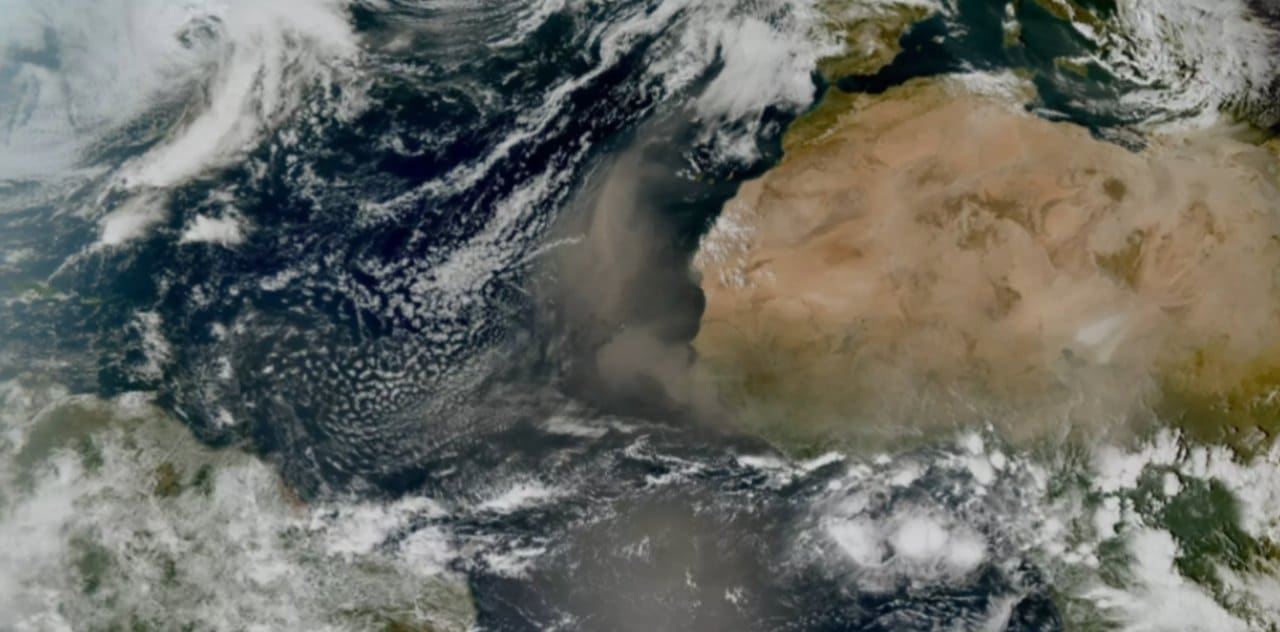
An immense cloud of mineral sediments, originating north of África, began a transatlantic crossing that caught the attention of meteorologists and climate scientists this February. The phenomenon, driven by intense winds, traveled thousands of kilometers over the ocean until reaching South American territory, demonstrating the complex interconnection of global systems. Recent Monitoramentos indicate that the mass of dry, particle-laden air directly affects states of the Norte and Nordeste regions of the Brasil.
The arrival of this particulate matter on the continent is not an isolated event, but its current intensity has generated specific warnings. Mapas atmospheric forecast showed a significant increase in the concentration of suspended particles, covering extensive swaths of the national territory. The movement of this plume is closely monitored by satellites, aiming to anticipate possible environmental changes and impacts on the routine of local populations.
Dynamics of atmospheric transport
The Saara desert is considered the largest source of mineral dust on the planet, releasing hundreds of millions of tons of sediment into the atmosphere annually. Este material is initially lifted by sandstorms and later captured by air currents at high altitudes. The trade winds, which blow from east to west in the tropical zone, act as the main driver of this displacement towards Américas.
The transatlantic journey exceeds 5 thousand kilometers and its duration varies depending on weather conditions and the strength of the winds. Apenas the finest and lightest fraction of dust can remain suspended long enough to cross the entire ocean. Esse natural process is a clear example of terrestrial atmospheric dynamics, connecting distant ecosystems through the transport of minerals through the air.
Health risks and monitoring
The main concern of health authorities refers to the presence of fine particles, technically classified as PM 2.5. Estas particles have a diameter around 30 times smaller than the thickness of a human hair, which gives them a high capacity to penetrate the respiratory system. Exposure to these high concentrations requires increased attention, especially for vulnerable groups.
The presence of these particles in the atmosphere generates immediate consequences that can be observed by the population:
– Redução of horizontal visibility, mainly affecting large urban centers and air operations.
– Alteração in the color of the sky, which tends to take on murkier, orange or reddish tones during the day.
– Potencial worsening of pre-existing respiratory diseases, such as asthma, bronchitis and allergies.
– Aumento the risk of inflammatory processes due to inhalation of fine particulate matter that can reach the bloodstream.
Experts recommend that, during periods of greater dust cloud density, the population avoids intense physical activity outdoors. Manter Closing doors and windows and using protective masks outdoors are effective preventive measures to mitigate sediment inhalation.
Ecological benefits for Amazônia
Despite the obvious risks to human health and air quality, the phenomenon plays a crucial ecological role for South American biodiversity. Dust transport from Saara is one of the main natural fertilization mechanisms of Floresta Amazônica. Wind-borne sediments are rich in nutrients, including phosphorus, which is essential for the growth of tropical vegetation.
Frequent rains in the Amazon region tend to wash nutrients from the soil, making external replacement vital for maintaining the forest. Sem this regular supply of minerals from África, the fertility of the Amazonian soil would be significantly lower, which would impact the entire production chain and local biodiversity. Este delicate balance reinforces the duality of the phenomenon, which acts simultaneously as a health risk and an ecological support.
Schedule and dispersion
Monitoring systems began to record the presence of cloudier air and dust concentrations in mid-level atmospheres from Monday, February 23. The observation confirmed the movement of the mass of particles towards the continent, serving as an early warning for authorities in Brazil and neighboring countries.
Meteorological projections indicated that the peak concentration of particulate matter would occur between February 24th and 25th. The tendency is for the dust plume to persist over the region at least until Friday, the 27th. Continued monitoring via satellite and surface stations remains essential to provide real-time data on the dispersion of dust columns and guide public health decision-making.



