
Harvard physicist points out possible artificial maneuver of object 3I/ATLAS during solar alignment

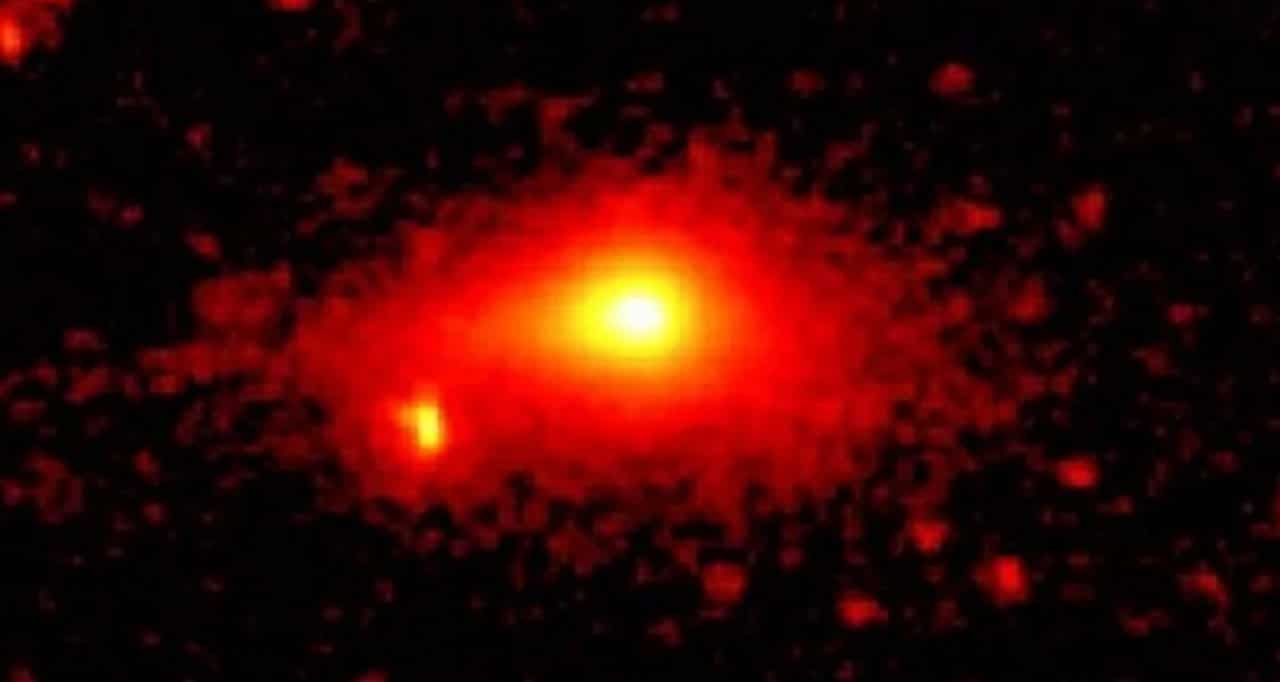
The recent passage of an interstellar visitor through the inner regions of the solar system has reignited intense debates in the astronomical community about the nature of these celestial bodies. The object identified as 3I/ATLAS carried out a unique event last October, when its trajectory placed it in direct alignment with Sol, making it invisible to terrestrial observatories during a critical period of its journey.
The temporary disappearance of the celestial body from monitoring radars coincided exactly with the moment when it would reach its maximum speed. Essa synchronization of events caught the attention of Dr. Avi Loeb, physicist from Universidade of Harvard, known for his theories about the possibility of extraterrestrial technology in our cosmic neighborhood. Para the researcher, the occultation may not have been a mere orbital chance, but a strategic window.
The theory presented suggests that the positioning of 3I/ATLAS allowed the execution of what is known in astronautics as the Oberth maneuver. The physical concept describes how a spacecraft can gain additional thrust by firing its engines at the deepest point of a gravity well, in this case, solar perihelion. Performing this procedure during the blind period of ground-based telescopes would prevent immediate detection of any artificial change in orbit.
Experts in orbital dynamics explain that the efficiency of this maneuver directly depends on the proximity to the massive body. Quanto The closer and faster the object passes the star, the greater the gain in kinetic energy resulting from additional propulsion. If the object were a technological probe, this would be the mathematically ideal time to alter its course or accelerate toward deep space.
Strategic Invisibility Window
The event timeline shows that the peculiar lineup began on October 21st. From that date onwards, the star’s intense brightness overshadowed any attempt at visual or radio tracking from Terra. Esse period of occultation lasted for eight days, covering exactly the phase of maximum approach to the object.
During this interval, 3I/ATLAS dove toward Sol without direct human supervision. The hypothesis raised by
The coincidence between the period of invisibility and the point of greatest efficiency for orbital maneuvers is the central pillar of the argument about a possible artificial origin. In human space exploration scenarios, probes often use the gravity of planets to gain speed, but executing a hidden propulsive maneuver adds a layer of complexity to the object’s behavior.
Energy potential and sun exposure
Upon reaching perihelion on October 29, the object was subjected to extreme levels of solar radiation. Cálculos astronomical data indicate that the energy exposure at this point in the orbit exceeded the 33 gigawatt mark. Para put this number in perspective, the amount of energy available would be comparable to a significant fraction of the production of the entire nuclear network of major industrial powers.
This energy density raises questions about the use of resources by supposedly advanced technology. If 3I/ATLAS had panels or collectors compatible with its hypothetical nature as a “mothership” or probe, the passage near Sol would serve not only to gain gravitational speed, but also as a massive recharge station for its internal systems.
The ability to withstand and convert such magnitude of energy would require materials engineering unknown to current science, capable of withstanding the infernal temperatures of the solar corona while operating complex systems. The theory proposes that the “privacy” guaranteed by orbital alignment would allow such collection or propulsion operations to occur without leaving thermal signatures visible to us.
Trajectory analysis and verification
The scientific method demands that extraordinary claims be rigorously tested. Confirmation or refutation of the Loeb hypothesis now depends on the detailed analysis of the object’s exit trajectory. Natural Corpos, such as comets and asteroids, follow predictable curves dictated exclusively by gravity and, to a lesser extent, natural outgassing.
Astronomers around the world are compiling post-perihelion data to see if there have been any anomalous deviations in 3I/ATLAS’ speed or direction. An acceleration that cannot be explained by known gravitational forces or the rocket effect caused by ice evaporation would be a strong indication of artificial propulsion.
The absence of a cometary tail or visible coma before perihelion had already classified the object as unusual. If telemetry data confirms a vector shift consistent with an Oberth maneuver, the 3I/ATLAS classification could migrate from natural curiosity to the center of one of the greatest discoveries in the history of space exploration.
While definitive results are not published, the scientific community maintains healthy skepticism, treating the object as natural until proven otherwise. However, the discussion opened by renowned physicists about technology signatures and orbital maneuvers broadens the horizon of the search for intelligence outside of Terra, transforming each interstellar visitor into a potential messenger of other civilizations.



