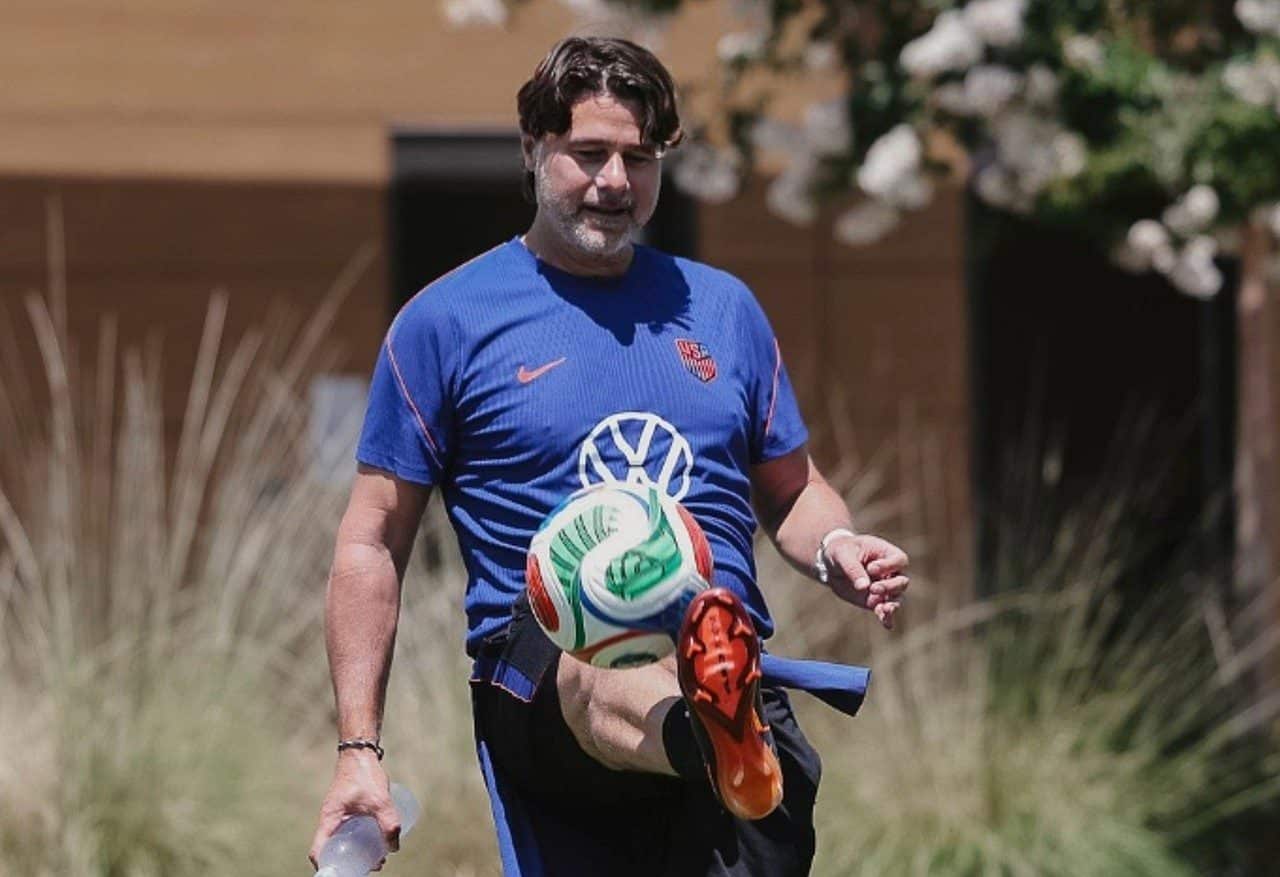
Jurgen Klopp may leave his position as global director at Red Bull after tension with the board


The former coach of Liverpool, Informações published by press outlets in Áustria indicate that severe internal wear and tear could lead to the early termination of your career at the multinational. The German professional’s current contract is expected to expire until 2029, but mutual termination is already being discussed as a real possibility for the next transfer window in the European summer.
Several factors contribute to this unstable scenario, including the perception that the expected impact of hiring the technician did not materialize in practice. Expectations surrounding global sports coordination were high, aiming for more robust integration between the network’s clubs, such as RB Leipzig and Red Bull Salzburg. However, the execution of the strategies planned by Klopp would have encountered internal resistance and results that did not satisfy the top management of the organization based in Fuschl am
- Divergences in the implementation of new training methodologies.
- Difficulties in adapting the former coach to administrative functions.
- Pressure from German club fans against the presence of Klopp in the group.
- Need for immediate reformulation for the 2026/2027 season.
Sports performance and reactions from the European market
The arrival of Jurgen Klopp into the Red Bull ecosystem was initially received as one of the biggest strategic moves in modern football, uniting one of the most successful coaches in recent history with an aggressive corporate structure. Apesar From the initial enthusiasm, the reality of daily administrative life seems to have generated friction over the autonomy of technical decisions in relation to the brand’s commercial interests. The local press highlights that the management model proposed by the German was not always in line with the processes already consolidated by the company over the last decade.
Vehicles like Salzburger Nachrichten reinforce that the departure could be made official much sooner than fans and analysts predicted when the announcement was made. The market is closely watching developments, as the availability of Klopp on the market could cause a domino effect on large clubs looking for new managers or even coaches. Red Bull’s official stance so far has been one of silence, avoiding fueling speculation while internal negotiations for an amicable exit continue behind the scenes at the club.
Oliver Glasner emerges as the main candidate for succession
The name of Oliver Glasner, current coach of Crystal Palace, gained immediate strength as the natural successor to assume the responsibilities left by Klopp. Glasner has a deep history with the Red Bull philosophy, having previously worked within the company’s structure and demonstrated competence in high-level European competitions. Essa familiarity with the group’s game system and talent management makes the Austrian the safest option to stabilize the global sporting project after the German’s possible departure.
The transition to Glasner would be seen as a return to the tactical roots that have defined Red Bull’s success on the international stage in recent years. Enquanto Klopp is known for its charismatic leadership and people management, Glasner offers a profile more aligned with the rigorous technical execution required by the brand’s directors. The movement would indicate a change in priority, focusing less on the marketing of a global figure and more on the operational efficiency of clubs spread across the world, from Alemanha to Brasil and Estados Unidos.
Fan resistance and impact on public image
Klopp’s decision to join Red Bull was controversial from day one, especially among fans of his former clubs such as Mainz 05 and Borussia Dortmund. Muitos fans interpreted the move as a betrayal of the traditional values of German football, which often criticizes the business model based on massive corporate investment. Faixas protest and constant criticism on social networks may have weighed on the professional’s assessment of the viability of his long-term continuation in the management position.
The emotional strain of dealing with rejection from part of the German fan base added to the professional challenges of a role that requires less field and more office space. Jürgen Klopp has always been a figure driven by passion from the stands, and the distance from this energy seems to have affected his enthusiasm for the project. Analistas sports suggest that leaving early could be a way of preserving their historical image before the wear and tear on the board and the public becomes irreversible or detrimental to their biography in sport.
Structural reorganization and the group’s next steps
If Klopp’s departure is confirmed in mid-2026, Red Bull plans a complete reorganization of its sports command structure to avoid power gaps. The idea is to decentralize some of the functions that were concentrated in the position of global director, allowing each regional unit to have more autonomy under more technical and less centralized technical supervision. Este adjustment aims to accelerate the revelation of young talents, which is the central pillar of the company’s business model in international football.
The exit process will require complex financial agreements, given the value of the contract and the confidentiality clauses involved in managing one of the biggest sports brands on the planet. The expectation is that a joint statement will be issued as soon as the terms of the termination are finalized, ensuring a transition that does not affect the teams’ performance on the field. The main focus remains on the stability of the RB Leipzig in the Bundesliga and on maintaining the competitiveness of the
Future of Klopp after administrative experience
Red Bull’s departure raises immediate questions about the next fate of Jurgen Klopp, who had previously declared her intention to take an extended sabbatical. His short experience as a director may have rekindled his desire to return to the sidelines, where his success is widely recognized and undeniable. Clubes elite and national teams are certainly monitoring the situation, awaiting any sign that the coach is ready to take on a new technical project with high impact on the global stage.
Although the management position offered a different perspective on football, the competitive essence of Klopp seems to be more linked to the direct training of athletes than to corporate strategy. If he decides to return to coaching, the coaching market will immediately increase in value, with speculation linking his name to European powers seeking renewal. For now, the professional’s focus remains on resolving his issues with Red Bull in a professional and discreet manner, closing a chapter that proved to be more challenging than originally anticipated.
History of Klopp and the relationship with modern football
Klopp’s trajectory has always been guided by long-term projects and deep connections with the communities where he worked, which contrasts with the often cold nature of multinational management. In No Liverpool, he rebuilt the identity of a giant, while in Borussia Dortmund he challenged the hegemony of Bayern’s Munique with a vibrant style of play. The attempt to transfer this success to the administrative environment of Red Bull was a bold experiment that now seems to be coming to an end, highlighting the difficulties of transition between different spheres of sport.
Klopp’s legacy will not be tarnished by a short stint on the board, but will serve as a case study in how great figures in the field adapt to executive roles. Modern football demands a rare combination of skills that don’t always translate seamlessly from one role to another, regardless of level of technical knowledge. The possible departure of Red Bull marks the end of an attempt at personal innovation by the German, who now finds himself once again faced with an open range of possibilities for his successful career.