
Resident Evil Requiem in-depth analysis shows distinct performance on PS5, Switch 2 and Xbox Series S

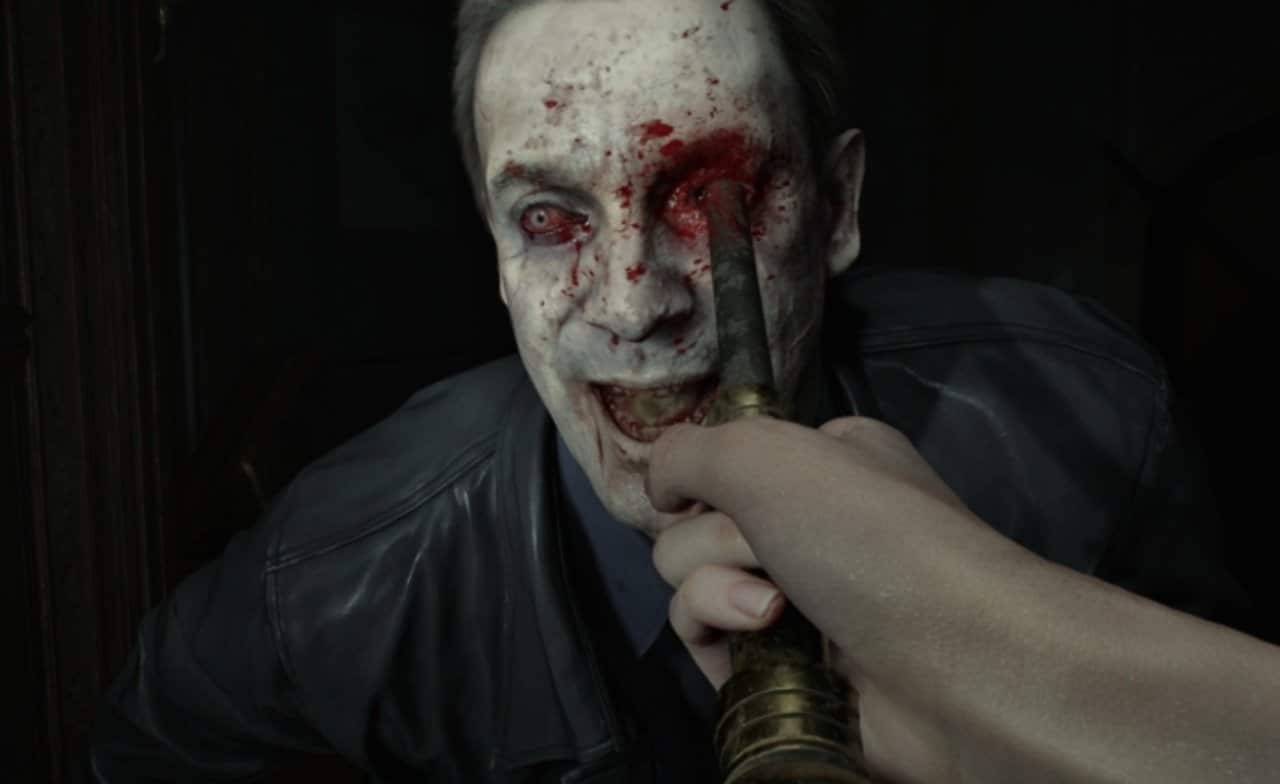
With the launch of Resident Evil Requiem approaching, the community of gamers and technology experts has already begun to observe the first comparisons of the title running on the main platforms available on the market. Esses videos and technical analyzes place the PlayStation 5, Nintendo Switch 2 and Xbox Series S versions of the game side by side, with a particular focus on the capabilities and limitations of the new Nintendo console, which generates great expectations among consumers. The results point to notable variations in performance and graphical fidelity, determining different experiences for each user.
A peculiarity identified in the console versions is the absence of selectable graphics modes, a practice that has become common in current games to allow players to prioritize performance or visual quality. No Xbox Series S, Resident Evil Requiem operates at a base resolution of 600p, which is then upscaled to 1080p through upscaling techniques, aiming for a target of 60 frames per second. Já for PlayStation 5 owners, the base is more robust, starting at 1080p and scaling to 2160p, the equivalent of 4K, also with the aim of reaching 60 FPS.
Performance on platforms: an initial overview

The new Nintendo Switch 2, in turn, presents performance scenarios that adapt to the way of use. Quando docked, the game renders at 720p and is upscaled to 1080p, aiming for the same 60 frames per second. In portable mode, the internal resolution drops to 468p, and is also scaled to 1080p, maintaining the target of 60 FPS. Apesar of all platforms having a target of 60 FPS, Switch 2 is the one that shows the most difficulties in maintaining this stability, registering noticeable drops in moments of greater visual and action intensity.
Technical experts suggest that the inclusion of an option to lock the frame rate at 30 FPS could provide a more constant fluidity on the Nintendo console, minimizing the fluctuations that affect the experience. Esta feature, although less desired in terms of responsiveness, often ensures smoother gameplay on devices with more limited processing power. Frame stability is a crucial factor for immersion in fast-paced games like Resident Evil Requiem.
The performance of the Nintendo Switch 2
The version from Resident Evil Requiem to Switch 2, specifically, has been the subject of detailed analyzes that highlight both its achievements and its weaknesses. The portable device shows an impressive ability to run a visually demanding title, but the compromises to achieve the desired performance are clear. The drops in frame rate, although noticeable in complex scenes, do not completely compromise gameplay.
Even so, the experience in portable mode, with a base resolution of 468p, is evaluated as usable. Essa adaptability allows players to enjoy the game on the go, something not all platforms offer. The ability of a portable console to run a game of such scope is a testament to technological evolution despite the intrinsic limitations of the hardware.
Still in the context of Switch 2, there was criticism regarding the lack of mandatory support for VRR (Variable Refresh Rate) when the console is in docked mode. VRR is a feature that allows the screen to synchronize its refresh rate with the console’s frame output, smoothing performance fluctuations and avoiding image tearing. Sua presence could have mitigated some of the performance inconsistencies observed on the console.
Visual quality and graphical compromises
In terms of visual fidelity, both Nintendo Switch 2 and Xbox Series S exhibit some reductions compared to the PlayStation 5 version. Tais optimizations are necessary so that the game can run satisfactorily on platforms with different hardware capabilities.
Despite the optimizations, the Nintendo console surprises in some visual aspects. In certain scenarios, the internal resolution at which the Switch 2 renders the game is higher than that of the Xbox Series S, which results in a sharper image in certain passages. Além Furthermore, some textures in the Switch 2 version were considered slightly better in direct comparison to the Series S, demonstrating careful optimization work by the Capcom development team for the specific hardware.
These differences highlight the challenge of developing multiplatform titles that maintain a cohesive experience on hardware with such different architectures and powers. The balance between visual quality and performance is a constant in the industry, requiring creative solutions for each console. The way details are sacrificed or maintained can directly influence the player’s perception of the game’s quality.
Optimization work in contemporary games involves difficult choices. Reduzir the complexity of the geometry, for example, reduces the number of polygons that the GPU needs to process each frame. Da Likewise, lower resolution textures or simplified shadows ease the burden on memory and graphics processing, allowing the game to meet performance targets on less powerful hardware.
Loading times and optimization
Loading times on Resident Evil Requiem also reveal a distinction between platforms, being slightly longer on Nintendo Switch 2. Embora the times are not excessively long to the point of making the game unfeasible, they are noticeable when compared to more advanced platforms.
Loading optimization is a vital aspect of the smooth experience in modern games, especially those with large maps or frequent transitions between areas. Desenvolvedores employ various techniques to mask or reduce these times, such as hint screens or background narratives. The difference in loading times highlights the variations in the I/O (Input/Output) architecture between platforms, which directly impacts the speed at which game data is read and processed.
Enhancements on PlayStation 5 Pro
Although the base PlayStation 5 does not offer selectable viewing modes, maintaining a fixed frame rate of 60 FPS, Capcom has prepared an enhanced experience for the PS5 Pro. Esta’s most powerful version of the console allows players to enable or disable Ray-Tracing, an advanced lighting technology that simulates the physical behavior of light to create more realistic reflections, refractions and shadows. By disabling Ray-Tracing on the PS5 Pro, the target frame rate can rise to 120 FPS, with swings ranging between 85 and 120 FPS, offering even greater fluidity for those who prioritize absolute performance. Além of the improvements in
The ultimate player experience
Developed by the renowned Capcom, The Switch 2’s ability to run the title, even with some concessions, demonstrates the potential of the new Nintendo console in the current gaming scene.



