
The post-credits scene of the fourth season of Bridgerton reveals the details of the protagonists’ outcome

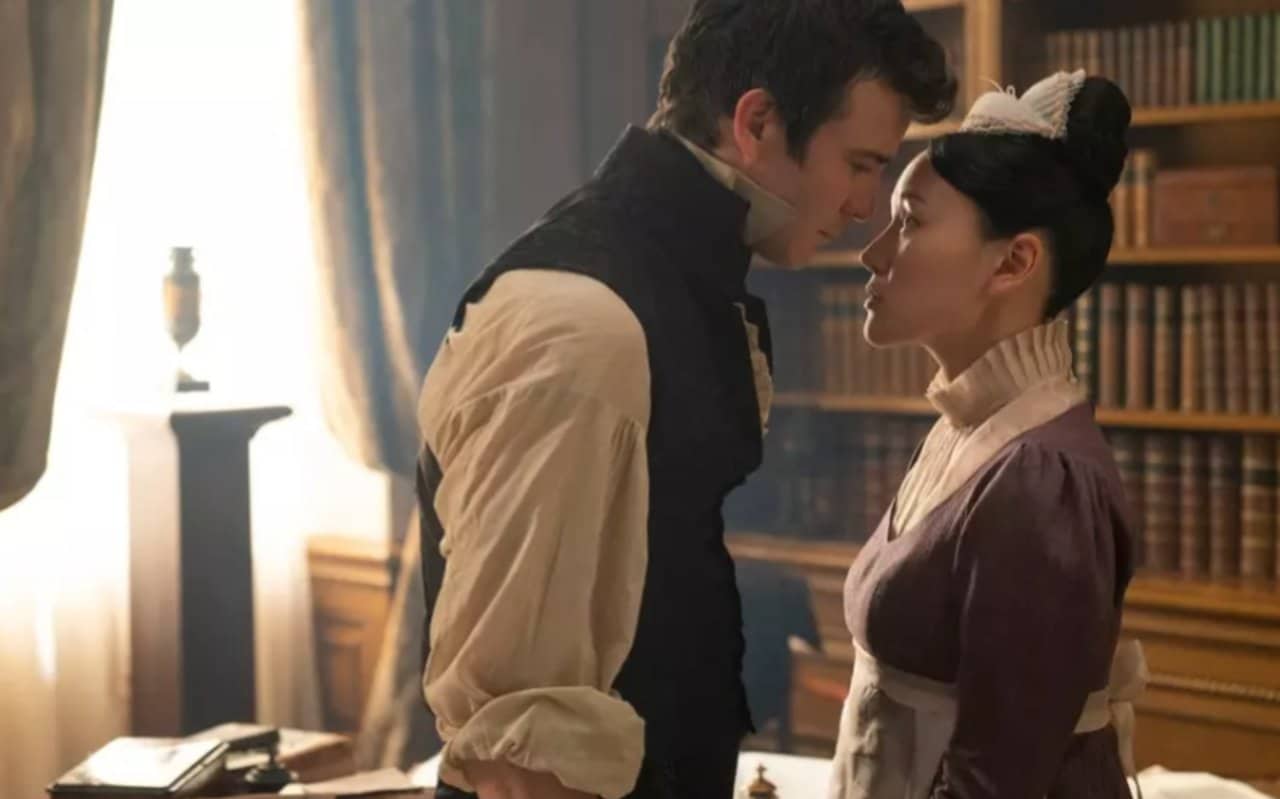
The fourth season of Bridgerton, now available on Netflix, ended with a break from tradition that surprised viewers. Unlike previous cycles, which presented a “fast-forward” to the protagonists’ marital life right at the main outcome, the narrative of the romance of Benedict and Sophie reserved its climax for a moment after the credits.
This strategic shift kept the audience in suspense, waiting to understand the fate of the second son Bridgerton and his beloved. Expectations revolved around how the series would adapt the final events of a long-awaited relationship, which traditionally culminated in a vision of the already established future.
The decision to move the most anticipated scene to a post-credits period not only innovated the narrative structure, but also reinforced the importance of the couple to the overall plot. The crucial scene promises not only to seal the union of the characters, but also to deepen the understanding of their individual and collective journeys.
The new approach to the final scenes

The first three seasons of Bridgerton established a clear pattern for its conclusions. Daphne and Simon, Anthony and Kate, and Penelope and Este format served as a kind of happy epilogue, confirming the stability and success of the relationships developed.
However, the conclusion of the fourth season, focused on Benedict and Sophie, opted for a different path. The main final episode ended with the couple still at the Rainha Charlotte dance, after the marriage proposal, leaving the formalization of the union and other important developments for a special segment after the opening credits, generating new expectations among fans.
The moments of the post-credits ending
It is in the post-credits scene that fans finally witness the long-awaited wedding between Benedict Bridgerton and Sophie Beckett. The ceremony takes place in an intimate way, with Sophie being accompanied to the altar by her friend Alfie, a detail that highlights the character’s journey of overcoming, as she did not have a traditional family to support her.
The sequence also offers a moment of family reconciliation, with Anthony Bridgerton, the older brother, and Visconde, apologizing to Benedict. Este gesture reflects Anthony’s recognition for not having supported his brother’s union with Sophie initially, demonstrating maturity and unity within the Bridgerton clan.
Additionally, the scene includes brief dialogue between Kate and Eloise. Kate expresses curiosity about “who will be the next to get married”, while Eloise responds, with her usual sarcasm and independence, that she loves weddings, but “as a guest”, reaffirming her aversion to the social conventions of marriage to herself.
The journey of Benedict and Sophie
Benedict Bridgerton’s path to the altar with Sophie Beckett was marked by encounters and disagreements, social dilemmas and the search for his artistic identity. Desde the first masquerade ball where he met her, Sophie, an illegitimate daughter, captivated Benedict with her intelligence and beauty, but the social barriers of the time made their relationship a constant challenge. Benedict’s persistence in breaking these conventions, combined with the resilience of Sophie, who faced adversity as a servant, formed the backbone of a romance that fans eagerly anticipated. Este outcome not only crowns their love, but also represents a victory against the rigid norms of the Regency society that the series explores so much.
Marriage Details and Family Forgiveness
The wedding between Benedict and Sophie in the post-credits scene is a moment of great significance, not just for the couple, but for the entire Bridgerton family. The presence of Alfie, leading Sophie to the altar, highlights the importance of bonds of friendship and the formation of a family by choice, given Sophie’s complicated history.
Anthony’s apology to Benedict is a crucial point, demonstrating the evolution of Anthony’s character and the strengthening of their brotherly relationships. Ele recognizes his initial prejudice and embraces his brother’s happiness, consolidating the family union.
The art of Benedict and the Dama of Prateado
The series ends with a painting of Sophie, portrayed as the “Lady of Prateado”, a work created by Benedict. Este detail is symbolic and of great importance for the development of Benedict’s character. Throughout the seasons, Benedict’s passion for art and his difficulty in finishing his work were recurring themes, reflecting his search for purpose and self-expression outside of his family’s social expectations.
The completion of Sophie’s painting represents not only the realization of his artistic talent, but also the meeting of his muse and his true self. Dama’s image of Prateado is a direct reference to the Julia Quinn books, where Sophie first appears at a masquerade ball, enchanting The ending Este reinforces that the love between them was the missing piece for Benedict to find his full fulfillment, both in his personal and artistic life.
Repercussion and future of the series
The decision to present the final scene of Benedict and Sophie as a post-credits epilogue generated wide discussion among viewers and specialized critics. Muitos considered the approach a clever way of maintaining the “fast-forward” tradition while creating an element of surprise and exclusivity. The measure also highlights the importance of the final moments for the complete season experience.
The Bridgerton universe continues to expand, with Netflix already planning the next adaptations of the Julia Quinn books. The expectation is that each new season will focus on one of the Bridgerton brothers, following the literary order or adapting it according to the dynamics of the series.
The series is known for its cultural impact, popularizing the period romance subgenre and influencing fashion and decoration trends. The attention to detail from the Regency period, combined with a modern narrative, guarantees its prominent place in the streaming platform’s catalog.
The developments in the relationships of the other brothers, such as Eloise and Francesca, are now the center of speculation. The series needs to maintain a balance between fidelity to the books and introducing narrative elements that captivate both readers and new fans.
The global phenomenon of Bridgerton
Bridgerton has established itself as a global phenomenon since its debut. The production, which mixes period romance with a vibrant and inclusive aesthetic, quickly won over millions of viewers around the world. Seu’s success boosted the careers of several actors and reinforced Netflix’s commitment to large-scale narratives and diverse appeal. The series not only attracts with its love plots, but also for exploring issues of class, race and gender in a contemporary way, within a historical context.
The adaptation of the Julia Quinn novels has proven to be a successful formula, with each new season being eagerly awaited. The impact of the series goes beyond entertainment, generating discussions and analyzes about representation and the relevance of stories set in the past.




