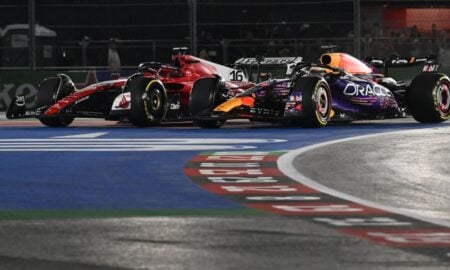
Aston Martin faces critical Honda engine failures and seeks urgent solutions for excessive vibrations


The Japanese manufacturer identified a severe defect in the power unit supplied to the British team during preparatory sessions for the world motorsport championship. The central problem involves abnormal oscillations that resulted in physical damage to the battery, forcing the team to suspend several track activities scheduled for the testing period and triggering a red alert on the eve of the season opener.
These unexpected vibrations arose from a complex interaction between the internal combustion engine and the energy recovery system, creating a resonance that the car’s structure was unable to adequately dissipate. Honda officially confirmed that the incident occurred repeatedly during the sessions, which drastically limited the mileage and number of laps completed by the drivers, hampering the collection of essential data for the development of the car.
Executives from the automaker, in a statement made this Friday, February 27, highlighted the seriousness of the situation, but reinforced that corrective measures are already in an advanced phase of implementation. Technical collaboration with Aston Martin has been intensified in the last few hours to ensure a definitive solution is in place before cars hit the track for Grande Prêmio from Austrália.
The situation generates apprehension behind the scenes, as reliability is a fundamental pillar for success under the new rules of the category. Engenheiros from both parties work double shifts, using telemetry data and virtual simulations to redesign components and adjust electronic parameters that can mitigate the failures observed in the circuit.
Technical failure details
Preliminary analysis indicated that excessive vibrations were directly affecting the integrity of the battery, a vital component for the hybrid performance of the new power units. Engineers observed that the problem manifested itself more acutely at high speeds, compromising not only the durability of the parts, but also the overall energy efficiency of the powertrain.
Simulations carried out at the Honda base of operations, in Sakura, revealed that the current assembly structure contributed significantly to the amplification of these mechanical oscillations. Diante In addition, the technical team needed to adjust the final test plan on the track, prioritizing short runs to avoid a total collapse of the system and preserve the remaining components for laboratory analysis.
The diagnosis points to a failure to predict the harmonic interactions between the chassis and the V6 engine. Ferramentas Advanced modeling techniques are now being used to map these destructive frequencies and develop brackets and mounts that better isolate the battery from the vibrations generated by the engine running at full speed.
Impacts on the testing schedule
During the second week of evaluations at Bahrein, Aston Martin recorded just 334 laps, the lowest number of any team on the grid. Esse reduced running volume severely impacted the team’s ability to understand the new car’s aerodynamic behavior and find the ideal setup for different track conditions.
The starting drivers, including veteran Fernando Alonso, faced frequent interruptions to their training programs, with unscheduled stops on the track that led to red flags. Honda publicly took responsibility for these setbacks, adjusting the work schedule to focus almost exclusively on remote diagnosis and equipment preservation.
In addition to the lack of mileage, pure performance was also below initial expectations. Dados maximum speed (speed traps) indicated deficits in relation to direct competitors, suggesting that the Honda engine had difficulty maintaining electrical power delivery efficiently while dealing with parasitic vibrations.
Patch and update strategies
Honda mobilized additional engineering resources to investigate the root cause of the problem, combining virtual dynamometer testing with physical analysis of the damaged components. The recovery plan involves immediately implementing updates to power management software to alter torque delivery cycles to avoid resonant frequencies.
At the same time, intense discussions are taking place between the automaker’s engineers and the Aston Martin design department to reinforce the physical integration between the chassis and the power unit. Essa integrated approach seeks to prevent recurrences in real racing conditions, where lateral and longitudinal loads are even more severe than in tests.
- Implementation of new software control algorithms to reduce vibrations in real time.
- Installation of structural reinforcements in the battery fixing assembly for greater mechanical resistance.
- Direct collaboration with material suppliers to develop more robust and lightweight composites.
- Adjustments to the mapping of the internal combustion engine to optimize power delivery without compromising durability.
History and challenges of the partnership
The union between Honda and Aston Martin was announced in 2023, marking the return of the Japanese manufacturer as an exclusive supplier starting this season. However, the development of the new unit faced logistical and operational challenges, including maintaining a skeleton crew during the transition period until the final signing of the agreement.
This pause in full development affected the rate of progress, resulting in the teething problems observed now. Aston Martin, in turn, invested heavily in infrastructure, opening a new wind tunnel and factory facilities to complement the technology provided by the Japanese, hoping that the fixes will allow for a quick recovery in the championship.
Logistical preparations for Austrália
With Grande Prêmio of Austrália scheduled for next weekend, Honda is working urgently to deliver the updated units on time. The logistics for Melbourne are complex and do not allow for delays, requiring that modified parts be sent by air as soon as they are validated on the test benches in Japão.
The technical team will travel to the Albert Park circuit in advance to supervise the installation and static testing of the new power units. Essa thorough preparation aims to minimize the risk of unexpected failures during free practice, ensuring that pilots can focus on driving and not just managing mechanical problems.
Despite the setbacks, the automaker remains committed to the sustainability goals of the new rules, which prioritize synthetic fuels and greater electrical efficiency. Resolver the vibration problem is seen not only as a competitive necessity, but as a crucial step towards validating the robustness of the green technologies implemented in the new engine.
Outlook for the season
The incident highlights the critical importance of reliability in current regulation. Rival teams are closely observing Aston Martin’s difficulties, adjusting their own strategies to capitalize on any weakness in their opponents in the first stages of the World Cup.
Honda sees setbacks as an opportunity for accelerated learning, seeking to transform failures into data to strengthen the power unit for the intense disputes to come. The season promises fierce competition between manufacturers, and the ability to react quickly will be decisive for the success of the Japanese-British partnership.