
Fiat expands production in Serbia with new seven-seat hybrid SUV focused on families

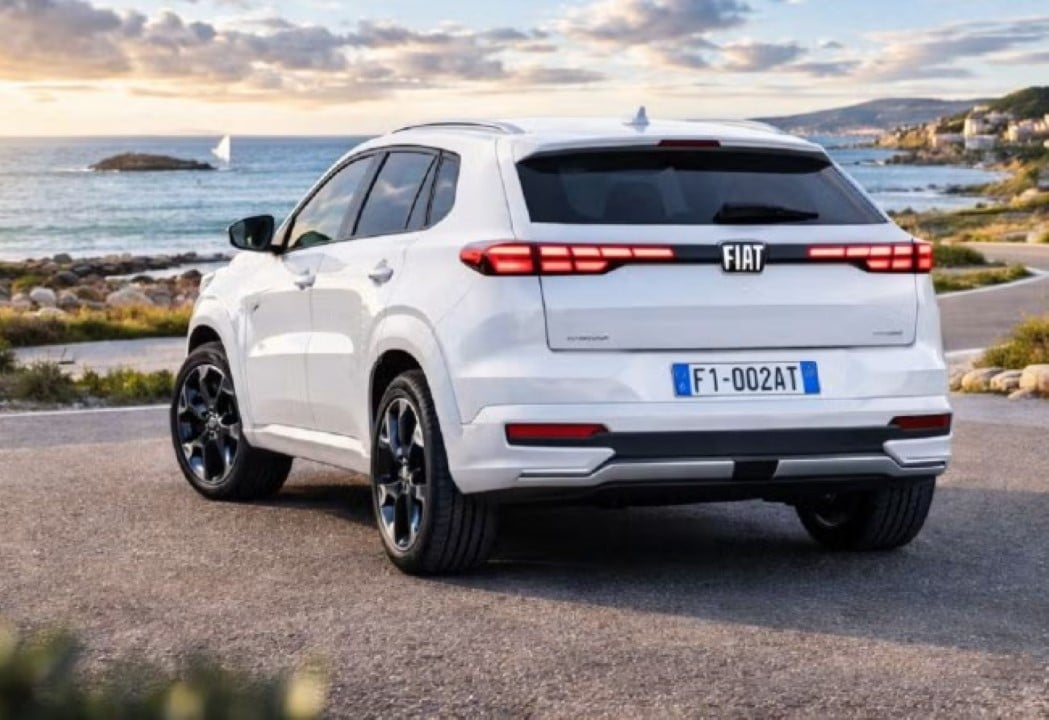
The global automotive industry is closely watching the strategic movements of Fiat, which is making decisive progress in the development of its new large sports utility vehicle. The Italian automaker, part of the Stellantis conglomerate, has consolidated plans to manufacture an unprecedented model capable of accommodating seven passengers, aiming to fill an important gap in the affordable family vehicle segment. Production will be concentrated at the Kragujevac industrial unit, at Sérvia, a factory that receives robust investments to adapt to new electrification platforms and which historically plays a central role in the brand’s manufacturing at
This new project is treated internally as a fundamental piece for the renewal of the company’s portfolio, aligning itself with the new visual and functional identity inaugurated by the Grande Panda concept. The proposal is to offer a vehicle that combines robustness, versatility and, above all, cost-benefit, challenging direct competitors that have gained ground on the European continent with low-cost proposals. Fiat’s strategy is to democratize hybrid technology, making it viable for large families who need space, but who find few electrified options in intermediate price ranges.

The development of the SUV follows an accelerated schedule, driven by the need to meet stringent emissions standards without compromising the financial accessibility of the final product. The brand’s engineering team opted for pragmatic solutions that balance energy efficiency and durability, essential characteristics for the target audience of this launch. The choice of Sérvia as a production hub also reflects a logistics and industrial optimization tactic, taking advantage of existing infrastructure to ensure global competitiveness.
The arrival of this model marks a new phase for Fiat, which seeks to reaffirm its leadership in the practical and functional car segment. With a design inspired by the square and utilitarian lines that established the original Panda, the new SUV promises to maximize internal space through an intelligent architecture, offering comfort for all occupants and a load capacity adaptable to the demands of modern everyday life.
Motorization and energy efficiency strategies
At the heart of this new SUV is mild hybridization technology, technically known as MHEV (Mild Hybrid Electric Vehicle). Fiat decided to equip the model with a 48-volt system, a solution that has proven to be extremely effective in reducing fuel consumption and pollutant emissions without the complexity and high cost of plug-in hybrid or fully electric systems. Esta technical choice is crucial to keeping the vehicle’s price competitive, one of the central pillars of the project.
The mechanical set must be led by the 1.2 PureTech engine, a propellant widely used within the Stellantis group and recognized for its thermal efficiency. Integration with the auxiliary electrical system allows the combustion engine to be switched off in situations of low demand or during deceleration, providing significant savings in urban cycles. Além Furthermore, the system offers additional torque when starting off, improving the drivability of a vehicle which, due to its seven-seater nature, tends to be heavier.
For energy storage, the automaker chose to use lithium iron phosphate (LFP) batteries. Esta accumulator technology is crucial to the economic viability of the project, as it has a lower production cost than conventional lithium-ion batteries, in addition to offering an extended useful life and greater thermal safety. The adoption of LFP cells demonstrates engineering’s commitment to seeking solutions that benefit the end consumer, reducing long-term maintenance and ownership costs.
The calibration of the hybrid system is being refined to prioritize comfort and smoothness in the transition between operating modes. The objective is to deliver a driving experience that is intuitive and does not require changes in the driver’s habits, facilitating the migration of owners of traditional combustion vehicles to the new era of electrification.
Functional design and use of space
The aesthetics of the new SUV, often referred to as “Giga Panda” behind the scenes, adopts a design philosophy focused on extreme functionality. The straight lines and boxy silhouette are not just stylistic choices, but engineering imperatives to ensure maximum use of the internal volume. In a seven-seater vehicle with compact dimensions for the category, every cubic centimeter is valuable, and the vertical shape of the rear allows the third row of seats to be accommodated with dignity for passengers.
The Smart Car platform, the basis on which the vehicle is built, offers the modularity necessary to create a flexible interior. Espera The model features intelligent storage solutions and folding seats that allow multiple configurations, transforming the car from a passenger carrier into a cargo vehicle in just a few movements. Versatility is the watchword, aiming to cover everything from school transport during the week to leisure trips on the weekends.
The interior should follow the digitalization trend, but with a simplified and durable approach. Materiais easy cleaning and high resistance should be prioritized, consistent with intense family use. The onboard technology will focus on essential connectivity and active safety, offering driving assistants that add real value to everyday life, without excesses that make the product unnecessarily expensive.
Market positioning and competition
The launch of this SUV puts the Fiat on a direct collision course with brands that have dominated the entry-level segment in the Europa, specifically the Dacia with the Bigster model. The competition promises to be fierce, with the Italian automaker betting on the strength of its brand and the reliability of its assistance network to attract consumers looking for a rational vehicle, but with design and personality.
Production at Sérvia is strategic to supply not only the European market, but also to serve as an export base for other emerging regions where demand for seven-seater vehicles is high. The Kragujevac factory, which ended production of the Fiat 500L, underwent a profound modernization to receive the new assembly line, guaranteeing global quality standards for the new utility vehicle.
Market analysts point out that the success of this model will fundamentally depend on the launch price. If Fiat manages to position the hybrid SUV in a competitive range, it could capture a significant share of families who are currently forced to turn to the used market to find vehicles with this passenger capacity.
The initiative reinforces the role of Fiat within Stellantis as the brand of accessible and intelligent mobility. Enquanto other brands in the group focus on premium or performance segments, the Italian house maintains its historical vocation of creating cars for the people, adapting this mission to the contemporary challenges of sustainability and energy efficiency.



