
Moon and four planets visible to the naked eye in the Brazilian sky until February 28


Lua and four planets from Sistema Solar appear simultaneously in the Brazilian sky during the last week of February. The phenomenon allows naked-eye observation across the country shortly after sunset. Especialistas and Observatório Nacional confirm that Vênus, Mercúrio, Saturno and Júpiter stand out in the western band of the horizon. Netuno and Urano participate in the cluster, but require telescopes for viewing.
The event began on February 18th and runs until Saturday 28th. Astrônomos explain that celestial bodies are concentrated in the same region of the sky due to the common orbital plane. Visibility occurs at twilight, when the sky darkens enough to reveal the bright stars.
How to identify the planets in the sky
Venus stands out as the brightest point just after dusk. Júpiter appears high in the sky, near the constellation Gêmeos. Saturno and Mercúrio are lower, close to the western horizon.
Lua, in a growing phase close to full, complements the scene and is a few degrees from Júpiter at times. Observadores must look for places with a horizon free of obstacles and clear skies.
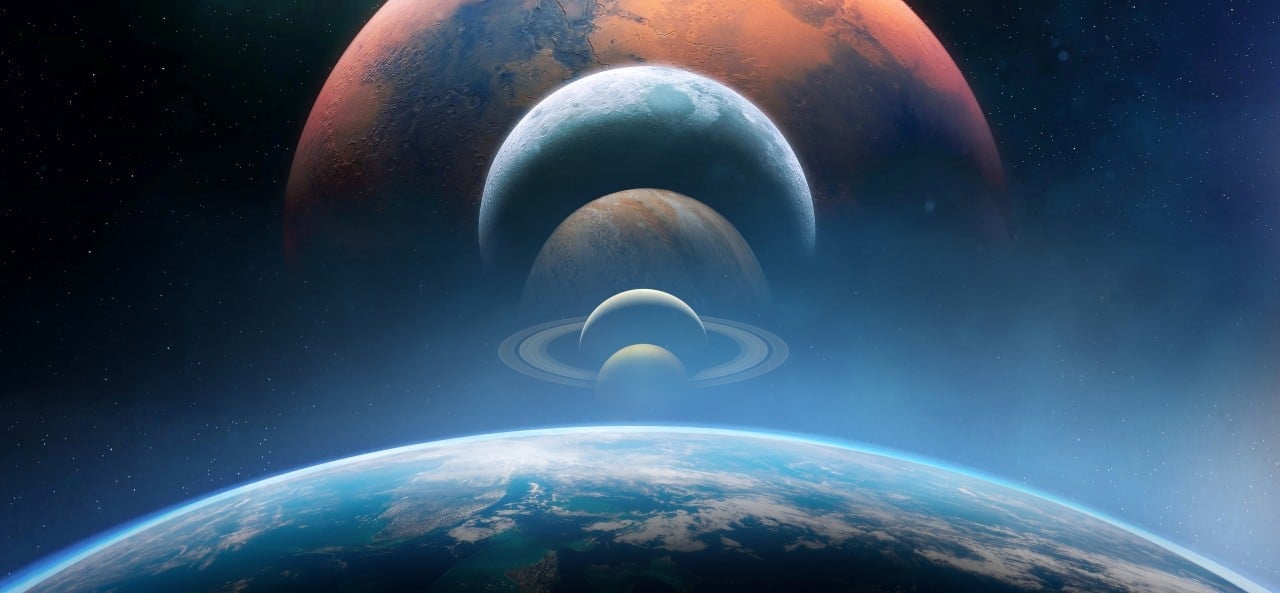
Explanation of the clustering phenomenon
The term planetary alignment describes the visual appearance of Terra. The planets don’t form a perfect straight line in space, but they appear close when viewed from here. The elliptical orbits and different periods create these configurations periodically.
Astronomer Gabriel Hickel, partner of Observatório Nacional, compares the event to observing a line of people standing inside it. The terrestrial perspective makes the stars group together in a piece of the sky.
Tips for better observation
Choose times between 30 and 60 minutes after local sunset. Evite areas with light pollution to increase contrast. Aplicativos of astronomy help you locate exact positions.
The phenomenon occurs throughout the national territory without the need for special equipment for the four main planets. Condições Favorable weather maximizes visibility.
Details about the visibility of the planets
Venus appears first and shines brightly due to its proximity to Sol and reflective atmosphere. Mercúrio appears briefly before setting, requiring quick attention. Saturno shows a slight yellowish tone, while Júpiter shows a constant and high brightness.
The Lua adds a dynamic element to the scene. Sua position varies slightly each night, moving closer or further away from the planets.
Astronomical importance of the event
These configurations help astronomers study orbital motions and refine models of Sistema Solar. Eventos similar events occurred in previous years, but this one brings together multiple stars visible without instruments.
The grouping reinforces public interest in astronomy. Muitos use the moment to begin regular observations of the night sky.
Observation in different regions
In Brasil, the time varies depending on the local zone. In coastal areas, the western horizon makes it easier to see Mercúrio and Vênus. Regiões indoors benefit from less light interference.
The event is risk-free and can be enjoyed by anyone interested.




