
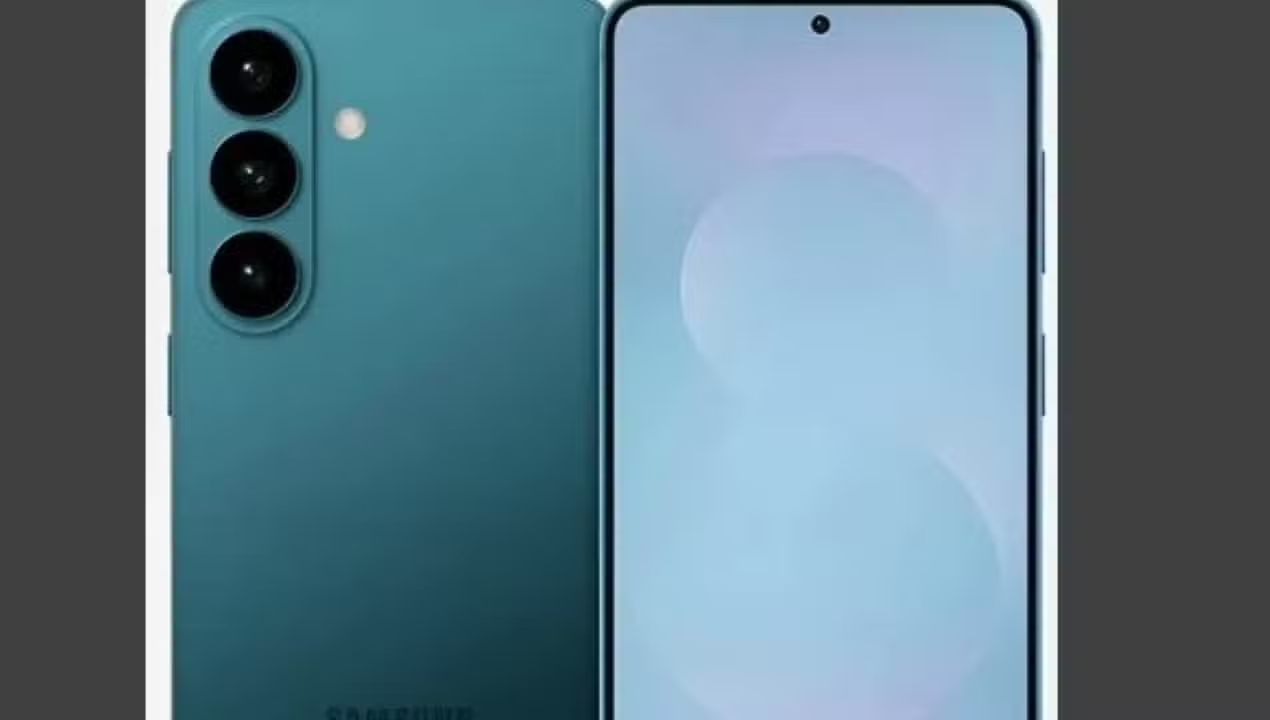
Samsung launched the Galaxy S26 line in the Brasil with official prices reaching R$15,499 for the 1 TB Ultra version. Consumidores carefully evaluate previous generations, as the increase in cost in new models does not bring drastic differences in daily use for most people. The Galaxy S25 and S25+ maintain a screen, set of cameras and battery capacity very close to the equivalents of the S26 series, but appear in promotions for much lower prices at major retailers. Lojas apply coupons and cash discounts that significantly reduce the investment necessary to have a premium device from Samsung.
Pre-sales for the S26 line began on February 25, 2026, with deliveries scheduled for March 20. The devices incorporate advances in processors, artificial intelligence features and screen privacy, but many users consider that the leap in performance does not justify the full price compared to the previous generation.
Official prices for the Galaxy S26 series at Brasil
The Samsung positioned the S26 line with higher values than its predecessor in almost all variants. The Galaxy S26 starts at R$7,499 in the 256 GB configuration and reaches R$9,099 in the 512 GB configuration. The S26+ starts at R$9,199 (256 GB) and reaches R$10,799 (512 GB). The top of the line, Galaxy S26
These prices reflect adjustments in the cost of components such as memory and dedicated AI chips. Fatores market and exchange rates also influenced the high positioning in the Brazilian launch.
Why the Galaxy S25 stands out as an alternative
The Galaxy S25 features a 6.2-inch Dynamic AMOLED 2X screen with similar resolution, a triple set of rear cameras and a 4,000 mAh battery. Modelos of 256 GB appears on offers for around R$3,697 with coupons on large marketplaces. The Snapdragon 8 Elite processor combined with 12 GB of RAM guarantees fluidity in heavy games, multitasking and prolonged use.
The S25+ follows the same logic with a 6.7-inch screen, identical cameras in resolution and a larger battery. Preços fell to values close to R$4,409 in recent promotions. Consumidores find performance close to that of the S26+ while paying approximately half the launch price of the new generation.
- Screen and refresh rate maintain premium standards in both
- 200 MP main cameras on the Ultra and 50 MP on standard models are equivalent
- Software update support follows the same long timeline
- Wireless charging and IP68 resistance remain identical
Main technical differences between generations
The standard Galaxy S26’s battery has risen to 4,300 mAh, compared to the S25’s 4,000 mAh. Telas have extra layers of privacy that limit viewing at side angles, especially in the Ultra model. Processadores have received optimizations for energy efficiency and more complex AI tasks, but the S25 still handles most current applications with ease.
Cameras maintain core sensor base and resolutions. The S26 brings refinements in night image processing and new capture modes, but practical gains depend on the type of use. Initial Armazenamento has been adjusted in some variants, eliminating minor options in the new line.
Where to find the best current S25 deals
Large retailers and marketplaces intensified promotions on the S25 line shortly after the announcement of the S26. Pagamentos via Pix and exclusive coupons further reduce final values. Estoques remain available on known networks and websites specializing in electronics.
The previous generation continues with extended official support. Atualizações security features and new Android features arrive regularly, keeping the device up to date for years to come.
AI and privacy features in the S26 lineup
The S26 series highlights more advanced artificial intelligence agents for automatic photo editing, text summarization, and contextual responses in applications. The Ultra model incorporates an anti-spy screen that blocks side views, useful in public or shared environments.
These resources attract those looking for immediate news and greater integration of AI in their daily lives. Para most users, the Galaxy S25 covers today’s needs without noticeable losses in performance or essential features.