
Stellantis expands Bio-Hybrid with 48V flex engine for Renegade, Compass and Toro

Stellantis confirmed the next phase of its Bio-Hybrid program at Brasil, marking a significant advance in the electrification of the national fleet. The company will begin production of a 48-volt flex-light hybrid system at Polo Automotivo of Goiana, at Pernambuco, with launch scheduled for the first half of the year. Este strategic move aims to consolidate the company’s presence in the electrified vehicle segment in América of Sul, offering more sustainable and efficient solutions.
The initiative reflects Stellantis’s commitment to innovation and adaptation to market demands for cleaner technologies. The Goiana factory, already a center of excellence, will become the production center for these new hybrid models. The expectation is that the improved technology will provide a superior driving experience, combining the robustness of flex engines with the efficiency of electric propulsion.
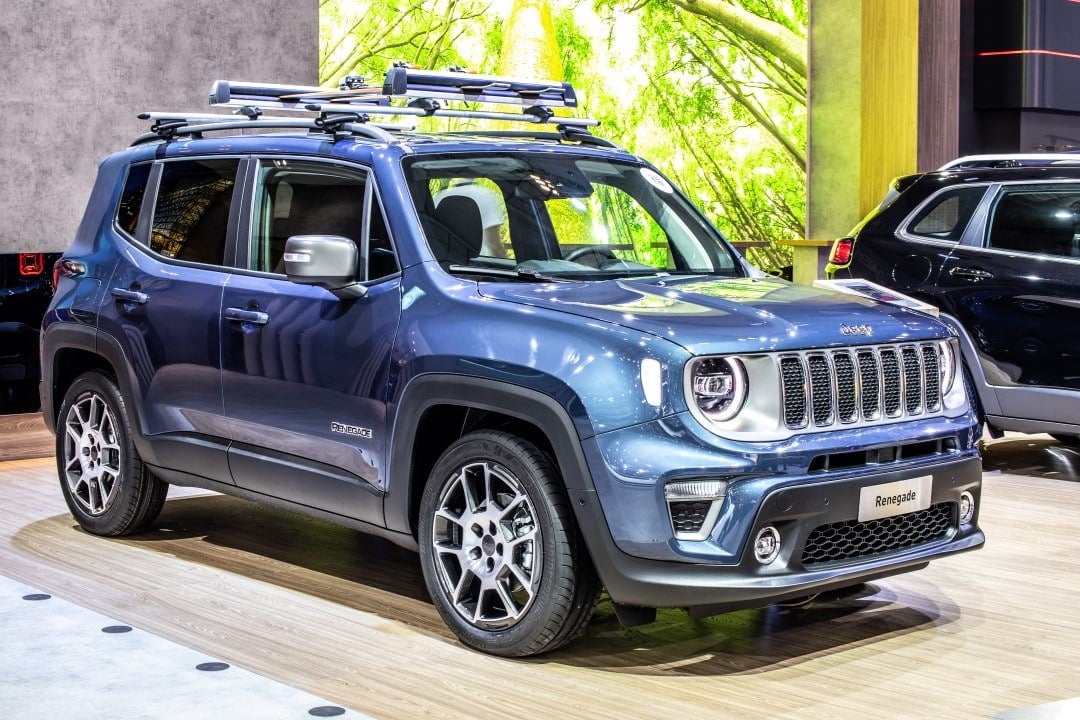
Four models manufactured at the Pernambuco unit will be the first to receive the new MHEV 48V set. Entre among them are the Jeep Renegade, which should debut the new version in its 2027 version in March, the Jeep Compass, the Jeep Commander and the Fiat Toro. Esta portfolio expansion reinforces the strategic role of Goiana in the production of vehicles with different levels of electrification, from light hybrids to future implementations.
Advanced technology in the Bio-Hybrid 48V system

The new mild hybrid system represents an evolution of the Bio-Hybrid technology already present in vehicles such as the Fiat Pulse and Fastback, and also the Peugeot 208 and 2008. considerably more powerful and efficient.
Esta improved version combines the 1.3 turbo flex T270 engine, which delivers 176 horsepower, with a multifunctional electric machine. This machine replaces traditional components such as alternator and starter motor, taking on crucial functions. Além to generate additional torque, it is capable of recovering energy during deceleration and braking, storing it in a 48V lithium-ion battery, discreetly installed under the driver’s seat.
Benefits and impact on vehicle performance
The integration of the electric motor into the thermal block provides an increase of approximately 30 horsepower, a significant improvement compared to the 4 horsepower offered by the previous system with the T200 engine. Esse gain translates into greater agility in throttle responses and more robust performance, especially in situations of speed recovery or steep climbs.
The electronic management of the system intelligently coordinates the action between thermal and electrical propulsion, prioritizing energy efficiency and reducing fuel consumption. Esta synergy allows the optimization of vehicle operation, adapting to driving conditions to minimize emissions and maximize autonomy. The technology promises smoother and more economical driving.
Optimization for the urban environment
With the new configuration, it is expected that vehicles equipped with the 48V hybrid system will be able to make short journeys in exclusively electric mode. Isso will be particularly advantageous in intense traffic scenarios, such as maneuvering in parking lots, stopping and starting in traffic jams. The ability to operate without the combustion engine at these times contributes to reducing noise and local pollution, especially in large urban centers.
This functionality not only improves the driving experience, but also aligns the Stellantis models with the growing demands for vehicles with a lower environmental impact. The promise of less dependence on gasoline or ethanol engines in specific situations reflects an intelligent approach to urban mobility, where efficiency becomes a decisive factor for consumers and the environment.
Continued expansion of electrification strategy
The introduction of the Bio-Hybrid 48V system is a milestone in the continuity of the Stellantis electrification plan, which began in 2024 with the arrival of the 12V MHEV system on the regional market. In 2025, the success of the first phase was evident, with more than 24 thousand units equipped with this configuration sold in the América of the Sul, including models such as the Fiat Pulse, Fiat Fastback, Peugeot 208 and
The company reiterates its commitment to a robust investment plan of R$32 billion in the region until 2030, focused on modernization and technological innovation. Para the year 2026, 16 product launches and updates are planned, six of which will be vehicles with Bio-Hybrid technology produced locally. Esta ambitious strategy seeks not only to expand the offer of gradual electrification in the Brazilian market, but also to strengthen the national automotive industry with cutting-edge solutions.
The future of mobility in Goiana
Polo Automotivo of Goiana is consolidating itself as an essential hub in the production of electrified vehicles for Stellantis in América of Sul. The ability to develop and manufacture complex technologies, such as the new 48V Bio-Hybrid system, positions the unit as a driver of innovation and economic development in the region. The Pernambuco factory has been central to the company’s growth strategy in Brasil.
Constant technological evolution, with the introduction of more sophisticated and efficient systems, prepares Stellantis for the future challenges of the automotive industry. The focus on combining flex engines with different levels of electrical assistance is a direct response to the needs of a market that seeks a balance between performance, economy and sustainability, reflecting the company’s vision for the mobility of the future.



