
Total lunar eclipse in March brings blood moon phenomenon and will be partially visible in Brazil

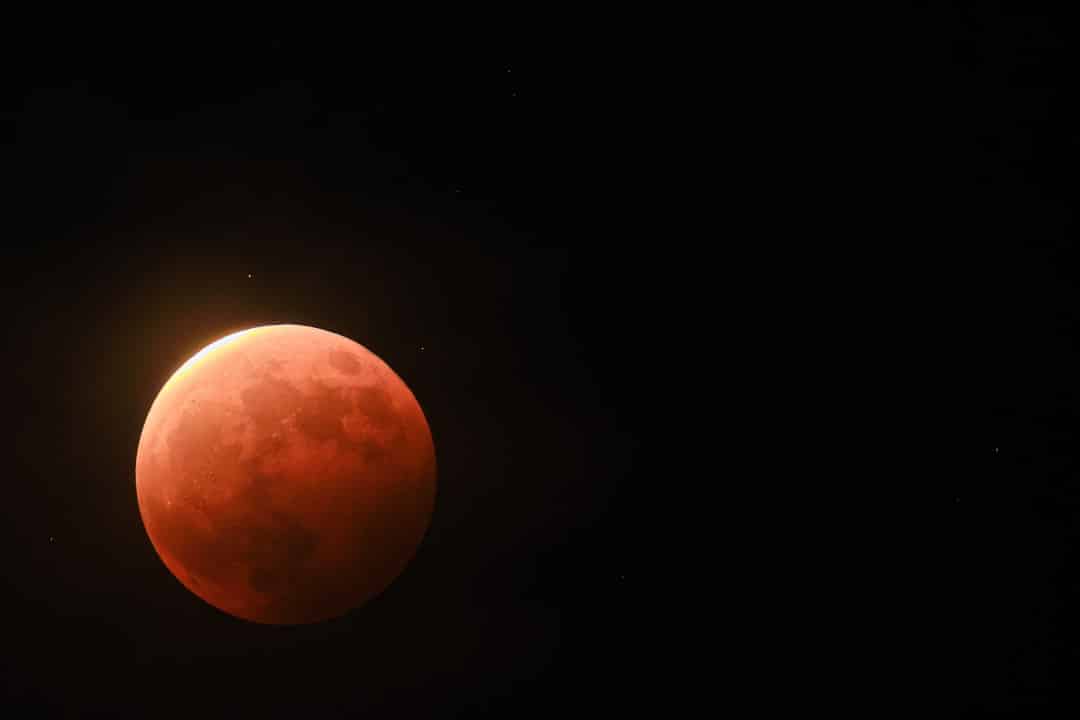
The early morning sky of March 3, 2026 will be the scene of a significant astronomical alignment, when the shadow of Terra will shroud the lunar disk in a globally anticipated event. The phenomenon, popularly known as Lua of blood, occurs when the natural satellite crosses the Earth’s umbra, acquiring a characteristic reddish color due to the refraction of sunlight in our planet’s atmosphere.
Observers located in Brazilian territory will have different viewing opportunities, depending mainly on their geographic location and local time zone. The country’s Norte and Oeste regions will feature the best visibility conditions, allowing enthusiasts to follow the initial and partial phases of the eclipse before Lua sets over the western horizon at dawn.

Experts from the North American space agency indicate that the phase of totality will last an estimated 58 minutes, although this specific moment will be difficult to observe for most of Brasil due to the light of the day that begins. The celestial mechanics of this event favor observers in more western time zones, where night will still prevail during the apex of the alignment.
The dynamics of the eclipse begins with the penumbral phase, scheduled for 3:44 am at Brasília time, when a subtle darkening of the lunar surface may be noticed by the most attentive. The event progresses to the partial phase at around 4:50 am, at which time the darkest shadow of Terra begins to “bite” the lunar disk, creating a visually noticeable contrast in the night sky.
Schedule and regional specificities
The visibility of the phenomenon in Brasil is marked by a geographic contrast, where states such as Acre, Amazonas, Rondônia and Roraima have a wider observation window. In Nessas locations, the sunset on Lua occurs later in relation to the time on
For residents of regions Sul and Sudeste, the experience will be predominantly restricted to the penumbral phase and the beginning of the partial phase. The alignment of the stars in these areas coincides with the light of the day, causing Lua to dip into the western horizon just when the eclipse would be gaining intensity, which requires advance planning for those who want to record the moment.
Astronomers recommend using astronomy and geolocation applications to determine the exact moment of the disappearance of Lua in each specific city. Correct adjustment to the local time zone is crucial, especially in a country with continental dimensions, to avoid missing the brief minutes in which the phenomenon will be visible to the naked eye.
The science of reddish coloring
The red hue that defines the Lua of blood is not the result of magic, but rather a physical principle known as Rayleigh dispersion. Durante the totality of the eclipse, the Terra blocks direct light from the
The intensity and nuance of this red can vary considerably according to global atmospheric conditions at the time of the event. Partículas in suspension, such as volcanic dust, wildfire smoke or urban pollution, has the ability to darken the tone of Lua, turning the bright red into a deep brown or dark gray.
International observatories use these events to collect data about the Earth’s stratosphere, analyzing how light is filtered through different layers of air. In 2026, prevailing climate and environmental conditions will play a key role in the satellite’s final appearance, serving as an indirect indicator of global air quality.
Recommendations for safe observation
Unlike solar eclipses, which require strict eye protection to prevent permanent damage to the retina, lunar eclipses are completely safe for direct observation. Não requires special filters, sunglasses or protective equipment, as the light reflected by Lua, even during the eclipse, is not intense enough to harm human vision.
To maximize the visual experience, it is recommended to look for locations with an unobstructed western horizon, away from tall buildings, mountains or dense trees. The Lua will be positioned low in the sky during the visible phases of the Brasil, making the horizon line the focal point for any observer or photographer wishing to record the event.
The use of optical instruments, such as binoculars or simple telescopes, can significantly enrich observation, revealing details of the lunar topography and the nuances of the Earth’s shadow advancing over the craters. Rural or coastal Áreas, away from the light pollution of large urban centers, offer the ideal setting to appreciate the contrast between the eclipsed Lua and the starry background.
Cultural importance and historical record
Throughout the history of humanity, lunar eclipses have served as temporal landmarks and sources of inspiration for various civilizations, which saw signs of changes or omens in the skies. Ancient Povos and indigenous communities used the regularity of these cycles to structure agricultural calendars and rituals, demonstrating an advanced knowledge of celestial mechanics long before modern technology.
In the contemporary context, these events function as powerful scientific dissemination tools, attracting the attention of the lay public to astronomy and space sciences. Museus, planetariums and astronomy clubs take advantage of the occasion to promote public observation sessions and lectures, democratizing access to knowledge about the solar system.
Night photography comes into its own during the eclipse, with professionals and amateurs alike employing long exposure techniques to capture the evolution of lunar colors. The documentary record of these observations, when shared on global networks, helps scientists map the visibility of the phenomenon at different latitudes and validate astronomical prediction models.
Future perspectives and astronomical cycles
The March 2026 eclipse inaugurates the calendar of total lunar events for the year, being followed by another similar phenomenon predicted for the month of August. The periodicity of these events follows precise orbital patterns, allowing astronomers to accurately calculate the dates and times of eclipses for centuries into the future.
Continuous data collection during each eclipse contributes to the refinement of the mathematical models that describe the movement of Lua and Terra. Pequenas variações na duração ou no tempo de entrada na sombra podem indicar sutis alterações na rotação terrestre ou na órbita lunar, informações valiosas para a manutenção dos sistemas de tempo e navegação.
Recent studies also seek to correlate the visual clarity of eclipses with long-term climate trends. Systematic analysis of lunar luminosity during totality offers researchers a historical database to understand how Terra’s atmosphere has changed over the decades, bridging astronomy and environmental science.
Tips for photographers and enthusiasts
For those wishing to photograph the eclipse, stability is the most critical factor, requiring the use of sturdy tripods to avoid blur in long exposure images. Câmeras with long-range objective lenses or attached to telescopes can capture the details of the lunar surface, while wide-angle lenses can compose the Lua in the landscape scene of dawn.
The equipment configuration must take into account the progressive decrease in light as the Lua enters the shadow of the Terra. Fotógrafos Experienced experts suggest increasing the ISO and adjusting the diaphragm opening as the phenomenon progresses, ensuring that the reddish coloration is recorded faithfully without introducing excessive noise into the final image.
Sharing these images on citizen science platforms allows the public to actively contribute to astronomical research. Relatórios visuals from different points around the globe help create a complete panorama of the event, overcoming the geographic limitations of fixed observatories and integrating the global community of sky observers.




