
Winds bring dust from the Sahara to Brazil and affect atmospheric conditions in the North and Northeast

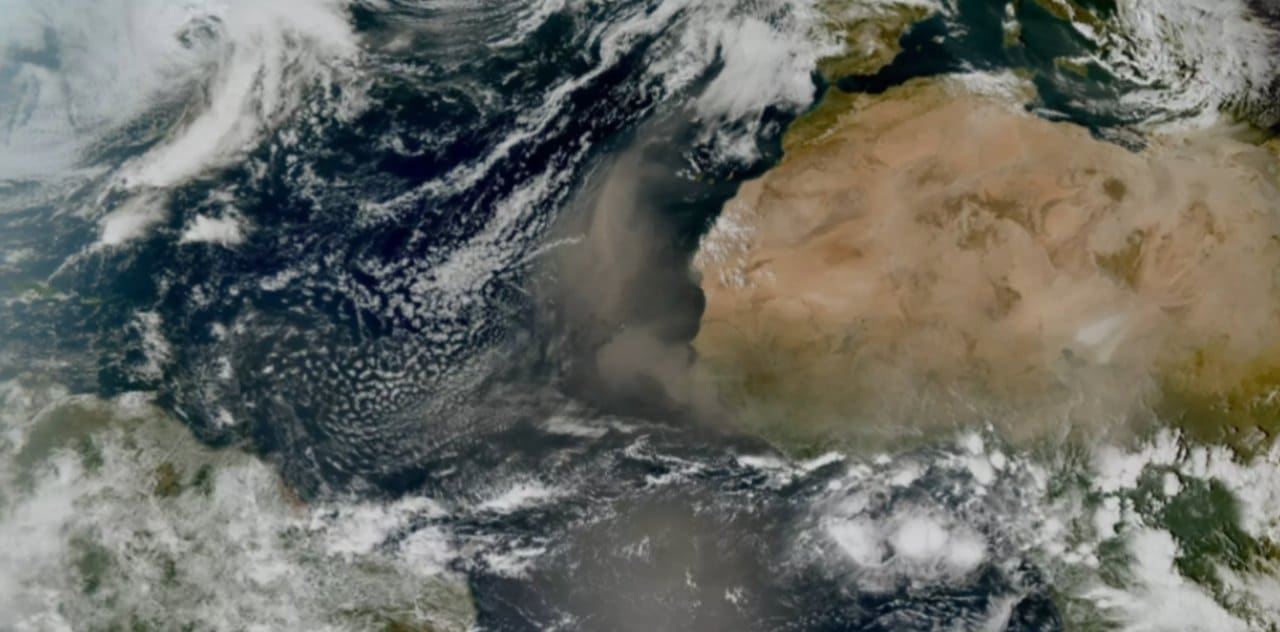
An extensive layer of mineral sediments from the north of the African continent completed its crossing through the Oceano Atlântico and began to influence atmospheric conditions in Brazilian territory this week. The phenomenon, monitored by international and national climate agencies, results from a complex wind dynamic that transports tons of sand from the Saara desert directly to the Norte and Nordeste regions of the Brasil. Imagens satellite images captured recently confirm the arrival of the plume, which alters visibility and air quality in several states.
The movement of this mass of dry air, loaded with suspended particles, is not unprecedented, but the density recorded this February caught the attention of meteorologists. The particulate matter traveled more than five thousand kilometers, driven by the trade winds, until reaching the South American coast. The presence of these sediments in the atmosphere creates a distinct visual scenario, often leaving the sky looking cloudy or orange, in addition to raising immediate concerns about the impacts on the health of the local population.
Experts explain that transatlantic dust transport is a natural event that connects distant ecosystems, but that requires constant vigilance when it reaches inhabited areas. The concentration of aerosols in the atmosphere interferes with the incidence of solar radiation and can modify cloud formation patterns, highlighting the interconnection of global climate systems.
Atmospheric dynamics and sediment transport
The Saara desert acts as the largest global source of mineral dust, injecting millions of tons of particles into the Earth’s atmosphere annually. The process begins with local sandstorms that lift the material to high altitudes, where it is captured by persistent air currents. The journey towards Américas is governed by the trade winds, which blow from east to west in the equatorial belt, functioning as a natural “conveyor belt” over the ocean.
During the journey, the heavier particles tend to be deposited in the sea, while the finer and lighter fraction can remain in suspension for days or weeks, traveling intercontinental distances. The intensity and duration of this phenomenon directly depend on seasonal weather conditions and the strength of the winds in the Atlântico Tropical. Este mechanism is fundamental to the planet’s biogeochemical balance, although it brings temporary challenges to the regions that receive the sediment load.
Health risks and respiratory care
The arrival of the dust cloud raises an alert for public health authorities due to the composition of the material transported. The main concern lies in fine inhalable particles, categorized as PM 2.5. With a diameter thirty times smaller than a strand of hair, these particles have the ability to overcome the natural barriers of the upper respiratory system, lodging deep in the lungs and being able to reach the bloodstream.
Prolonged or intense exposure to these high concentrations of dust can trigger a series of adverse reactions in the human body. Entre the most common symptoms and risks observed during the phenomenon are:
– Agravamento of chronic conditions such as asthma, bronchitis and allergic rhinitis, requiring greater caution from diagnosed patients.
– Irritação in the eyes, nose and throat, even in people with no history of respiratory diseases.
– Aumento the risk of systemic inflammatory processes resulting from the inhalation of fine particulate matter.
– Redução of air quality in large urban centers, enhancing the effects of existing local pollution.
Faced with this scenario, doctors and health professionals recommend the adoption of simple but effective preventive measures. It is advisable to avoid intense physical activity outdoors at times when dust is most concentrated. Manter ventilated indoor environments, but with doors and windows closed at critical moments, and using protective masks when moving through open areas are recommended strategies to mitigate sediment inhalation.
Ecological role in the fertilization of Amazônia
Although it poses a temporary risk to human health, dust from Saara plays a vital role in maintaining biodiversity in América and Sul, especially Floresta Amazônica. The phenomenon acts as a natural fertilization mechanism, transporting essential nutrients that are scarce in tropical soils.
Phosphorus, present in significant quantities in desert sediments, is one of the main nutrients delivered by this airway. Como torrential rains in the Amazon region tend to wash nutrients from the soil — a process known as leaching —, external replacement becomes crucial. Sem the regular supply of minerals from África, the biological productivity of the forest could be compromised in the long term.
This duality of the atmospheric event reinforces the complexity of environmental relationships: the same material that can cause respiratory discomfort in cities is what guarantees the vigor of the vegetation that regulates the global climate. Cientistas continue to study the exact amount of nutrients deposited annually to better understand how climate change can affect this intercontinental nutrition cycle.
Dispersal and monitoring schedule
The most recent meteorological data indicate that the dusty air mass began to be detected with greater intensity from Monday, February 23rd. Monitoring stations recorded an increase in atmospheric turbidity and particle concentration at mid-levels, confirming projections from numerical weather forecast models.
The expectation is that the peak concentration of the material on Norte and Nordeste will occur between the 24th and 25th of February. The dispersion of the plume should happen gradually, with the presence of dust persisting in the region at least until Friday, the 27th. Authorities continue to monitor the evolution of the phenomenon via satellite to provide real-time updates and guide the population about air quality in the affected areas.



