
Akari Fuji’s trajectory leads to the end of height restrictions for women in aviation in Japan

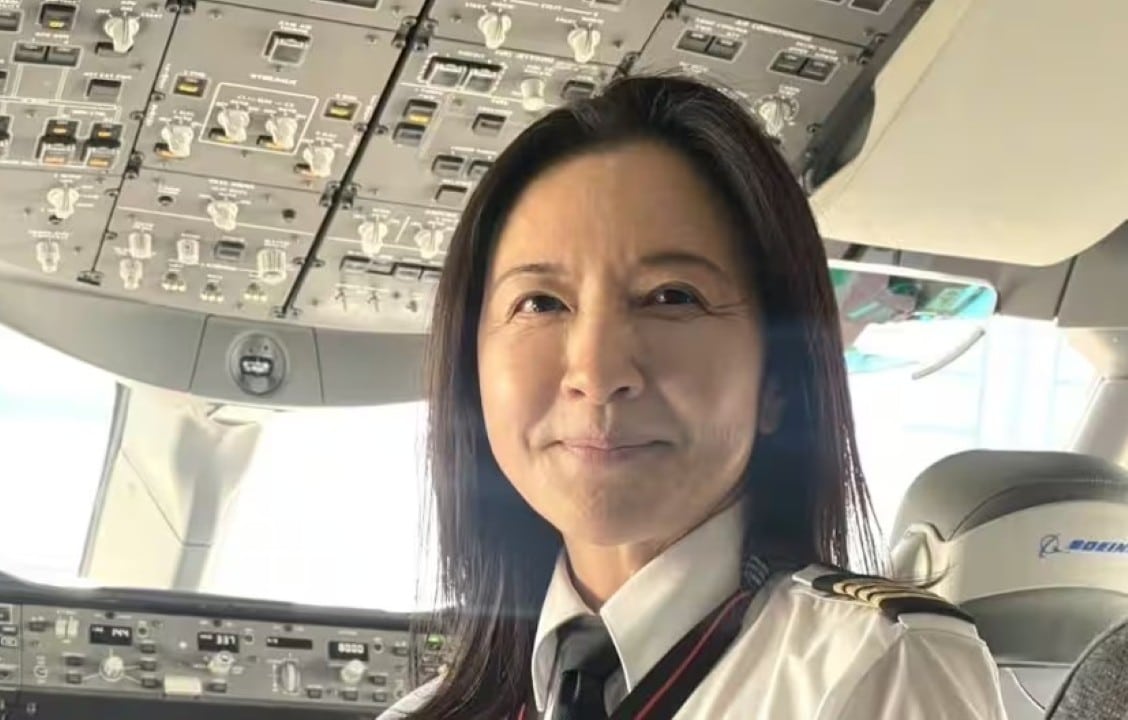
Japanese commercial aviation is going through a decisive moment of restructuring, driven by the urgent need to renew its personnel and break down historical gender barriers. Akari Fuji, who made history by becoming the first woman to captain passenger aircraft at Japan Airlines (JAL), established herself as a central figure in this transformation, proving that technical competence overcomes arbitrary physical limitations imposed by old regulations.
His professional rise prompted a profound review of the country’s admission standards, which until recently maintained strict criteria that excluded candidates based on stature. The Japanese government and major airlines now recognize that flexibility is essential for the sustainability of the sector.
The current scenario reflects a race against time to mitigate the shortage of qualified labor predicted for the next decade, adopting strategic measures such as:
- Elimination of the minimum height requirement of 158 centimeters for entry into national training schools;
- Implementation of scholarship programs aimed specifically at women;
- Adapting training curricula to foster more inclusive and diverse work environments.
These actions aim to avoid an operational collapse in the face of the mass retirement of veteran pilots, a phenomenon known locally as the “2030 problem”.
Overcoming physical and geographical barriers
Fuji’s path to the cockpit required creative solutions and determination to overcome the traditional Japanese system, which blocked his entry due to his height of 155 centimeters. Diante unable to attend the national aviation school, she chose to seek qualifications at Estados Unidos, where regulations prioritized piloting ability and safety over anthropometric characteristics, allowing her to obtain the necessary licenses.
Upon returning to Japão with his international training, Fuji still faced resistance in selection processes before gaining an opportunity at JAL Express. Sua promotion to captain in 2010, after years of dedication as a copilot and passing rigorous simulation and command tests, served as definitive proof that the previous restrictions were obsolete.
Labor crisis and new regulations
Ministério of Transportes of Japão recently intensified public policies to diversify the profile of aviation professionals, responding to the need to fill the gaps left by professionals who retire. The removal of height requirements seeks to increase female representation in cockpits, which has historically remained stagnant at levels close to 2% in the country’s main airlines.
Industry experts believe that the inclusion of more women not only solves a numerical issue, but also improves team dynamics. The diversity of perspectives in the cockpit is seen as a factor that contributes to innovation in safety processes and the quality of passenger service.
The modernization of rules aligns Japão with global recruitment practices, allowing talent that would previously have been overlooked to actively contribute to the country’s economy and connectivity.
The role of leadership in developing talent
Currently, Akari Fuji plays a fundamental dual role: continuing to operate commercial flights with a focus on safety and comfort, while also acting as an instructor and mentor for new pilots. Ela uses its experience to guide cadets on the importance of mental resilience and constant adaptation to new technologies in modern aircraft, such as the Boeing 787, emphasizing that technical learning must go hand in hand with emotional development.
Your role as a mentor is crucial to demystifying prejudices and encouraging young people to persist in their careers, regardless of gender stereotypes. Fuji constantly reinforces that the passion for aviation is the main driver for overcoming the logistical and cultural challenges that still persist in the industry.



