
Astronomical phenomenon brings together six planets in the sky and challenges observation equipment this season

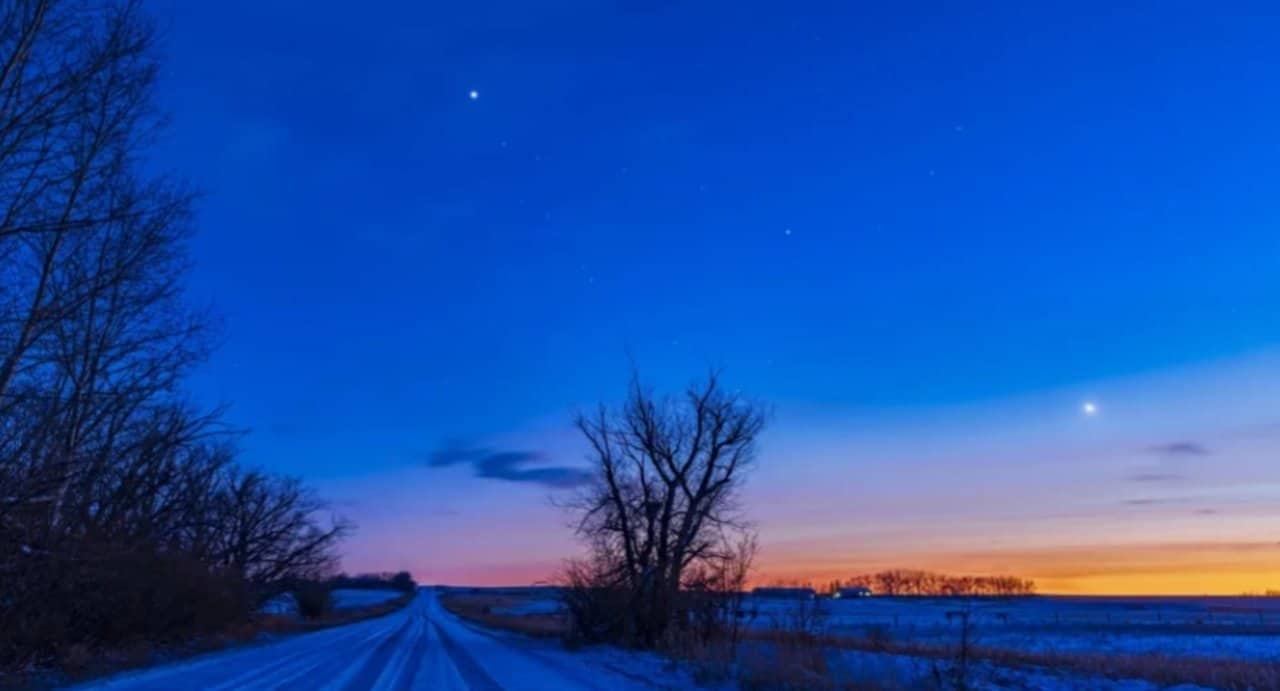
Astronomy enthusiasts and specialized photographers have turned their attention to the horizon in recent weeks, motivated by a complex celestial event that has moved the scientific community. Sistema Solar provided a rare visual spectacle, bringing together six of its planets in a configuration observable from Terra. The event required specific meteorological conditions, such as clear skies and unobstructed horizons, so that the alignment could be recorded in its entirety, connecting everything from the brightest stars to the most distant gas giants.
The celestial formation involved a specific area of the sky where Júpiter, Saturno, Vênus, Mercúrio, Urano and Netuno could be located, creating an imaginary line along the ecliptic. The observation of this phenomenon was not homogeneous, varying drastically according to the luminosity of each celestial body. Enquanto some planets stood out for their intense brightness visible to the naked eye, others required the use of advanced optical equipment, testing the patience and technique of observers who tried to capture the complete set in a single session.
For residents of large urban centers, light pollution represented an additional obstacle. The visibility of the faintest planets was severely compromised by city lights, making the search for remote locations with low light interference a necessity for those who wanted a complete experience. The ideal observation window was short, occurring just after sunset, which required punctuality and prior planning on the part of those interested.
Differences in magnitude and visibility to the naked eye
Observing dynamics revealed the brightness disparity between cosmic neighbors. Vênus and Júpiter, known for their high reflectivity and relative proximity, dominated the scene in the western sector of the sky. Estes stars played the role of visual guides, serving as bright reference points that allowed observers to draw the line where the other planets would be positioned. Mesmo Without instruments, these two planets could be identified easily, shining brightly against the twilight.
Mercury and Saturno presented an intermediate challenge. Embora visible without telescopes under ideal conditions, their proximity to the horizon or lower apparent brightness required an unobstructed view of buildings or mountains. Atmospheric turbulence close to the ground often makes it difficult for these stars to be clear, making them appear to twinkle more than usual. Para identifying these bodies accurately, prior knowledge of the celestial chart and atmospheric stability were determining factors for the success of the visualization.
The technical challenge of the ice giants
The real litmus test for amateur astronomers was the location of Urano and Netuno. Estes ice giants, located on the external borders of Sistema Solar, are not visible to the naked eye and require the use of powerful binoculars or telescopes. The visual magnitude of these planets is so low that, without precise orientation, they easily blend in with background stars, making the identification task similar to finding a needle in a cosmic haystack.
Neptune, in particular, required considerable technical effort. Localizado near Júpiter during the event, its dim light was often eclipsed by the gas giant’s intense glow. Observadores needed to use high magnifications and detailed maps to distinguish the planet’s small bluish disk amid the star field. The visual capture of these distant stars served as a reminder of the vast scale of our planetary system and the limitations of human vision without technological aids.
Auxiliary technology in celestial navigation
Modern astronomy benefits immensely from integration with mobile devices and mapping software. Durante this alignment, augmented reality applications and digital celestial charts were indispensable tools for locating planets invisible to the naked eye. By pointing smartphones at the sky, users were able to overlay real-time position information, confirming whether that faint point of light was in fact Saturno or a distant star.
The use of this software allowed even beginners to participate in the observation with greater assertiveness. The technology has eliminated some of the uncertainty inherent in amateur astronomical observation by providing precise azimuth and elevation coordinates. Isso was crucial for planning the framing of photographs and knowing exactly where to point optical instruments before the rotation of Terra caused the stars to disappear over the western horizon.
Complexities of Widefield Astrophotography
Capturing the “planetary parade” in a single image posed significant technical challenges for photographers. The main difficulty was the extreme difference in exposure required to capture such different stars. Configurações cameras that favored the intense brightness of Vênus left Urano and
To overcome these physical limitations, photographers have resorted to long exposure techniques combined with wide-angle lenses and sensors with high ISO capabilities. The balance between capturing the residual light of twilight and the pinpoint glow of the planets required constant testing and manual adjustments. Além In addition, the rotation of the planet
The result of this collective effort was a series of records documenting celestial mechanics in action. Astronomical photography, in this context, transcended mere aesthetics, serving as a documentary record of the relative position of celestial bodies at a specific moment in time. The final composition, showing multiple worlds aligned on the Earth’s landscape, offered a visual perspective of our cosmic neighborhood, combining refined technique and scientific knowledge.



