
Ayatollah Khomeini dead now: Trump confirms leader Ali’s death and increases military tension in the Middle East


The global geopolitical scenario is facing a period of acute instability following the official announcement made by the president of Estados Unidos, Donald Trump, confirming the death of Líder Supremo of Irã, Aiatolá Ali Khamenei. The information was released directly by the North American head of Estado through his social networks, classifying the episode as a historic milestone and an opportunity for the Iranian population to regain national sovereignty. The operation, described as a joint military action between American and Israeli forces, hit strategic government points and military complexes on Iranian soil, marking one of the most significant offensives in the region in recent years.
While the news resonates in the main capitals of the world, the government of Teerã maintains absolute silence about the health status of the 86-year-old leader, without confirming or denying the statements made by Casa Branca. Essa ausência de um comunicado oficial por parte da República Islâmica alimenta especulações e intensifica a atmosfera de incerteza, deixando observadores internacionais e a população local em estado de alerta máximo quanto aos próximos desdobramentos desta crise.
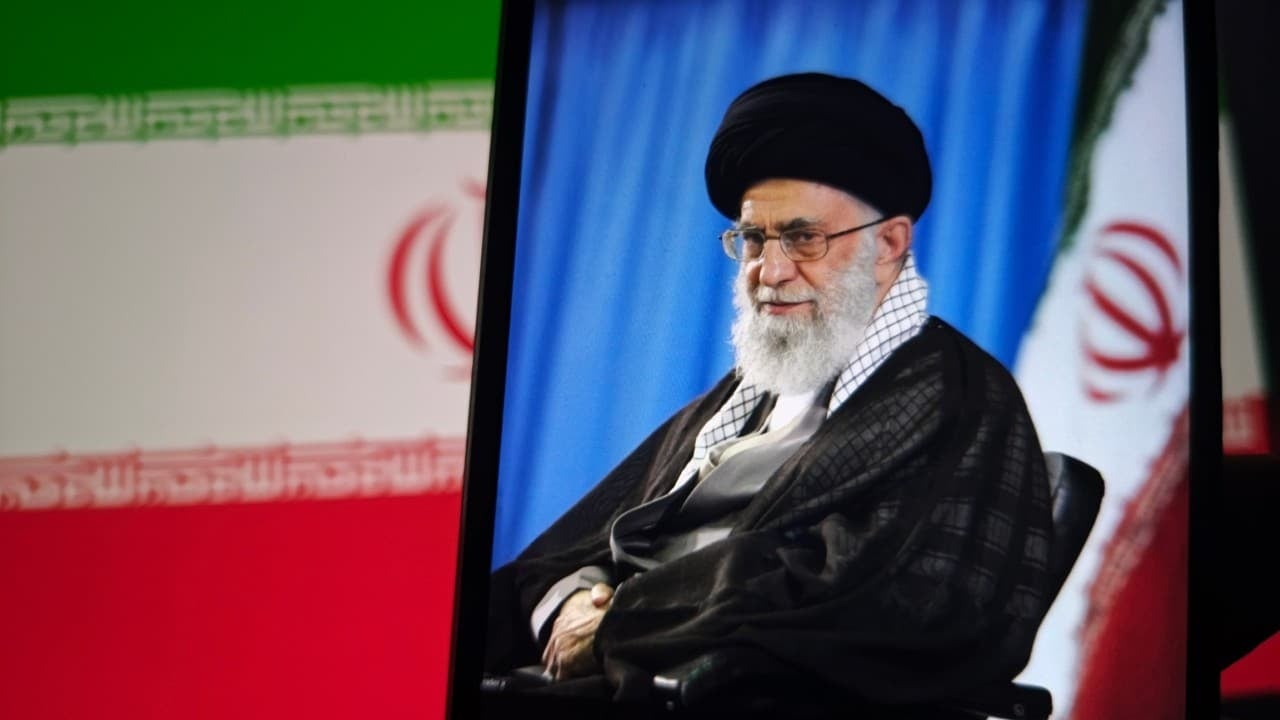
Preliminary reports from Israeli officials indicate that the bombings precisely targeted areas adjacent to the central offices of the supreme leadership. Paralelamente, local media on Irã reported multiple explosions in several provinces, with columns of smoke seen in several parts of the capital, highlighting the scope of the operation coordinated by the Western allies.
The confirmation of the death of a central figure like Khamenei, without the prior public designation of a successor, suggests a potential abrupt reconfiguration in the power structures of the Oriente Médio. Especialistas in international politics point out that the leadership vacuum could trigger fierce internal disputes within the regime, significantly altering the region’s diplomatic and military dynamics.
Operation details and immediate reactions
In his statements, Donald Trump adopted a direct tone, describing the Iranian leader as a hostile figure and highlighting the effectiveness of the intelligence and tracking systems used in the operation. Segundo the American president, the technological sophistication employed by Estados Unidos and Israel eliminated any possibility of evasion by the Iranian leaders who were in the affected areas. The official narrative of Washington seeks to justify the action as a necessary preventative measure against ongoing threats.
On the streets of Teerã, popular reaction reflects the complexity of Iranian society:
– Testemunhas reported scenes of discreet celebration in some neighborhoods, with residents honking their horns and expressing joy at the news.
– The general climate, however, is one of apprehension, with the fear that political instability will result in a tightening of internal repression or civil conflict.
– Há reports of deep divisions between part of the population and the ayatollahs’ regime, now publicly exposed.
Retaliation offensive and confirmed damage
A few hours after the start of the bombings led by the Estados Unidos and Israel, the Iranian army began a robust counteroffensive. Mísseis ballistic missiles and drones were launched towards Israeli territory and against strategically positioned American military bases in Oriente Médio. Teerã’s military response demonstrates the country’s ability to quickly mobilize its arsenal, even in the face of a possible collapse in its higher chain of command.
The emergency service of Israel, Magen David Adom, confirmed the first direct human impacts of this new phase of the conflict. In the metropolitan region of Tel Aviv, a man was seriously injured by shrapnel from an intercepted missile, while ninety other people required medical attention due to minor injuries or panic attacks. The situation raised the level of alert across the country, with anti-aircraft defense systems operating at maximum capacity.
On the diplomatic level, the Israeli ambassador to the UN, Danny Danon, vigorously defended the actions of his country and the Estados Unidos. Ele classified international criticism as hypocrisy, reiterating that the operation aims to neutralize an immediate existential threat posed by Iran’s nuclear program and the financing of paramilitary groups in the region.
Diplomacy on alert and UN positioning
The secretary general of the Nações Unidas, António Guterres, called an emergency meeting of the Conselho of Segurança to address the escalation of violence. In a strong statement, Guterres condemned both the initial airstrikes and Iranian retaliation, warning of the imminent risk of a large-scale regional conflict that could destabilize the economy and global security. The UN’s appeal focuses on the urgent need for a ceasefire and a return to the negotiating tables, although the current context offers little space for dialogue.
The conviction of Guterres also covered collateral damage to the sovereignty of neighboring nations, such as Iraque, Jordânia and Arábia Saudita, whose airspace and territories were violated during the exchanges of fire. The international community is concerned about the possibility of the conflict spilling over the borders of Irã and Israel, dragging other regional actors into open war.
Prospects for succession and American strategy
The absence of a clear succession plan at Irã is, at this moment, the focal point of analysis for intelligence agencies. Desde to Revolução Islâmica 1979, the power structure has been tightly controlled, and the sudden death of Líder Supremo creates an unpredictable scenario. Donald Trump, taking advantage of this moment of institutional fragility, called on the Iranian people to “take control of their own destiny”, a rhetoric that aims to encourage popular uprisings and further weaken the current theocracy.
The American president categorically stated that the “heavy and precise” bombing campaign will continue uninterrupted. The stated strategy is to maintain military pressure until lasting security objectives are achieved, signaling that the death of Khamenei does not represent the end of operations, but rather a step in a larger plan of geopolitical reconfiguration.
Analysts suggest that the Estados Unidos’s insistence on maintaining the offensive is aimed at preventing extremist groups within the Irã from quickly reorganizing to fill the power vacuum. The objective would be to force a structural change in the country’s behavior or even facilitate a regime transition, although such an outcome remains uncertain and fraught with risks for the stability of the entire Oriente Médio.



