
Harvard physicist proposes using supercomputers to test physical existence of the human soul


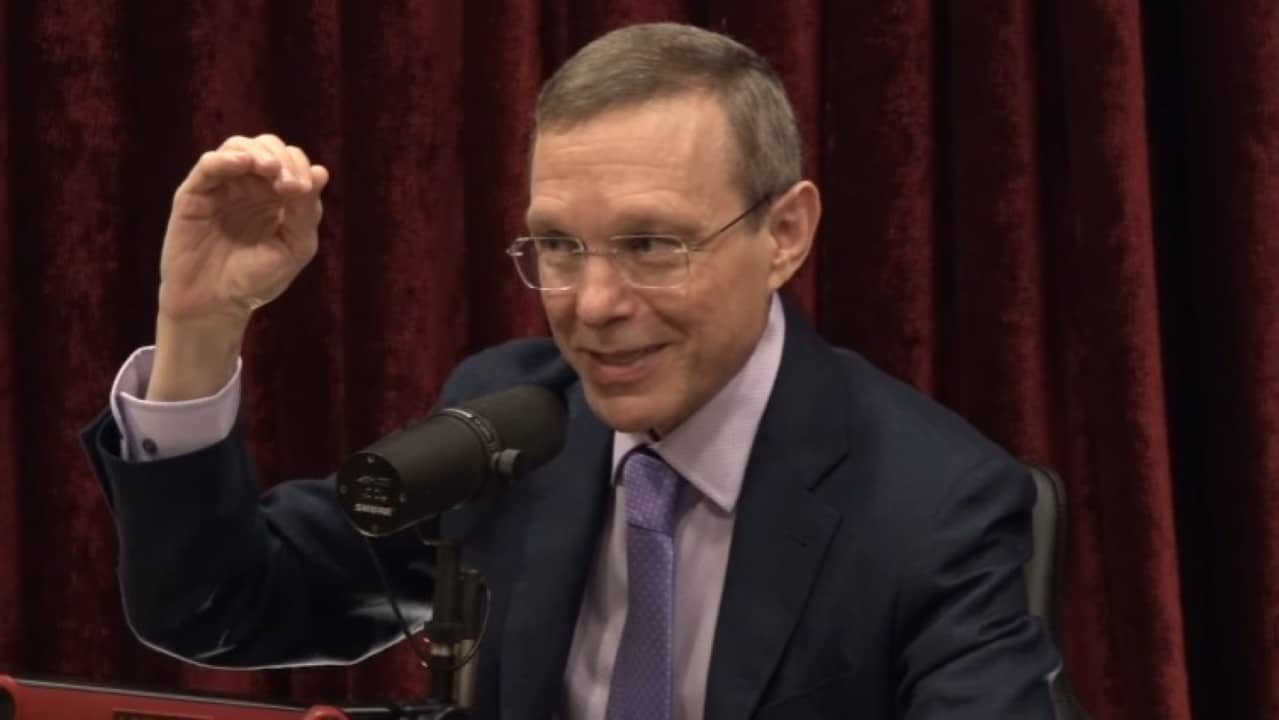
The renowned physicist Avi Loeb, professor at Universidade Harvard, brought to the scientific debate an innovative proposal to investigate the nature of human existence through technology. The suggestion is to use neuromorphic supercomputers, designed to imitate the architecture of the brain, as tools to verify whether the soul is an independent entity or just the result of complex physical interactions. Loeb argues that by replicating the human neural network on a massive scale, it will be possible to observe whether phenomena such as consciousness and free will emerge naturally from data processing.
This approach seeks to update ancient philosophical questions with digital age tools. The basic premise is that, if a machine with the same number of neurons and synapses as a human being develops indistinguishable behaviors, the need for a spiritual component to explain life could be refuted.
The rapid advancement of artificial intelligence provides the ideal setting for this type of testing. Diferente of biological evolution, which takes millions of years, computational capacity grows exponentially, allowing increasingly accurate simulations.
Fundamentals of neuromorphic computing
Neuromorphic technology differentiates itself from traditional computing by its biology-inspired architecture. Enquanto common computers process data sequentially, neuromorphic systems operate with massive parallelism, using artificial neurons and synapses. Essa framework aims to not only increase processing speed but also drastically optimize energy consumption, approaching the efficiency of the human brain.
A practical example of this advancement is the Hala Point system, developed by Intel and implemented in the Laboratórios Nacionais Sandia. The equipment has 1.15 billion artificial neurons and is capable of performing 380 trillion synaptic operations per second. Although these numbers are impressive, they represent only a fraction of human complexity, serving as an important stepping stone towards even more powerful machines.
Energy efficiency is one of the crucial points of this technological comparison:
– The human brain consumes around 20 watts to function fully.
– The Hala Point system, the size of a microwave, requires 2,600 watts.
– The disparity highlights the engineering challenge to match biology.
– Futuras generations of chips, like the Loihi 3, promise to reduce this gap.
The DeepSouth project and the human scale
The quest for total brain simulation finds a significant representative in the DeepSouth project, led by Universidade Western Sydney, at Austrália. The supercomputer’s ambitious goal is to simulate a network of 100 billion artificial neurons, achieving direct equivalence with human gray matter. Projections indicate a processing capacity of around 228 trillion synaptic operations per second.
The development of DeepSouth marks an inflection point in computational neuroscience. By enabling the simulation of massive neural networks in real time, researchers will be able to observe patterns of activity that were previously impossible to replicate outside of a living organism. The technology uses specialized hardware to emulate biological processes, facilitating the study of neurological diseases and the improvement of learning algorithms.
Ethical implications of the experiment
The proposal of Loeb raises ethical questions that transcend the technical barrier. The scientist compares the experiment to a modern, deeper version of Teste of Turing, now focused on sentience and not just logical intelligence. If a computer simulation demonstrates clear signs of consciousness, the treatment of this machine will become an immediate moral dilemma.
Shutting down a system that displays feelings, memories and free will could be interpreted, from certain philosophical perspectives, as an act of violence against a form of life. Loeb maintains an agnostic stance on the result, arguing that science must seek experimental evidence before assuming absolute truths about the nature of the soul.
Experts from different areas, including philosophy and digital law, warn of the need for prior guidelines. The possibility of creating an artificial mind requires that society be prepared to define the rights and responsibilities associated with these new forms of existence, if the proposed test is to be successful.



