
Khamenei’s death in attack on Tehran sparks celebrations among Iranians in the US and the capital

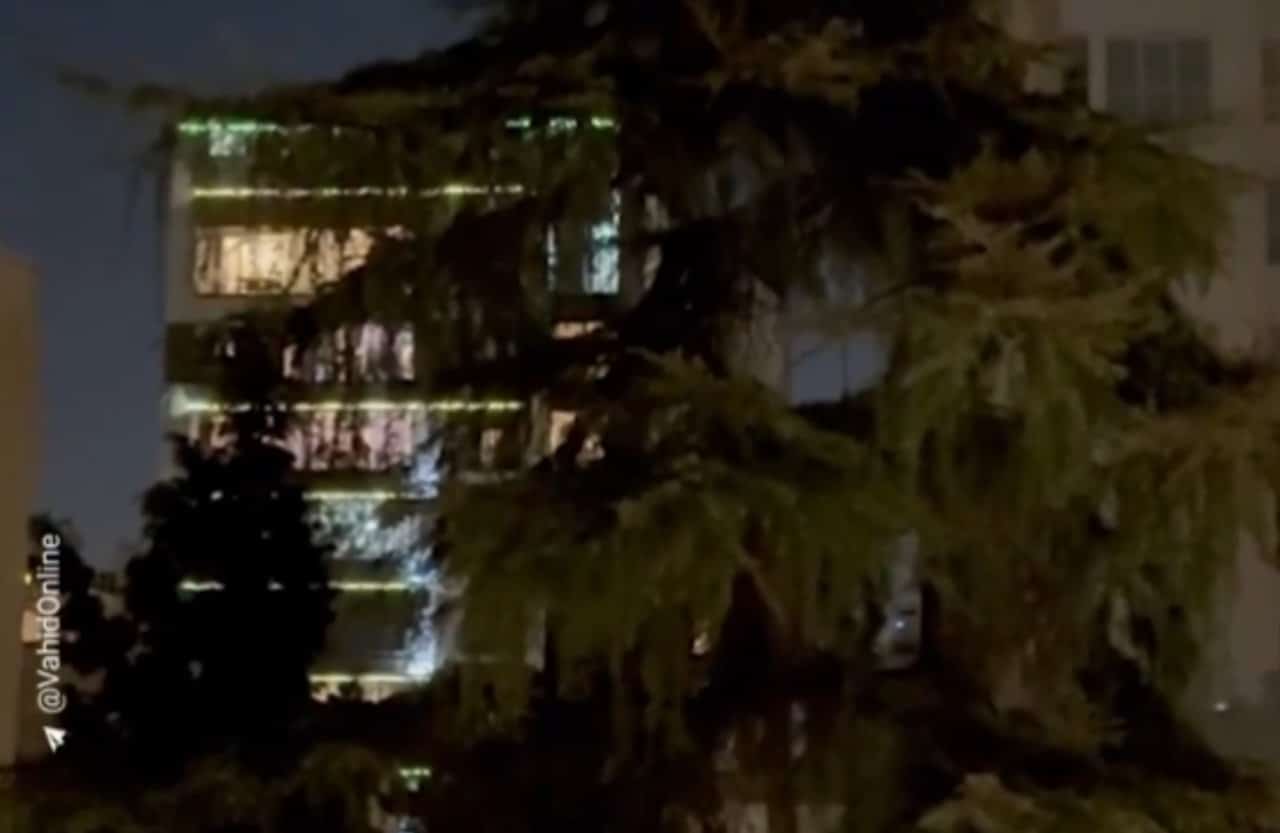
Screams of joy and public demonstrations echoed across many parts of Teerã on the night of February 28, 2026, shortly after the news broke about the death of the Iranian Supreme Leader, Ayatollah Ali Khamenei. Moradores went to the windows to applaud and play festive music, marking a moment of intense commotion in the Iranian capital. The celebrations began shortly after 11pm local time, according to witness reports and circulated audio recordings.
Confirmation of the death came in an unusual way, with the American president, Donald Trump, using his social network to announce the death. Paralelamente, in the Estados Unidos, several Iranian communities also took to the streets in acts of celebration. Esses events, both at Irã and abroad, underline the polarization and complex political relationships surrounding the figure of the ayatollah and the regime he represented.
The pre-existing tension between Irã, Estados Unidos and Israel reached a new level with the attack that would have resulted in the death of Khamenei. Global reactions varied between the euphoria of opposition groups and the uncertainty of governments regarding future developments in the already unstable region. The geopolitical situation of Oriente Médio remains at a critical point, with far-reaching implications for international stability.
Global celebrations and the fall of the ayatollah
In Teerã, the news of the death of Ali Khamenei, supreme leader of Irã, triggered a series of spontaneous celebrations. Moradores reported that the streets of some neighborhoods were filled with the sounds of horns and music, in marked contrast to the generally controlled demeanor of the population under the regime. Reports of euphoria were consistent, indicating a latent feeling of discontent that came to the surface with the announcement.
Away from Iran’s borders, the enthusiasm was equally palpable. Em Atlanta, Similarmente, in Boston, Massachusetts, to
Context of the attack and official reactions
Earlier, the prime minister of Israel, Benjamin Netanyahu, had issued a televised statement confirming “strong indications” that Ayatollah Ali Khamenei had died during a joint attack between Israel and The supreme leader’s residential complex in Teerã was reportedly hit in a surprise operation, described by Netanyahu as decisive for the course of events in the region.
In response to the Israeli statements, Esmaeil Baghaei, spokesperson for Ministério of Relações Exteriores of Irã, refused to confirm the status of Khamenei. Sua’s statement that he “could not confirm” added a layer of mystery and uncertainty about the supreme leader’s real state, while conflicting information circulated globally.
At the same time, American President Donald Trump used his digital platforms to confirm the death, a move that highlighted the coordination between the two countries regarding the operation. The rapidity of American communication, in contrast to Iranian silence, shaped the initial narrative and shaped public perception of subsequent events.
Testimonies and hopes for change in exile
The Iranian community in exile in the Estados Unidos reacted effusively to the news. Sam Yebri, a 44-year-old lawyer residing in Sua family, of Jewish origin, fled the Irã due to persecution, highlighting the depth of suffering and hope linked to regime change.
In Los Angeles, one of the largest concentrations of Iranian-Americans, hundreds of protesters gathered in front of a federal building in West Los Angeles at noon. The energy was palpable, with Iranian music being played at high volume and a party atmosphere. The demonstration turned into a march through Westwood, a neighborhood historically linked to the community, where cars honked their horns in support and people danced in the streets.
Demographic census data from the Estados Unidos indicate that more than half a million residents have, at least in part, Iranian ancestry. Muitos of these individuals belong to oppressed minorities in Irã, including Jews, Assyrians, Bahá’ís and Christians, who have sought refuge abroad. The mass flight largely occurred after the overthrow of the last shah of Irã, Mohammad Reza Pahlavi, in 1979.
Some of these Iranian-Americans were born in exile and never had the opportunity to set foot in their homeland. Para them, the death of Khamenei represents not only the end of an era, but the possibility of a reconciliation with their roots and a hope for a future for Irã. The symbolism of the date and the acts of commemoration carry significant historical and emotional weight for the entire diaspora.
Developments of the joint military operation
Israeli television networks, KAN and Channel 12, reported that American President Donald Trump and Israeli Prime Minister Benjamin Netanyahu had viewed a “body photo” of Khamenei. The broadcasters detailed that “senior Israeli officials were informed about the elimination of Khamenei” and that his body “was removed from the rubble of his residential complex.” Essas information, although not confirmed by official American or Iranian sources, reinforced the narrative of a successful attack with direct consequences.
After the attack, Netanyahu reiterated that the operation against Irã “will continue as long as necessary” and that, in the following days, it will “hit thousands of targets” of the regime. The Israeli premier’s statements indicated a planned escalation and a determination to dismantle Iran’s ability to threaten its neighbors and global security. The aggressive rhetoric of Israel and the American confirmation of the event suggest a new phase in the confrontation between regional and international powers.
The Iranian nuclear program and the justification for the attack
In his statement, Benjamin Netanyahu justified the joint attack against Irã as an essential measure to “fundamentally change” the possibility of the Persian country developing a nuclear weapon. Ele argued that Irã’s possession of such weaponry could “dramatically increase its threat” against neighboring nations and global stability. Concern over Iran’s nuclear program has been a central point of international contention for decades, leading to sanctions and complex diplomatic negotiations.
The attacks, according to the Israeli leader, also targeted commanders of the Guarda Revolucionária, the elite force of the Irã, as well as senior regime officials and employees directly linked to the nuclear program. Essa action targeted not only political leadership but also the infrastructure and human resources that support Iran’s nuclear ambitions. The stated goal was to eliminate any ability of Irã to become an atomic power, a threat that Israel and Estados Unidos consider existential.
Appeal to the Iranian population for an uprising
In addition to military actions, Benjamin Netanyahu addressed a direct appeal to the Iranian population, encouraging them to “free themselves from the shackles of dictatorship” and “stand up against the regime of República Islâmica”. In Hebrew, he emphasized: “Don’t miss the opportunity. Esta is a once-in-a-generation opportunity,” suggesting that the time was ripe for a popular uprising. Ele added in English: “Help has arrived”, reinforcing the idea of international support for a possible uprising. Este appeal adds a dimension of psychological warfare to the confrontation, seeking to instigate the internal destabilization of Irã.
Analysis of satellite images after the bombing
Following the attack, satellite images captured by Airbus and released by Soar Atlas revealed the extent of the destruction at the residential complex of Irã’s supreme leader, Ali Khamenei, in Aerial photographs showed several structures seriously damaged or completely destroyed within the area, corroborating the Israeli prime minister’s reports of the effectiveness of the bombing. Visual analysis of the images offers concrete proof of the impact of the attack and the precision of the chosen targets, reinforcing the seriousness of the military operation.
A leader’s legacy: four decades of political dominance
The death of Ali Khamenei closes a chapter of almost four decades in which he dominated the politics of the Irã, consolidating himself as a central figure after the death of Ayatollah Ruhollah Khomeini. Durante his long period in power, Khamenei exerted decisive influence over the country’s domestic and foreign policies, shaping República Islâmica’s identity and navigating complex regional and international crises. Seu death opens a phase of uncertainty regarding the succession and the future political direction of the nation, both for his supporters and his critics.



