
NASA calculations indicate an asteroid with a chance of a lunar collision in 2032 without a threat to the Earth

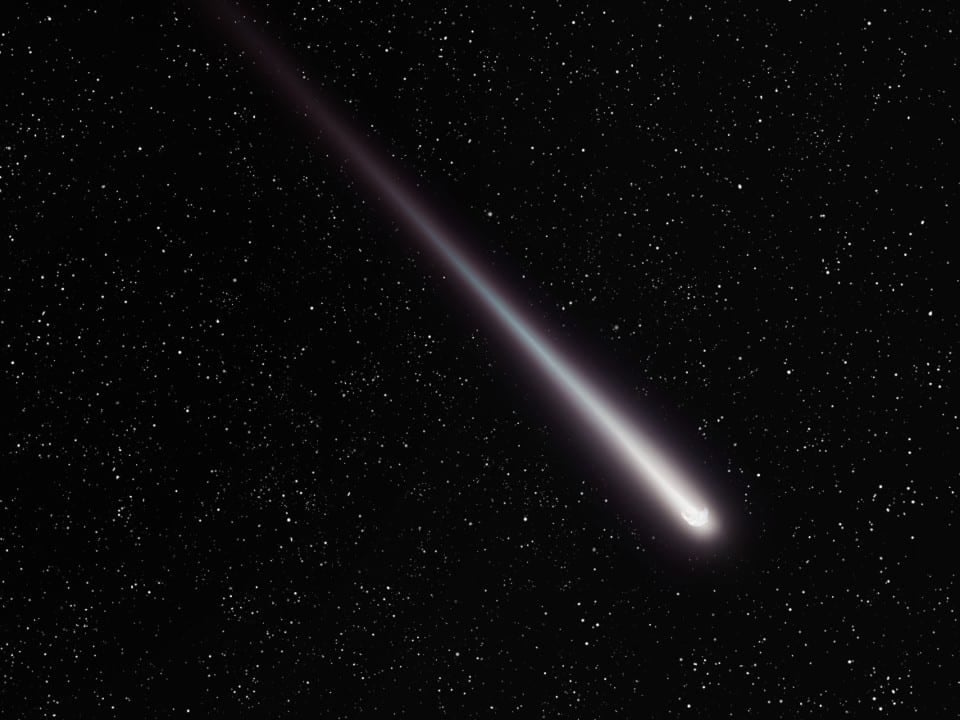
International space agencies have turned their attention to an orbital phenomenon that promises to move the scientific community in the next decade. The asteroid identified as 2024 YR4, monitored since its discovery at the end of 2024, has a trajectory that intersects the region between Terra and Lua. According to the most recent tracking data, there is a calculated probability of 4% that the object will collide with the lunar surface on December 22, 2032.
Although the possibility of a celestial impact generates curiosity and attention, experts from NASA and ESA (Agency Espacial Europeia) are emphatic in ruling out risks to humanity. Computer simulations, which analyze thousands of possible orbital variations, confirm that there is no threat of collision with our planet. The focus of monitoring now lies on the rare opportunity to study the dynamics of a natural impact on our satellite, if the probability is confirmed.

The evolution of data about 2024 YR4 reflects the advancement of planetary defense systems. Inicialmente, projections carried out in February 2025 indicated a tiny risk of 3.1% for Terra, a hypothesis that was quickly eliminated after new observations refined the celestial body’s orbit. Atualmente, the stability of the predictions points exclusively to lunar interaction, keeping the astronomical community on alert for the next observation windows.
The current scenario demonstrates the effectiveness of tracking programs, which identify and catalog objects close to Terra (NEOs) years in advance. Diferente of past decades, current technology allows events to be predicted with wide safety margins, transforming potential surprises into events scheduled for in-depth study.
Physical characteristics and impact potential
The asteroid in question belongs to the Apollo group and has considerable dimensions for an object of its class. Estimativas based on luminosity and preliminary observations indicate that 2024 YR4 has a diameter that varies between 53 and 67 meters. Para For comparison purposes, its size is equivalent to a building of approximately 20 floors, which classifies it as a potentially dangerous object, although its current route does not pose a danger to terrestrial infrastructure.
If the collision with Lua occurs in 2032, the release of energy would be significant. The impact of an object with this mass and relative speed would release a force comparable to the detonation of millions of tons of TNT. The immediate result would be the formation of a new crater on the lunar surface, which could reach a kilometer in diameter, permanently altering the local geography of the impact point.
The visual and physical effects of such an event would be notable but restrained:
- An intense flash would be visible from Terra for a few seconds, capable of being recorded by professional and amateur telescopes.
- The ejection of lunar material could reach 100 million kilograms of regolith and rocks.
- Most of the debris would be confined to lunar gravity or disperse into empty space.
- There would be no relevant risk to satellites orbiting Terra or to the planet’s atmosphere.
Particle dispersion studies indicate that, even in the worst-case impact scenario, the amount of material that could cross Earth’s orbit would be microscopic and insufficient to cause damage. The absence of noticeable gravitational or seismic effects at Terra reinforces the safety of the event.
Observation and data refinement windows
The accuracy of orbital calculations directly depends on the quantity and quality of observations carried out. Asteroid 2024 YR4 does not remain visible all the time; it has periods in which it approaches Sol in relation to the terrestrial perspective, making tracking difficult. Therefore, astronomers are anxiously awaiting the next visibility windows, expected to occur throughout 2026 and again in 2028.
The use of advanced instruments will be crucial in these stages. The Telescópio Espacial James Webb, with its infrared observation capacity, is one of the pieces of equipment listed to assist in the detection and refinement of the asteroid’s orbit in 2026.
Global coordination between southern hemisphere observatories and international networks ensures that no data is lost. As new telescopes come into operation and sensor technology evolves, the margin of error in predictions is shrinking, providing an increasingly clear picture of 2024 YR4’s ultimate fate.
Relevance to science and planetary defense
For the scientific community, the possibility of a lunar impact is not seen with fear, but as an open-air laboratory. The validation of collision dynamics models is one of the biggest advantages of this event. Comparar real data from a natural impact with theoretical simulations and the results of artificial missions, such as NASA’s DART test, would allow a qualitative leap in the understanding of how celestial bodies interact.
In addition to impact physics, spectral analysis of material ejected from the lunar subsurface would offer unprecedented data on the satellite’s geological composition, without the need for expensive landing missions. Instrumentos already in lunar orbit or ground-based telescopes could perform the “autopsy” of the event in real time, collecting valuable information for future manned and exploration missions.
The case of 2024 YR4 exemplifies the maturity of modern astronomy. What could previously have been a surprise is now a monitored, calculated and awaited event. Independentemente Whether the impact materializes or the asteroid just makes a close flyby, the knowledge acquired during years of monitoring strengthens planetary defense strategies, preparing humanity to identify and react to objects that could, in the future, pose real risks to our planet.



