
Planetary parade with six stars in the night sky gains prominence among global observers

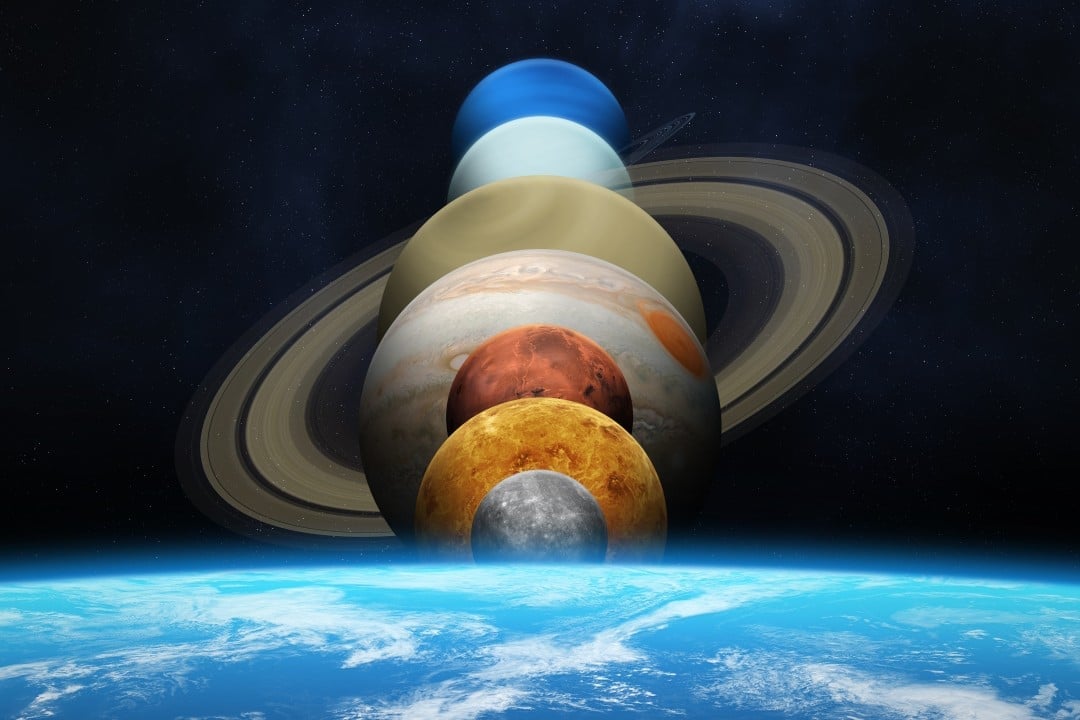
Amateur and professional astronomers from different parts of the world turn their instruments towards the western horizon at the end of February, awaiting a specific celestial configuration that involves almost the entire visible solar system. The phenomenon, expected to reach its peak on the 28th, brings together Mercúrio, Vênus, Júpiter, Saturno, Urano and Netuno in an apparent line shortly after sunset. Embora the planets are not physically aligned in three-dimensional space, the terrestrial perspective creates an optical illusion where the celestial bodies appear to parade together, providing a rare opportunity for contemplation and study of orbital mechanics.
The visibility of the event directly depends on local weather conditions and the level of light pollution in the observation region. Enquanto four of the planets involved are bright enough to be identified with the naked eye under ideal conditions, the most distant gas giants, Urano and Netuno, require the use of optical equipment to be visualized. Especialistas emphasize that the observation window is narrow, occurring in the afternoon twilight, a time when the contrast between the planetary brightness and the darkening of the sky reaches the ideal point for identifying the stars.
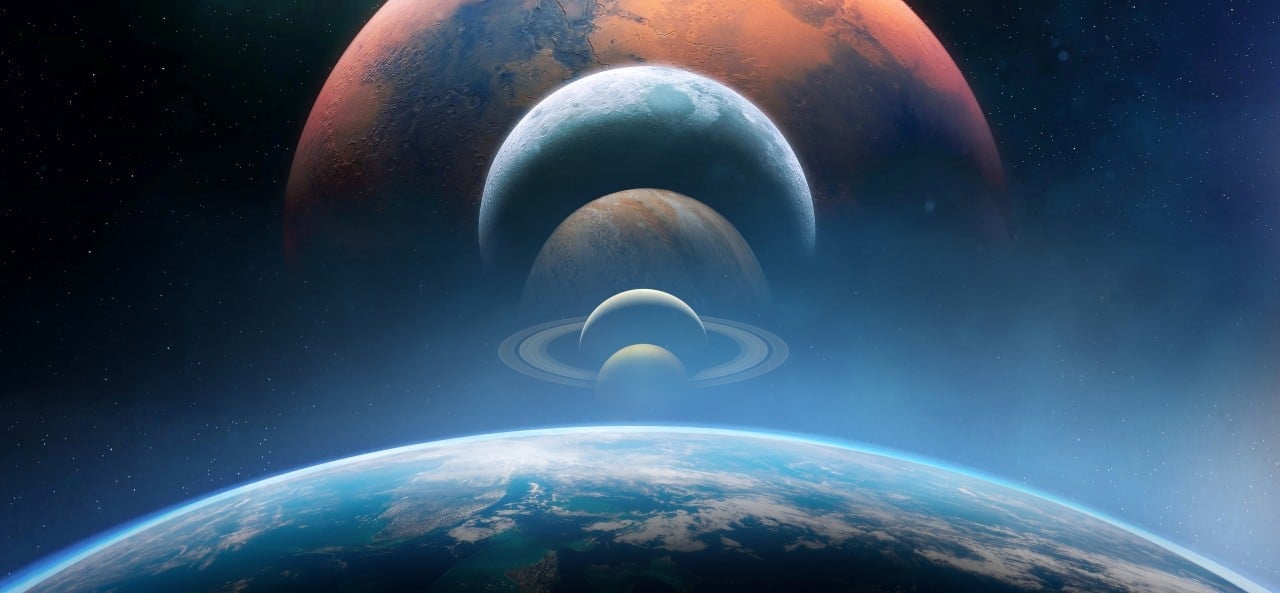
Public interest in astronomical events has grown significantly, driven by the ease of access to star mapping information and applications. The current arrangement of the planets allows observers to follow the evolution of the alignment over consecutive nights, noting the subtle changes in the relative positions of each celestial body. Este period serves as an invitation for the urban population to seek out places with an unobstructed horizon, reconnecting with the natural cycles of the cosmos.
Orbital configuration dynamics
The visual arrangement that appears in the sky is the result of the different orbital speeds of each planet around Sol. Mercúrio, being the fastest and closest to the star, is positioned low on the horizon and displays a subtly reddish color due to terrestrial atmospheric interference. Logo above, Vênus acts as the group’s beacon, presenting an intense and unmistakable glow that serves as a guide to locate the other members of the lineup.
Júpiter and Saturno, the largest planets in the system, occupy higher positions in the celestial vault, guaranteeing a longer exposure time before setting in the west. Viewing Saturno, even through modest telescopes, reveals the structure of its rings, while Jupiter allows observation of its Galilean moons as small points of light around it. Urano and Netuno, in turn, appear as pale points of bluish and greenish light, interspersed between their brighter neighbors, completing the planetary sequence.
Celestial mechanics dictate that such encounters are cyclical, but the simultaneous meeting of six planets in such a restricted sector of the sky is an event that does not occur annually. Analyzing this alignment allows students and enthusiasts to better understand the ecliptic plane, the imaginary line in the sky where Sol, Lua and the planets appear to transit.
Strategies for efficient observation
To ensure a satisfactory experience, it is recommended to start the vigil approximately thirty minutes after local sunset. The day’s afterglow will still be present, but it is in this interval that Mercúrio and Vênus become visible before dipping below the horizon line. The choice of location is decisive; Rural areas or parks away from large urban centers offer darker skies, essential for trying to locate Urano and Netuno with binoculars.
The use of technology has become an indispensable ally for modern astronomy. Aplicativos of augmented reality on smartphones allows the user to point the device at the sky and instantly identify which luminous point corresponds to which planet, facilitating orientation even for those who have no prior knowledge of celestial charts. Além Furthermore, checking the weather forecast to avoid cloudy nights is a crucial planning step.
Nature photographers and astrophotographers also benefit from this period. Câmeras with long exposure capabilities, mounted on stable tripods, can capture the entire alignment in a single image, recording the differences in magnitude and color between the planets. The Lua, depending on its phase, can add an aesthetic element to the composition or, if it is too crowded, overshadow the fainter objects.
Relevance to science education
High-visibility events act as catalysts for scientific dissemination and astronomy teaching. Observatórios Municipalities and astronomy clubs often organize public observation sessions during these phenomena, making larger aperture telescopes available to the community. Essas initiatives allow the lay public to have direct contact with science, transforming visual curiosity into concrete learning about the universe.
From an academic point of view, the alignment has no measurable gravitational impact on Terra, demystifying popular beliefs about catastrophes associated with planetary configurations. The importance lies in the opportunity to calibrate instruments and study planetary atmospheric conditions under specific lighting angles. The coincidence of this event with the continuous improvement of Earth observation technologies enriches the global astronomical database.
Observation of the night sky, in addition to its scientific value, carries a historical cultural component. Desde ancient times, civilizations monitored the movement of the stars to mark time and navigate. The current lineup connects the modern viewer to this ancient tradition, using contemporary tools to appreciate the same cosmic dance that fascinated past generations.
Recommended equipment
Although naked-eye observation is possible for most of the planets involved, the use of optical instruments substantially enriches the experience. Binóculos with specifications like 7×50 or 10×50 are ideal for beginners, as they offer a wide field of view and reasonable stability, allowing you to scan the sky for the dimmer planets. Eles are particularly useful for distinguishing Urano from background stars.
Small and medium-sized refracting or reflecting telescopes open up a new dimension of detail. With them, it is possible to observe the phases of Vênus, the atmospheric bands of Júpiter and the separation between the rings of Saturno and the planet. Para For those who want to record the moment, adapters for attaching smartphones to telescope eyepieces are affordable accessories that produce surprising results.
Independentemente do equipamento, a paciência e a adaptação da visão ao escuro são fundamentais. Recomenda-se evitar o uso de luzes brancas fortes no local de observação, preferindo lanternas com luz vermelha, que não afetam a dilatação das pupilas, preservando a sensibilidade ocular para captar os detalhes mais tênues do firmamento.



