
Space monitoring points to the possibility of an asteroid impact on the Moon in the next decade without terrestrial risk

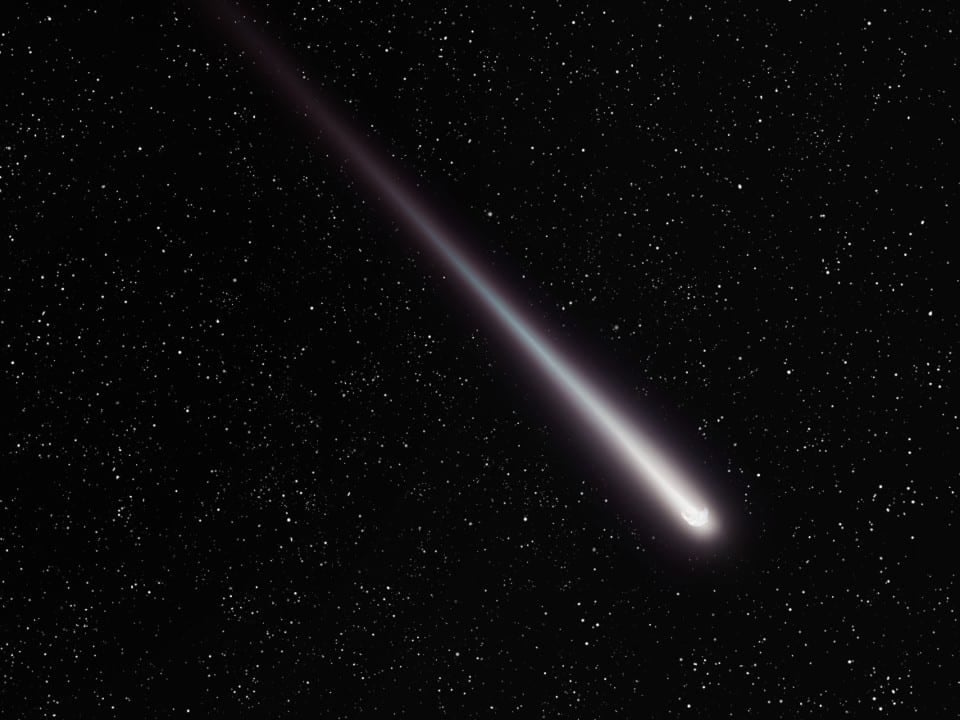
Space agencies around the world are focusing their attention on a celestial body that presents peculiar orbital dynamics in the vicinity of Terra. The asteroid, identified as 2024 YR4, entered astronomers’ radar in late 2024 and has since been the subject of complex calculations that indicate a significant chance of collision with the lunar surface. The most recent projections point to December 22, 2032 as the likely date for this cosmic event, with an estimated probability of occurrence of 4%.
Despite the proximity and magnitude of the predicted event, experts from NASA and Agência Espacial Europeia (ESA) assure that there is no reason to be alarmed regarding the safety of our planet. Exhaustive computational Simulações, which projected the object’s orbit for decades, ruled out any risk of impact with Terra. The focus now lies entirely on the interaction between the asteroid and Lua, turning a potential threat into a valuable scientific opportunity.

Orbit monitoring and refinement
The trajectory of 2024 YR4 has been constantly refined thanks to the recovery of observational data. Inicialmente, there were uncertainties regarding the exact path of the space rock, with a risk margin for Terra calculated at around 3.1% in February 2025. However, new observations made it possible to correct the object’s astrometry, eliminating the chances of a terrestrial collision and confirming the stability of the prediction of safe passage by our planet.
The tracking work involves a global collaboration between ground-based observatories and space telescopes. The ability to predict such an event years in advance demonstrates the increasing effectiveness of Defesa Planetária programs. Diferente of past decades, current technology allows not only to identify the Objetos Próximos of the Terra (NEOs), but also to catalog their future movements with a precision that transforms uncertainty into reliable statistical data.
Physical characteristics and impact energy
Dimensional analyzes suggest that 2024 YR4 has an estimated diameter of between 53 and 67 meters. Para For comparison purposes, this size is similar to a building of approximately 20 floors. Embora is classified as a small asteroid in astronomical terms, the speed at which it travels through space guarantees that a possible collision with Lua would release a colossal amount of energy.
If the collision takes place in 2032, the resulting explosion would be equivalent to the detonation of several megatons of TNT. The impact would be enough to create a new visible crater on the lunar surface, possibly with a diameter of more than a kilometer. Este phenomenon would permanently alter the local geography of the natural satellite and could be observed from Terra with suitable instruments, depending on the lighting and positioning conditions at the time of the shock.
Opportunities for lunar science
The scientific community views the possibility of this impact with great enthusiasm, treating it as a natural experiment of immense proportions. Diferente of controlled missions, such as NASA’s Double Asteroid Redirection Test (DART), this event offers a chance to observe the mechanics of impacting a celestial body at high speed without the costs associated with launching a purpose-built probe.
Among the main expected scientific benefits, the analysis of the debris plume that would be ejected from the lunar surface stands out. Studying this material could reveal mineral compositions of the lunar subsurface that would otherwise remain inaccessible. Além Furthermore, seismometers installed on Lua by previous or future missions could capture the shock waves, providing crucial data about the satellite’s internal structure.
The event would also serve as a litmus test for impact prediction models. Validar whether the collision will occur exactly at the predicted location and time would help calibrate planetary defense systems for future threats that may, in fact, target Terra.
Future observations and visibility windows
Asteroid 2024 YR4 does not remain visible continuously to ground-based telescopes. Sua orbit takes it to regions of space where the sun’s glare obscures its observation or where the distance makes it imperceptible to conventional equipment. Therefore, astronomers take advantage of specific approach windows to collect data. The year 2026 presents itself as a crucial period for collecting new information, with the expectation that high-power telescopes, such as the James Webb, can contribute to the physical characterization of the rock.
A new clear observation opportunity is scheduled for 2028. With each new batch of data collected, the 4% probability of impact on Lua will be adjusted. It is common in celestial mechanics that, as the margin of error in observations decreases, the probabilities of impact change drastically, potentially confirming the event as certain or completely ruling it out if the rock scrapes past the satellite.
Regardless of the final outcome, monitoring 2024 YR4 is already considered an operational success. Ele exemplifies the maturity of space surveillance systems and the human ability to anticipate cosmic events, ensuring that knowledge about Terra’s space neighborhood continues to expand in a safe and controlled manner.



