

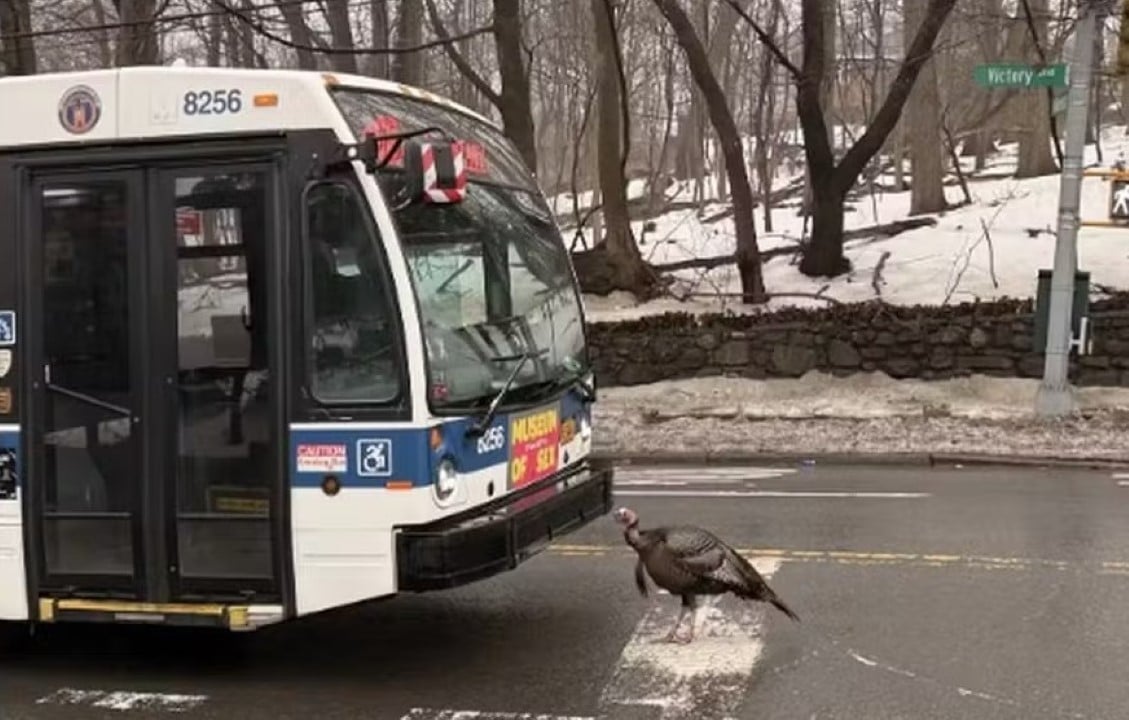
The routine of drivers and passengers traveling along Victory Boulevard, in Staten Island, was changed this Wednesday due to an unusual interaction with local fauna. A wild turkey obstinately positioned itself in front of an MTA bus, blocking the road and attracting the attention of those passing through the region of Costa Leste, an area where the presence of these animals has become increasingly common in the urban scene.
The public transport vehicle, which was on its regular route through the Silver Lake neighborhood, remained motionless while the bird appeared to examine its own reflection or an advertisement on the front of the bus. Testemunhas reported that the animal did not show fear due to the size of the vehicle, maintaining a rigid posture that prolonged the interruption of road flow and generated immediate curiosity.
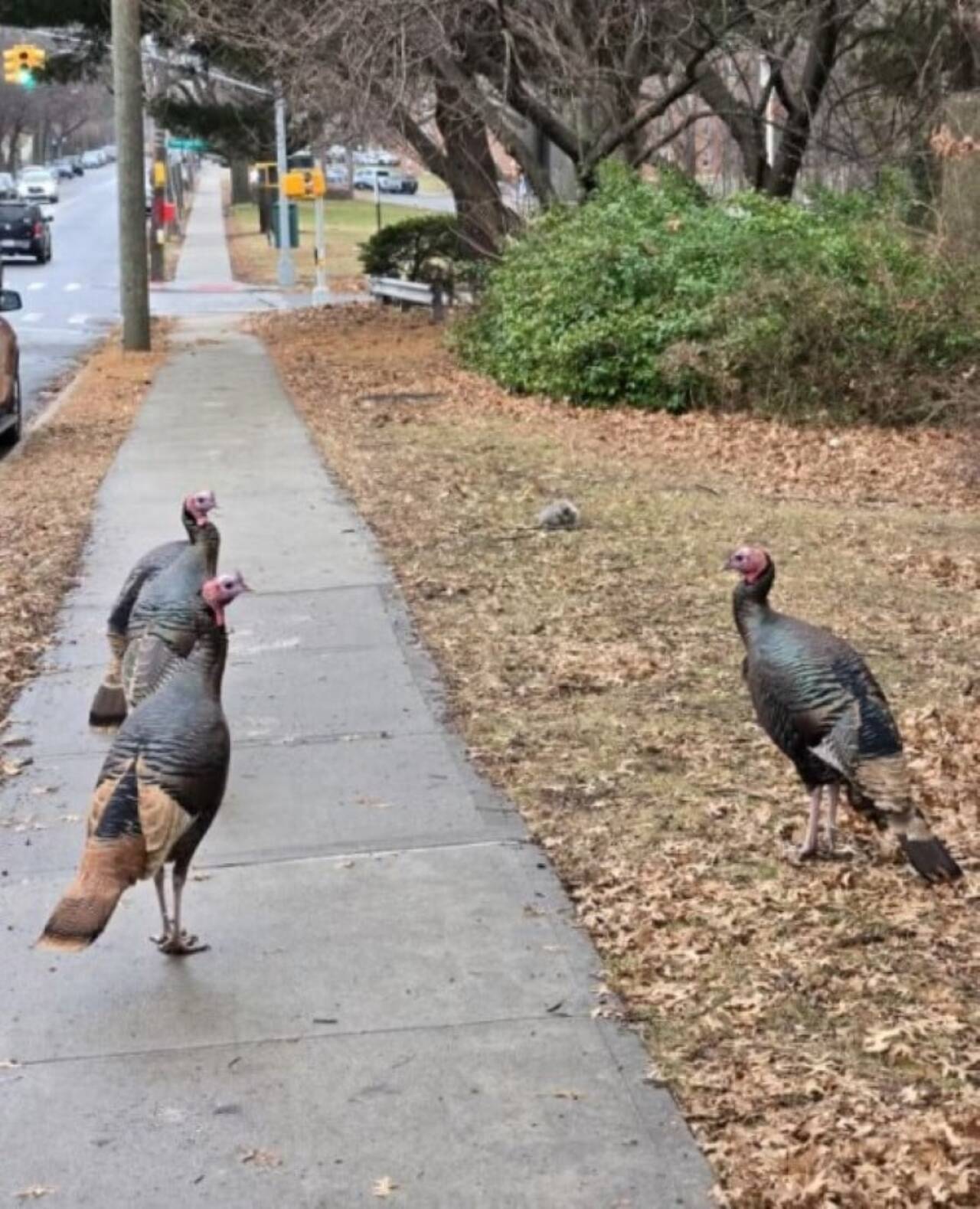
The episode resulted in temporary congestion on the avenue, affecting the circulation of cars following behind and generating an estimated five-minute delay in local traffic. Traffic authorities monitored the situation from a distance, but no physical intervention was necessary, as the bird ended up naturally moving away to the sidewalk, allowing the road to return to normal shortly afterwards.
Origin and adaptation of the species in the city
The established presence of wild turkeys in Staten Island dates back to the late 1990s, when a small group of domestic birds were released near a local psychiatric center. What began as an isolated incident turned into an environmental management issue, with population growth turning these birds into regular residents of the district. Current Estimativas points to the existence of around 100 individuals spread across neighborhoods like Dongan Hills.
Originally introduced without structured ecological planning, turkeys have benefited significantly from the absence of natural predators in the urbanized region. Essa biological advantage allowed their colonies to expand into residential streets and main thoroughfares, integrating into the local ecosystem in unforeseen and often conflictual ways.
Over time, these animals developed territorial habits that directly interfere with the daily lives of residents. Bloqueios sidewalks and pedestrian pursuits have become common reports. Esforços Initial attempts to control proliferation involved relocation attempts, which achieved limited results due to the birds’ high resilience and their ability to adapt to the cement and asphalt environment.
Recent incidents and pattern of behavior
This Wednesday’s case is not an isolated event, but part of a series of occurrences that demonstrate the growing boldness of these animals in densely populated areas. Apenas In recent months, several clashes have been recorded, evidencing a pattern of territorial behavior:
– In July 2025, a man was chased by a wild turkey as he tried to get into his car in a residential neighborhood in Staten Island, forcing him to run for cover.
– In January 2026, a group of turkeys blocked a street in Astoria, forcing drivers to detour and causing commercial deliveries to be delayed by almost ten minutes.
– In February 2026, a UPS delivery man faced two turkeys in an area close to Branford, having to wait for the animals to disperse before continuing his work route.
Control measures and coexistence challenges
Authorities in Nova York, through Departamento of Parques and Recreação, have implemented population monitoring programs that include annual counts and the use of cameras to track the movements of turkeys in Staten Island. Essas initiatives aim to identify high concentration zones and apply non-lethal methods to reduce negative interactions with the public, such as installing barriers at critical traffic points.
Furthermore, partnerships with environmental organizations promote educational campaigns for residents. The focus is on teaching coexistence techniques, such as avoiding direct feeding, which encourages the birds’ fearless behavior. Relatórios indicate that these actions reduced the number of complaints by 15% in the last year, although challenges persist in the most affected neighborhoods.
Wild turkeys exhibit intense territorial traits, especially males during mating season when they defend wide areas against perceived intruders. Esse behavior explains confrontations with vehicles, as birds often interpret large objects — or their own reflection in shiny surfaces like bumpers — as threats or rivals.
Urban adaptation allows them to explore varied sources of food, from natural seeds to human waste, which strengthens their presence in modified environments. Observações show that they move in family groups for greater protection, which can magnify the impact of their actions when they decide to occupy a public road.



