
BYD initiates recall of almost 90,000 hybrid sedans in China after identifying critical battery failure


Chinese automotive giant BYD has announced a significant recall campaign involving 88,981 units of its popular plug-in hybrid sedan, the Qin Plus DM-i. The measure was taken in response to a manufacturing flaw identified in the battery controller harness, which could compromise vehicle safety and, in extreme cases, result in a fire risk. The recall covers vehicles produced between January 2021 and September 2023, affecting a considerable portion of the fleet in circulation in the Chinese market.
The defect was formally reported to Administração Estatal of Regulação of Mercado (SAMR) of China, the body responsible for supervising the quality and safety of products in the country. According to the technical report submitted by the automaker, the problem lies in an inconsistency in the production process of the wire harness that connects the battery management system. Essa Structural failure can lead to microcracks in the cable covering, exposing the conductive core and creating an environment conducive to serious electrical failures.
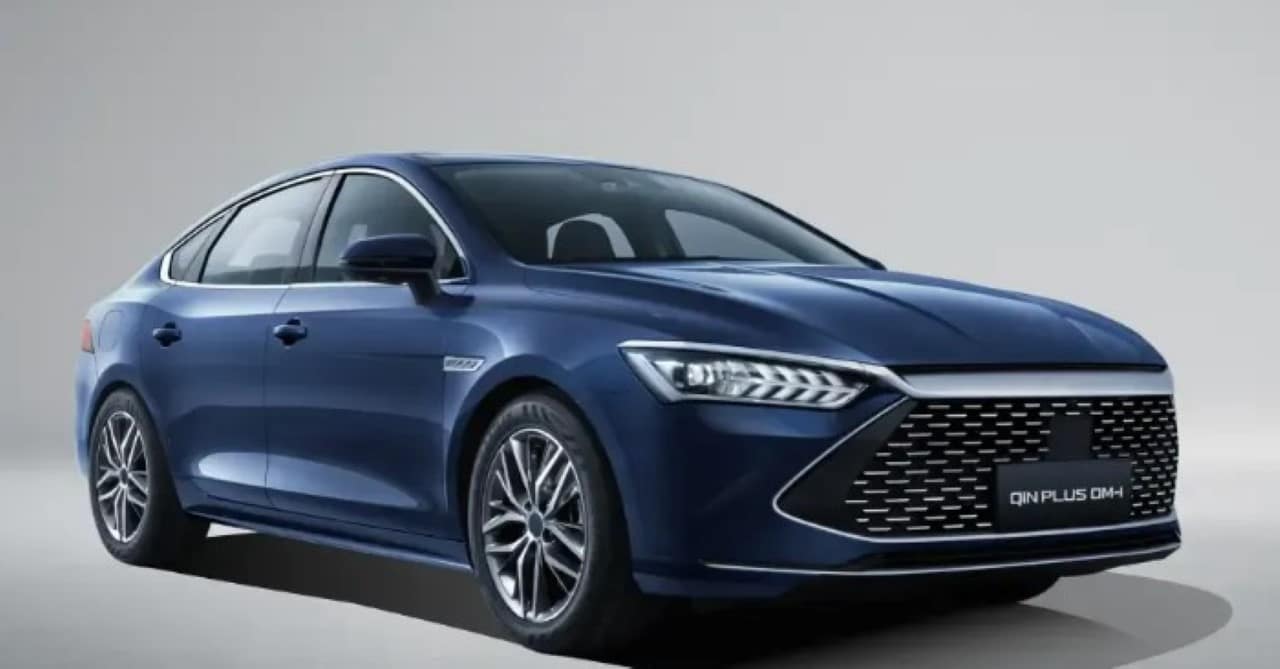
Automotive safety experts warn that exposing the controller’s wires can cause interference in the power system’s data communication. If the management software does not receive accurate readings, the vehicle may experience a sudden loss of power while driving, increasing the risk of collisions. Além Furthermore, in scenarios where overheating or short circuiting occurs due to exposed components, the possibility of a thermal event in the battery becomes a real concern for owners.
BYD’s response involves a two-pronged approach to mitigating risks. Inicialmente, the company will implement an over-the-air software update (OTA – Over-The-Air) to improve power cell monitoring and detect anomalies in current flow. Paralelamente, owners will be notified to come to the dealership, where technicians will perform a detailed physical inspection. Caso If damage or abnormal wear is found in the controller harness, the component will be replaced free of charge, ensuring the integrity of the electrical system.
Technical challenges in the production of electrified vehicles
The complexity of electrical systems in modern hybrid and electric vehicles poses rigorous challenges to assembly lines. The case of the Qin Plus DM-i illustrates how millimeter deviations in the manufacturing of internal components, such as harnesses and connectors, can have large-scale repercussions. The battery controller acts as the brain of the energy system, and any failure in its connection compromises not only performance, but the structural safety of the car.
Lithium battery technology, although efficient, requires constant monitoring of temperature and voltage. Quando the communication harness malfunctions, the Sistema of Gerenciamento of Bateria (BMS) may lose the ability to regulate these critical parameters. Sem this regulation, the system is vulnerable to oscillations which, in situations of high energy demand — such as sudden accelerations or rapid recharges — can trigger unwanted thermal reactions.
This incident highlights the importance of increasingly strict quality control protocols in the new energy vehicle (NEV) industry. With mass production accelerating to meet global demand, automakers face the challenge of maintaining technical precision across millions of units. BYD, when identifying and reporting the problem, follows a transparency protocol required by Chinese authorities, which have intensified supervision over battery safety.
Recent history and containment measures
This is not an isolated event in the recent trajectory of the expansion of electric vehicles in Ásia. The industry has seen an increase in the number of recalls related to software and electrical components as cars become more dependent on complex digital systems. Para to BYD, the recall of the Qin Plus DM-i adds to other corrective actions carried out in recent years, demonstrating that the brand’s exponential growth is accompanied by the need for constant adjustments to its industrial processes.
Previously, models such as the Tang DM-i and the Yuan Pro also underwent recall campaigns due to battery safety concerns. In some of these cases, the failure was related to the sealing of the battery packs, which could allow moisture to enter and cause short circuits. The repeat recalls focused on the power system suggest the automaker is refining its technologies in real time, learning from data collected from the fleet in use.
The strategy of using OTA updates as the first line of defense is a growing trend in the industry. Isso allows the manufacturer to change safety parameters instantly, reducing risk while physical repair is scheduled. However, the need for physical hardware replacement indicates that not all problems can be resolved via software, reaffirming the importance of the construction quality of physical components.
Market impact and sales performance
Despite technical challenges and recall campaigns, BYD maintains a dominant position in the global electrified vehicle market. Sales figures continue to break records, indicating that consumer trust in the brand remains resilient. The Qin Plus DM-i model, specifically, is one of the company’s sales pillars, offering an affordable hybrid option that competes directly with traditional combustion sedans.
Recent data shows that demand for plug-in hybrid vehicles (PHEV) continues to be strong. The ability of these vehicles to operate on electricity in the city and fuel on long trips attracts consumers concerned about range. The recall, although a logistical and financial setback, is seen by market analysts as a necessary measure of maturity for a company seeking global leadership not only in volume, but in reliability.
Transparency in conducting this process will be crucial for maintaining the brand’s image. BYD has instructed its dealer network to prioritize service to affected customers, seeking to minimize vehicle downtime. How quickly you resolve the battery harness issue will determine the long-term impact on the Qin Plus line’s reputation.
The Chinese market, being the largest in the world for electric vehicles, serves as a rigorous laboratory. SAMR regulations are forcing automakers to raise their standards. Para consumers, this results in safer vehicles in the long term, as potential faults are identified and corrected with greater rigor and speed than in the era of purely mechanical vehicles.



