
US president promises unprecedented force against Iran after Khamenei’s death and regional attacks

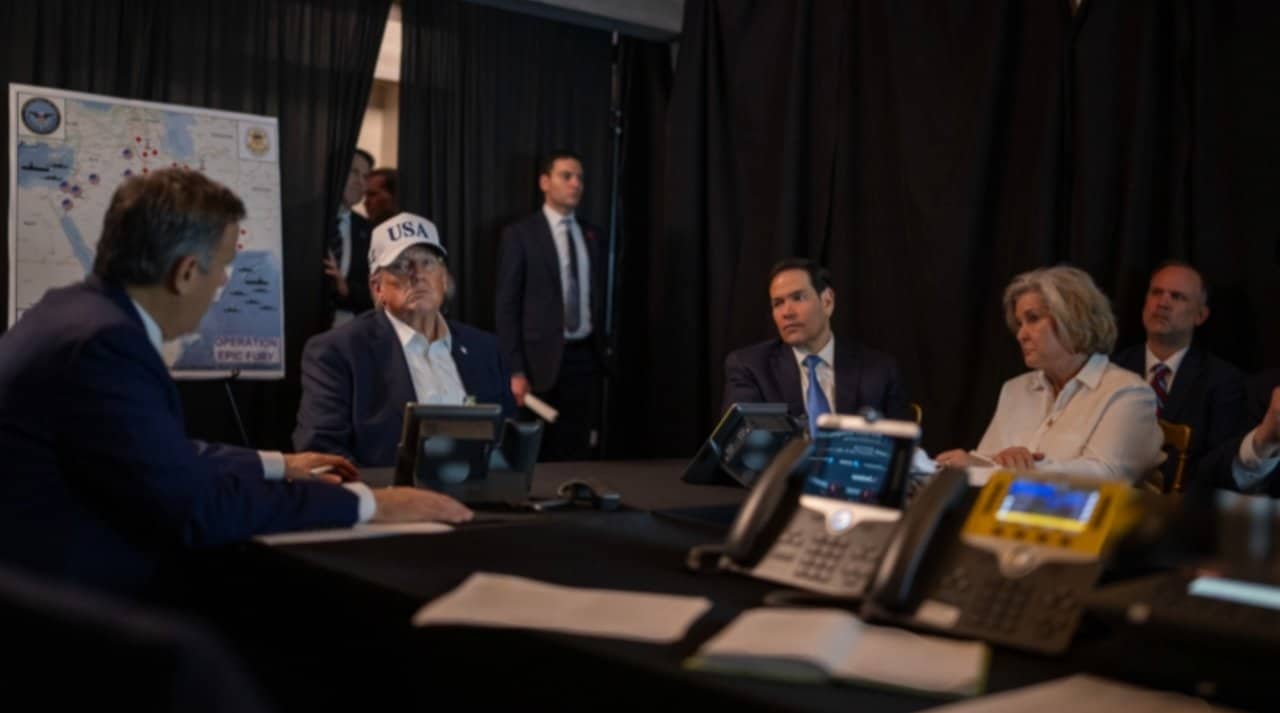
Geopolitical stability in Oriente Médio suffered a seismic shock this weekend, triggering one of the most serious crises in recent decades. Após a coordinated military operation that resulted in the death of the Iranian supreme leader, Ali Khamenei, and several high-ranking officials in Teerã, the scenario quickly evolved into a direct exchange of threats and bombings. The president of the Estados Unidos,
The American leader’s statement came in immediate response to the actions of Teerã, who began a vast retaliatory operation using drones and ballistic missiles. Trump’s statement, released through the Truth Social platform, emphasized that the Estados Unidos will not hesitate to escalate the conflict to protect its interests and allies, placing the region on high alert for a comprehensive war.
American and Israeli military forces had already carried out strategic bombings against 14 Iranian cities on Saturday. The operation, officially described as an effort to neutralize nuclear capabilities and destabilize the regime’s command, had devastating consequences, claiming hundreds of victims and hitting civilian infrastructure, including a school in the city of Minab, according to local reports.
Allied offensive and the power vacuum in Teerã
Saturday’s joint operation marked a turning point in the recent history of Irã. Além confirmation of the death of Ayatollah The tactical objective of dismantling the hierarchy of command appears to have been achieved, but the human and political cost has generated a wave of outrage that fuels the ongoing military response.
The preliminary official toll points to at least 201 dead and 747 injured on Iranian territory. The precision and scope of the attacks suggest deep military intelligence on the part of Washington and Tel Aviv, targeting not just physical facilities but the surgical elimination of decision-makers.
Among the authorities confirmed as fatal victims of the offensive are names crucial to the regime’s security:
– Amir Nasirzadeh, minister of Defesa of Irã;
– Mohammed Pakpour, commander of the land forces of Guarda Revolucionária;
– Abdolrahim Mousavi, head of the Estado-Major of the Forças Armadas;
– Gholamreza Rezaian, head of Inteligência of the national police;
– Ali Shamkhani, admiral and strategic advisor to the supreme leader.
Iranian response and strategic targets
Faced with significant losses, the president of Irã, Masoud Pezeshkian, adopted a stance of total confrontation. In an official statement, he classified the attacks as a historic crime and reaffirmed that revenge is an inalienable right of República Islâmica. The rhetoric was quickly converted into military action, with projectiles being launched against seven neighboring nations that host American bases or interests.
Targets of Iranian retaliation include territories in Arábia Saudita, Jordânia, Bahrein, Emirados Árabes Unidos, Catar, Kuwait and Israel. Teerã’s strategy aims to demonstrate that the military presence of the Estados Unidos in the region puts all host countries in the line of fire, trying to create internal diplomatic pressure between Washington’s allies in the Golfo Pérsico.
The Guarda Revolucionária Islâmica, now under new and uncertain leadership, promised that the deaths of its commanders will not go unpunished. The military organization issued notes guaranteeing severe and decisive punishments, signaling that the operational capacity of the Irã, although injured, maintains the potential to inflict considerable damage on the energy and military infrastructure of adversaries.
Continued escalation and global risks
The situation worsened further on Sunday, when Israel confirmed new air strikes against the center of Teerã. Esta second wave of bombings indicates that there are, at the moment, no effective diplomatic channels containing the violence. The international community watches with apprehension, fearing that the conflict will spill over into the closure of vital trade routes, such as the Estreito of Ormuz, which would directly impact the global economy.
International bodies and neutral powers have begun behind-the-scenes moves to try to halt the escalation, but the rhetoric of “strength never seen before” coming from Casa Branca and the commitment to “sacred revenge” from Teerã leave little room for immediate negotiations. The scenario remains volatile, with intense military movements throughout the Arabian peninsula and in Levante.



