
War Coverage: Pentagon refutes Iran’s claim about attack on American aircraft carrier in the Persian Gulf

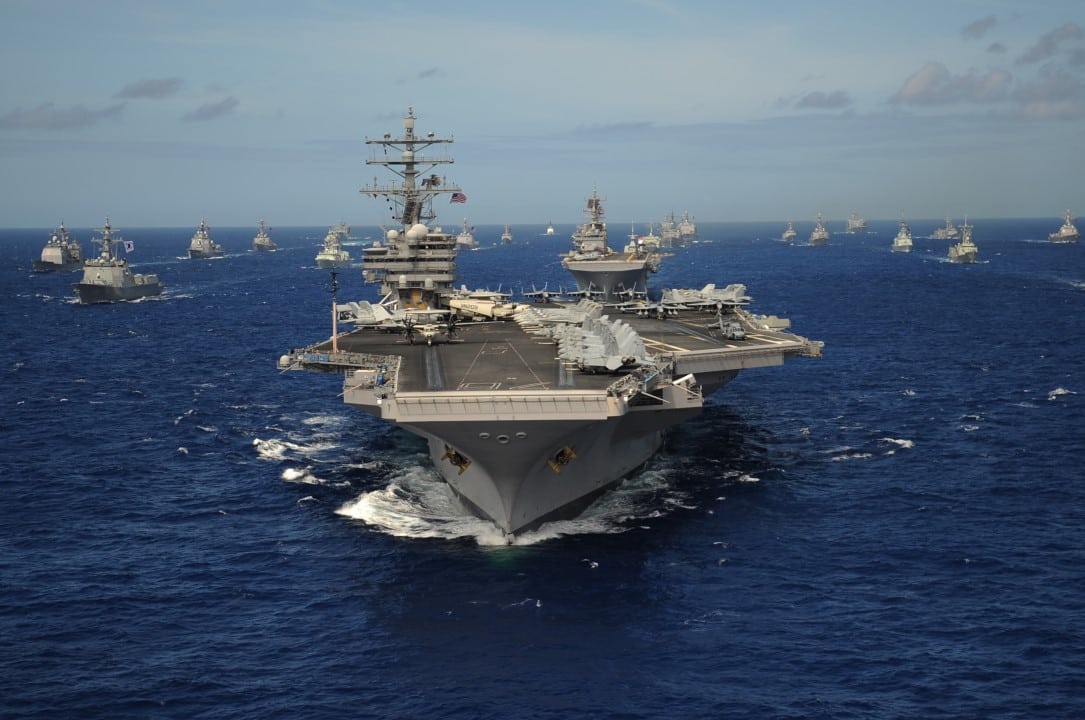
The Forças Armadas of the Estados Unidos vehemently denied the information released by the Guarda Revolucionária Islâmica of the Irã that the American aircraft carrier USS The Iranian statement, which quickly had repercussions, was categorically refuted by the US Comando Central (Centcom) this Sunday, March 1st. The American denial underscores the intensity of rhetoric and actions amid escalating tensions in the Oriente Médio, where Israel and the US are engaged in an offensive against the Irã.
Centcom called the Iranian claim a “lie”, declaring that “Lincoln was not hit” and that the missiles allegedly fired “didn’t even come close to it”. Guarda Revolucionária had told local media that the aircraft carrier had been hit by four ballistic missiles, issuing a warning that “land and sea are increasingly becoming a graveyard for terrorist attackers”, according to reports.
Escalation of tensions and offensive against Teerã
The situation in the region is marked by an intensification of conflicts, with the Israeli Prime Minister, Benjamin Netanyahu, announcing an increase in military attacks against Teerã. The Israeli army was already reaching the heart of the Iranian capital with “increasing force”, and Netanyahu promised that this intensification would be even greater in the coming days.
The order to continue the offensive was issued after a meeting with the Ministro of the Defesa, Israel Katz, the Chefe of the Estado-Major, Eyal Zamir, and the head of the Netanyahu stated that Israel is mobilizing the full strength of the army “like never before” to “guarantee our survival and our future”, highlighting cooperation with the US to “deal a decisive blow to the terrorist regime”.
Regional repercussions and incidents
The escalation in Oriente Médio has generated international concerns, with leaders such as Chancellor Friedrich Merz of Alemanha expressing concern about the situation. Paralelamente, reports of specific incidents continue to emerge, adding to the complexity of the scenario.
A rocket reportedly fell close to a German cruise ship, highlighting the proximity of the conflict to civilian transit areas. Milhares of cruise passengers were stranded in cities such as Dubai, Abu Dhabi and Doha, reporting missile attacks and impacts, according to circulating testimonies.
Notable events and reports of attacks
Violence in the region was also marked by events with great impact. The former president of Irã, Mahmoud Ahmadinejad, who governed República Islâmica from 2005 to 2013, reportedly died in combat. A German tourist in Dubai reported experiencing Iranian attacks firsthand, describing disruptions to normal life, especially at night, due to the explosions.
American military casualties have also been confirmed, with Pentágono reporting the deaths of three soldiers since the start of the joint US and Israel war against Irã. Estas are the first casualties recorded by the Estados Unidos in the context of the current conflict.
Cyprus and rocket attacks
The government of Chipre, a member of União Europeia, had to go public to refute reports that Iranian missiles had been fired towards the Mediterranean island. Spokesperson Konstantinos Letymbiotis used the X platform to clarify that such allegations were unfounded and that authorities were closely monitoring the situation.
Despite denials, rocket attacks continue to hit targets. An Iranian missile reportedly hit the Israeli city of Beit Shemesh, resulting in the death of at least nine people and leaving another 20 injured, two of them in serious condition, according to Times of Israel. Equipes search and rescue services were sent to the scene.
Tragedy at a girls’ school in Irã
One of the most tragic episodes reported involved an attack on a girls’ school in the south of Irã, in the city of Minab, which resulted in the deaths of at least 108 people. Equipes Rescue Crescente Vermelho Iraniano and Iranian judicial authorities confirmed the number of victims.
A local official blamed Israel for the attack, while the Israeli army denied any knowledge of an Israeli or American attack on Minab. Army spokesman Nadav Shoshani declared that the operations were conducted “with the utmost precision”, leaving the authorship of the attack on the school under controversy.
Geopolitical scenario and implications
The complexity of the current conflict in Oriente Médio reflects a series of historical tensions and power struggles that span decades. Direct and indirect clashes between Israel and Irã, with the involvement of the Estados Unidos, constantly reshape alliances and strategic calculations in the region. Volatility is accentuated by the diversity of actors, including governments, militias and paramilitary organizations, each with their own interests and agendas.
The response from the international community has been divided, with some countries calling for de-escalation and others expressing support for one party or the other. The situation has significant implications for global energy security, given the region’s importance for oil production and traffic. Control of strategic sea lanes, such as Golfo Pérsico, becomes a critical point in any intensification of hostilities.
In addition to direct casualties and destruction, the humanitarian impact of the conflict is growing, with an increase in refugees and internally displaced people. Civil infrastructure is frequently affected, and access to basic services such as health and education is severely compromised, generating a major humanitarian crisis that affects millions of lives.



