
Blood moon recorded in March 2025 delights astronomers and marks the history of celestial observation


The astronomical event that occurred on March 13, 2025 remains one of the most significant records for the scientific community and amateur observers around the world. Naquela date, Lua passed through the shadow of Terra, resulting in a total lunar eclipse that dyed the natural satellite an intense reddish color, a phenomenon popularly known as a blood moon. The celestial configuration provided a visual spectacle that depended directly on terrestrial atmospheric conditions to achieve its characteristic tone.
Experts explain that the precise alignment between Sol, Terra and Lua is the determining factor for the occurrence of this type of eclipse. Durante the phenomenon, Terra blocks the direct incidence of sunlight on the lunar surface, but a small part of this light is refracted by our planet’s atmosphere. Particles present in the atmosphere filter blue light and allow red and orange spectrums to pass through, which end up being projected onto the Lua, creating the visual effect that has fascinated millions of people.
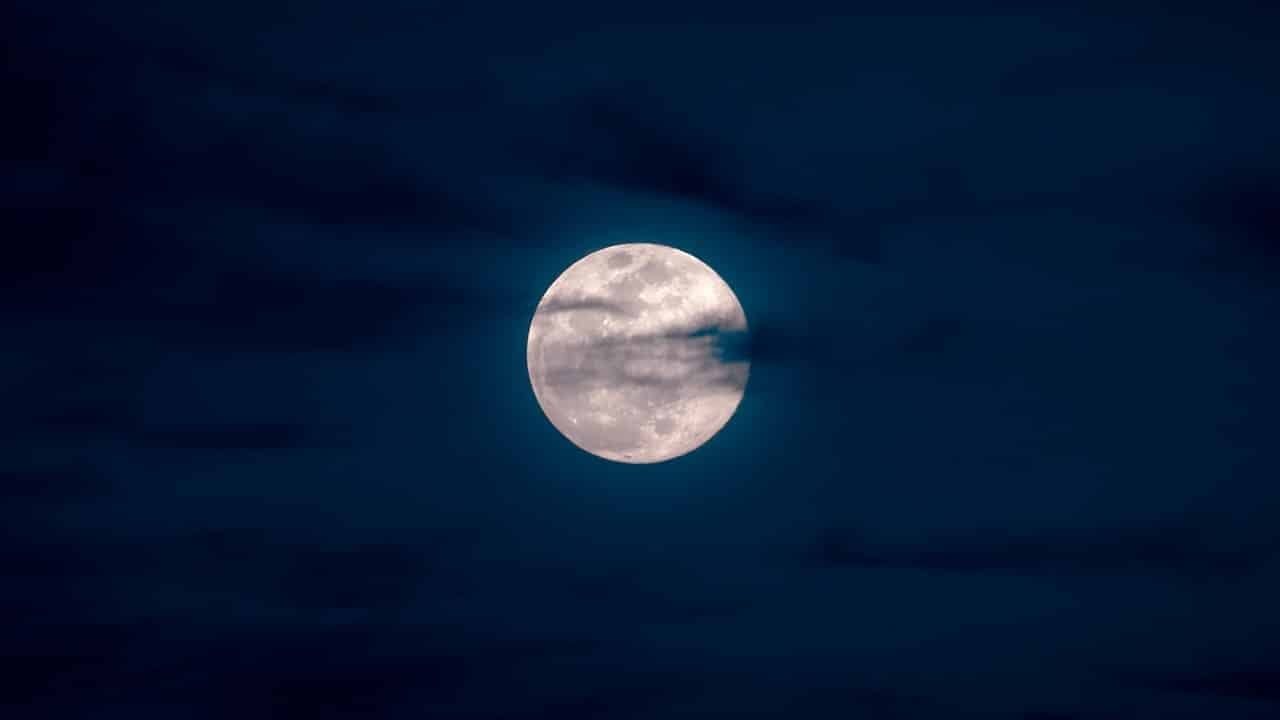
The visibility of the event was improved in several regions, with emphasis on areas with low light pollution and clear skies. The magnitude of the 2025 eclipse served not only as a moment of public contemplation, but also as a crucial opportunity to collect data on the atmospheric composition of Terra at that particular moment.
Physical mechanisms of coloration
The exact hue that Lua takes on during a total eclipse varies according to the amount of dust and clouds present in the Earth’s atmosphere. In March 2025, global conditions contributed to particularly vivid coloration, the result of the physical phenomenon known as Rayleigh scattering. Esse The same principle is responsible for making the sky blue during the day and the sunset reddish, acting as a natural filter for the sunlight that reaches the satellite.
During the totality of the eclipse, Lua does not disappear completely, but rather gains a faint, colorful glow. The intensity of this glow depends on the depth of Lua’s immersion in the umbra, the darkest part of Terra’s shadow. Astrônomos used the event to measure variations in luminosity and refine models on how light interacts with different layers of the Earth’s atmosphere.
Studying these variations in color and brightness offers valuable insights into atmospheric transparency and the presence of volcanic aerosols or pollution. Cada lunar eclipse carries a unique signature based on the state of Terra’s atmosphere at the time of alignment, making the 2025 event a historical archive of that year’s environmental conditions.
Privileged observation at Brownsville
Among the places that offered the best viewing conditions, the region of Marina and Brownsville stood out for the clarity of the horizon and atmospheric stability. The geographic location allowed observers to follow all phases of the eclipse, from the beginning of twilight to the maximum moment of totality, without visual obstructions common in large, densely built urban centers.
The gathering of enthusiasts and residents in open spaces turned the night into an astronomical vigil. The absence of dense clouds in the region during the time of the event facilitated high-resolution photographic recording, allowing images captured in Brownsville to circulate globally as references to the beauty of the phenomenon. The collective experience reinforced public interest in astronomy and understanding celestial cycles.
Impact on scientific research
For the academic community, the March 13, 2025 eclipse was more than a visual spectacle; It was an open-air laboratory. Observatórios professionals turned their instruments to monitor thermal changes on the lunar surface as direct sunlight was blocked. The rapid drop in temperature during an eclipse allows scientists to study the physical properties of lunar soil, such as thermal conductivity and rock density.
In addition to thermal measurements, spectroscopic analysis of the light reflected by Lua during the eclipse provided data on Terra’s atmosphere as seen from an outside perspective. Essa technique is similar to that used by astronomers to study the atmospheres of exoplanets that transit in front of their host stars. Portanto, the event served as a calibration test for instruments and methods that search for life or habitable conditions in other solar systems.
The data collected will continue to be analyzed in 2026, contributing to scientific articles and improving predictions of future events. The collaboration between amateur astronomers, who provided thousands of images from different angles, and professional scientists demonstrated the importance of citizen science in modern astronomy.
Detailed documentation of this specific eclipse helped fill gaps in the historical record of lunar eclipses, allowing comparisons with events from decades past to identify long-term trends in Earth’s atmosphere and orbital motions.
Security and accessibility of the phenomenon
Unlike solar eclipses, which require strict eye protection to prevent permanent damage to vision, lunar eclipses like the one in 2025 are completely safe to observe with the naked eye. The light reflected by Lua, even during the full phase or during the eclipse, is not intense enough to harm the human retina, which makes the event extremely accessible for people of all ages and without special equipment.
The ease of observation contributed to the great global engagement. Binóculos and simple telescopes, although not mandatory, allowed observers to view details of the lunar surface, such as craters and seas, bathed in reddish light. Essa democratic accessibility is one of the factors that keeps lunar eclipses among the most popular and anticipated astronomical events by the general public.




