Microsoft prepares console for 2027 with AMD hybrid technology and advanced AI features
Behind-the-scenes information from the technology industry indicates that the guidelines for the next generation of electronic entertainment from the Redmond giant have already been drawn up. The company’s internal schedule points to 2027 as the milestone for the arrival of a new device on the market, respecting the historical seven-year hardware renewal cycle. The project, identified internally by the codename “Magnus”, consolidates the continuity of the strategic partnership with chip manufacturer AMD and aims to redefine the limits of visual fidelity and processing capacity.
The fundamental strategy of this new phase is not just the increase in raw power, but the focus on the deep integration of intelligent systems. The device’s engineering is being designed to support the increasing demands of modern graphics engines and the complexity of increasingly dense virtual worlds. With the rapid evolution of semiconductor technologies, the focus is on energy efficiency combined with maximum performance, setting the stage for a decade of innovations in the gaming sector.
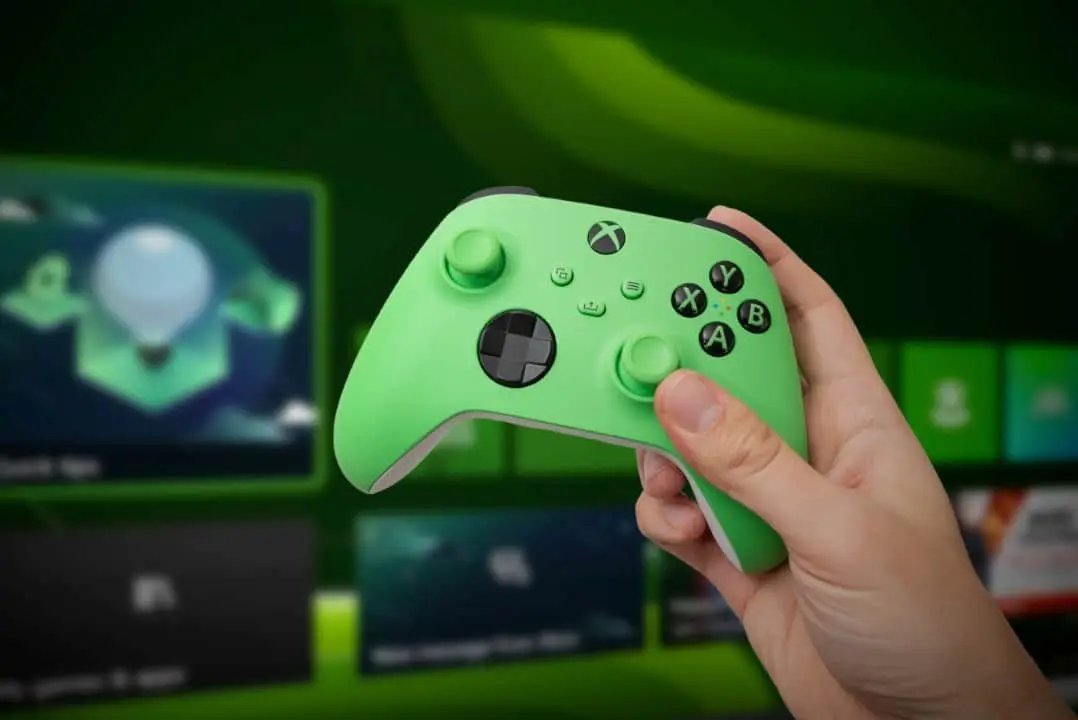
Industry experts point out that the move anticipates convergence trends between different media platforms. Preparations for launch in 2027 suggest that development studios will have time to adapt their tools and create experiences that natively use the new features. The hardware is expected to represent not just an incremental upgrade, but a significant step forward in the way interactive content is processed and delivered to consumers.
The planned architecture promises to resolve historical data transmission and latency bottlenecks. By prioritizing a construction that unites central and graphics processing in a unified and intelligent mesh, the device seeks to eliminate the technical barriers that currently limit developers’ creativity, allowing physical and behavioral simulations on scales never before seen on home consoles.
On the same topic: Leak details future Microsoft console with AMD chip and total focus on artificial intelligence for 2027
Advances in lithography and memory
One of the central pillars of the Magnus project is the adoption of cutting-edge manufacturing processes for its internal components. TSMC’s choice of 3-nanometer lithography signals a commitment to transistor density and thermal efficiency. Esta technology allows a much larger number of logic circuits to be accommodated in a reduced physical space, estimated at around 408 mm² for the main chip. The reduction in transistor size directly results in lower energy consumption to perform the same tasks, in addition to reducing heat generation, a critical factor for the design of compact consoles.
Regarding the memory subsystem, the specifications point to a generational leap with the implementation of the GDDR7 standard. The system must be equipped with up to 48 GB of memory operating over a 192-bit bus, which guarantees exceptional bandwidth for data transfer. Essa robust configuration is essential to power ultra-high-resolution textures and allow the operating system to manage multiple simultaneous tasks without compromising the fluidity of games, ensuring a seamless and interruption-free user experience.
Hybrid Processing Framework
The Unidade Central of Processamento of the future console will bring a paradigm shift in hardware architecture for tabletop gaming. The device will feature 11 cores based on AMD’s Zen 6 architecture, using a hybrid approach that combines different types of cores to optimize workflow. The internal structure will be composed of three high-performance cores, designed to handle the heaviest and most complex instructions in games, ensuring that physics and main logic have full processing priority.
Complementing the brute force, the processor will integrate eight high-efficiency units, based on the Zen 6c variant. Estes smaller cores will be in charge of managing background processes, such as downloads, system updates and interface functions, freeing the main cores exclusively for running games. Essa intelligent division of tasks allows a much more rational use of available energy, avoiding waste in activities that do not require the chip’s maximum potential.
The design based on interconnected chiplets reflects a mature industrial strategy, aiming to increase production yield and control final hardware costs. The estimated energy consumption of the entire system varies between 250 and 350 watts at maximum load. Graças to advanced 3-nanometer lithography, the cooling system is expected to be able to maintain silent operation even during prolonged sessions of intense use, preserving the useful life of the components.
The hybrid architecture also facilitates performance scalability according to application needs. In times of lower demand, the system can turn off high-performance cores and operate only with efficient units, drastically reducing electrical consumption. Essa flexibility is a characteristic inherited from the mobile device and laptop market, now successfully applied to a high-performance desktop console.
Full coverage: News (EN)
See Also


Graphics revolution with RDNA 5 architecture
The visual evolution planned for 2027 relies heavily on the new RDNA 5 graphics architecture. The Unidade of Processamento Gráfico of the Magnus project must incorporate 68 computational units specifically designed to accelerate global illumination and reflection calculations. The goal is to make Ray Tracing a ubiquitous standard across all titles, eliminating the performance penalties that characterized previous generations when enabling these advanced visual features.
Performance projections indicate that the new hardware will be able to rival elite video cards on the computer market, such as a theoretical RTX 5080. The established goal is to run games in native 4K resolution with refresh rates of 120 frames per second. Além Furthermore, compatibility with HDMI 2.1b connections opens the door to displaying multimedia content in resolutions up to 8K, preparing the device for the next generation of televisions and monitors.
The role of the neural processing unit
The biggest hardware innovation lies in the inclusion of a dedicated Unidade of Processamento Neural, known by the acronym NPU. Este specific component is designed to uniquely manage artificial intelligence workloads, boasting a computing capacity estimated at 110 TOPS (trillion operations per second). The system allows you to isolate these tasks on a specialized chip, freeing the CPU and GPU to focus on their primary logic and rendering functions.
The practical application of this technology will be felt mainly in image reconstruction and frame generation techniques. The NPU will allow upscaling software to operate with greater precision and lower latency, increasing final visual quality without requiring excessive brute force from the graphics card. Isso enables more beautiful and fluid games, even in scenes of high geometric complexity.
In addition to graphical benefits, local neural processing will drive significant advances in the artificial intelligence of non-playable characters (NPCs) and game physics. Desenvolvedores will be able to create more realistic behaviors and dynamic interactions that learn from the player, all processed directly on the console, without the need for constant connection to cloud servers.
The energy efficiency of the NPU is also worth highlighting, enabling smart assistant features and standby modes with negligible consumption. The component can operate on just 1.2 watts in standby mode, ensuring the console remains ready to respond to voice commands or perform simple AI tasks without waking the entire system, modernizing the everyday usage experience.
Follow: all about AMD Zen 6
Platform unification and development
The technical collaboration between the companies involved aims to break down the traditional barriers between consoles and personal computers. From 2025 onwards, an acceleration in the convergence of ecosystems is expected, facilitated by the hybrid architecture that closely resembles that of modern PCs. Isso will simplify the process of porting games, allowing developers to create titles that run natively on both platforms with minimal code adjustments.
Reports indicate that preliminary development kits would already be in the hands of major partner studios. Essas test units allow software teams to begin adapting their graphics engines to the new specifications of the Magnus project. The objective is to ensure that, at the launch of the console in 2027, the market is supplied with a robust game library that demonstrates, in practice, the technological leap provided by the new hardware.