
Oil price soars after offensive against Iran and market monitors stability in the Strait of Hormuz


Geopolitical tension in the Oriente Médio reached a new critical level, provoking immediate and significant reactions in global financial markets. Operadores and investors quickly adjusted their positions following confirmation of military offensives involving Estados Unidos and Israel against targets in Iranian territory during the last weekend. The uncertain scenario boosted the search for protective assets and drastically increased the risk premium embedded in energy contracts.
The central fear of analysts lies in the possibility of physical interruptions in the supply of crude oil, given the strategic location of the conflicts. The region is responsible for a considerable share of global production, and any threat to extraction or transport infrastructure generates shock waves in commodity exchanges. The volatility observed in the first hours of trading reflects nervousness about a possible prolonged escalation.
Investors now monitor the diplomatic and military response of the countries involved, while governments of importing nations evaluate their strategic stocks. The perception of risk extended beyond the commodities market, affecting currencies and sovereign debt securities, creating a panorama of widespread caution for the week ahead.
The movement in oil prices is not just a reflection of fear, but a mathematical pricing of the probabilities of logistical blockage. With the global supply chain already operating under pressure in several sectors, an energy shock of this caliber has the potential to alter inflation and economic growth projections on a global scale.
Immediate impact on international prices
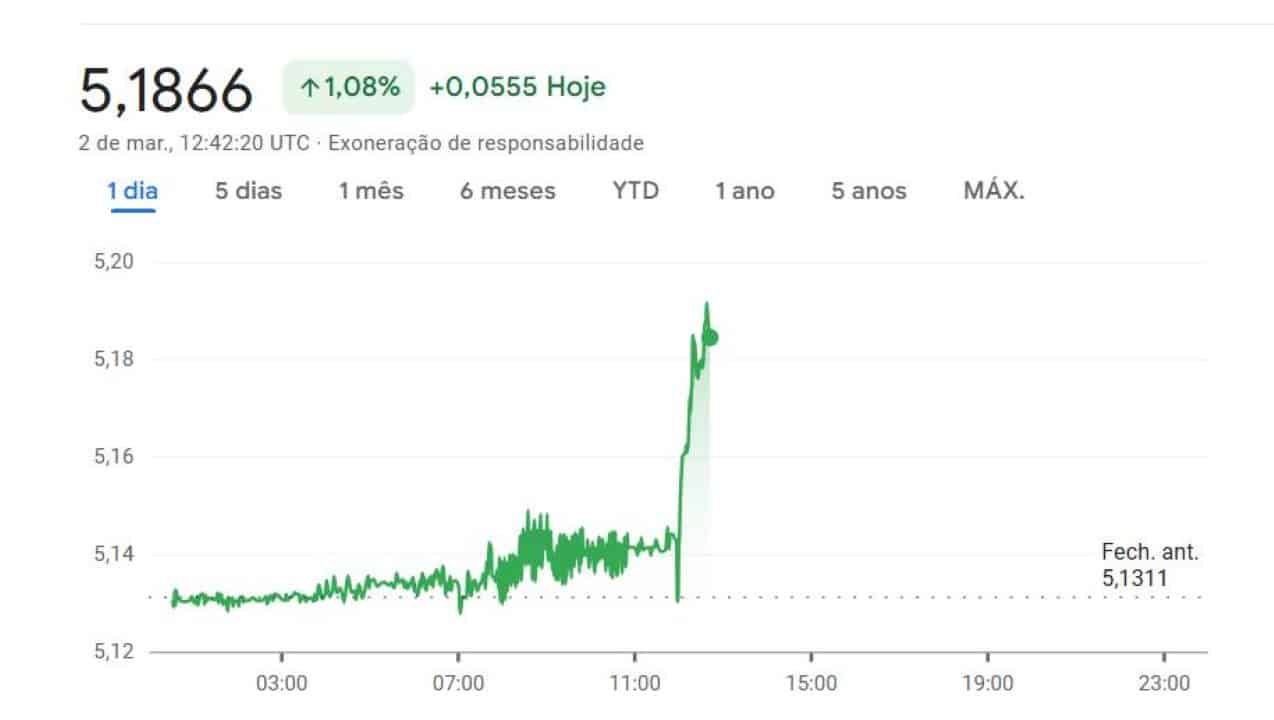
Reference indicators for the energy market responded with robust increases at the opening of the sessions. Brent oil, used as a basis for international prices and due in May, registered an appreciation of 7.31%, being traded at US$78.17 per barrel at Intercontinental Exchange (ICE). Este movement represents one of the most significant daily increases in recent months, highlighting the market’s sensitivity to events in the region.
In the North American market, WTI oil (West In moments of greater tension during the trading session, the Brent rose 13% in an instinctive reaction from traders, before giving back part of the gains as the news flow stabilized.
The ripple effect reached other financial assets, with the US dollar gaining strength against a basket of strong and emerging currencies. Paralelamente, Tesouro, Estados Unidos and
Logistical relevance of Estreito of Ormuz
The focus of global concerns converges on the Estreito of Ormuz, a vital sea passage that connects the Golfo Pérsico to the Golfo of Omã. Este channel is the main artery for the flow of production from oil giants such as Arábia Saudita, Iraque, Emirados Árabes Unidos and Kuwait. The site’s narrow geography makes it susceptible to blockades, mines or military actions that could paralyze tanker transit.
Logistics and energy security experts warn that any interruption, even partial or temporary, on this route would have devastating consequences for global supply. The risk premium associated with maritime transport in the region has skyrocketed, driving up insurance costs for vessels that still dare to sail through the area. The world’s dependence on this single route turns the Estreito into a crisis thermometer.
Historically, threats to close Estreito of Ormuz have acted as triggers for historic highs in the price of a barrel. The complexity of political relations around the canal, added to the military capacity of the actors involved, keeps the market in a state of maximum alert. The security of this passage is considered a national security interest for several economic powers.
Projections and scenarios evaluated by financial institutions
Given the new geopolitical situation, financial institutions revised their short-term projections for the commodity. The Citi analysis team released a report indicating that Brent oil should fluctuate in the range between US$80 and US$90 per barrel throughout this week. Esta estimate incorporates the immediate geopolitical risk premium and uncertainty about the next steps of the conflict.
The base scenario outlined by the bank’s strategists considers the possibility of a quick resolution or forced de-escalation. Caso changes in Irã political leadership or strategic setbacks in missile and nuclear programs occur, the market could see a correction in prices. The expectation is that, if there are clear signs of stabilization within a period of one to two weeks, the pressure on prices will decrease.
In an optimistic perspective of easing tensions, Citi projects that the price of a barrel could fall to the level of US$70, still maintaining a residual portion of risk. Para the second half, the projection points to a convergence towards US$62 per barrel, conditioned on the normalization of the supply flow and the absence of new large-scale military incidents.
Although a broad regional conflict is not the central scenario of current analyses, the probability cannot be ruled out. The persistence of internal hostilities in Irã or the direct involvement of other neighboring nations could sustain prices at high levels for a period much longer than initially estimated, forcing a complete reassessment of hedging and investment strategies in the energy sector.
Vulnerability and strategic planning
The current crisis exposes the fragility of the global energy balance in the face of territorial and political disputes. Países, highly dependent on oil imports, observe the volatility with apprehension, which directly impacts industrial costs and prices for the final consumer. Security of supplies has returned to the top of the agenda in international economic discussions.
Companies in the transport and logistics sector have already started reviewing their budgets, anticipating higher fuel and insurance costs. Strategic planning for the remainder of the fiscal year is being adjusted to accommodate higher price scenarios, which could put pressure on profit margins and pass on costs to the global production chain.



