
Release of image of Hawking on Epstein Island generates clarifications about medical team and event

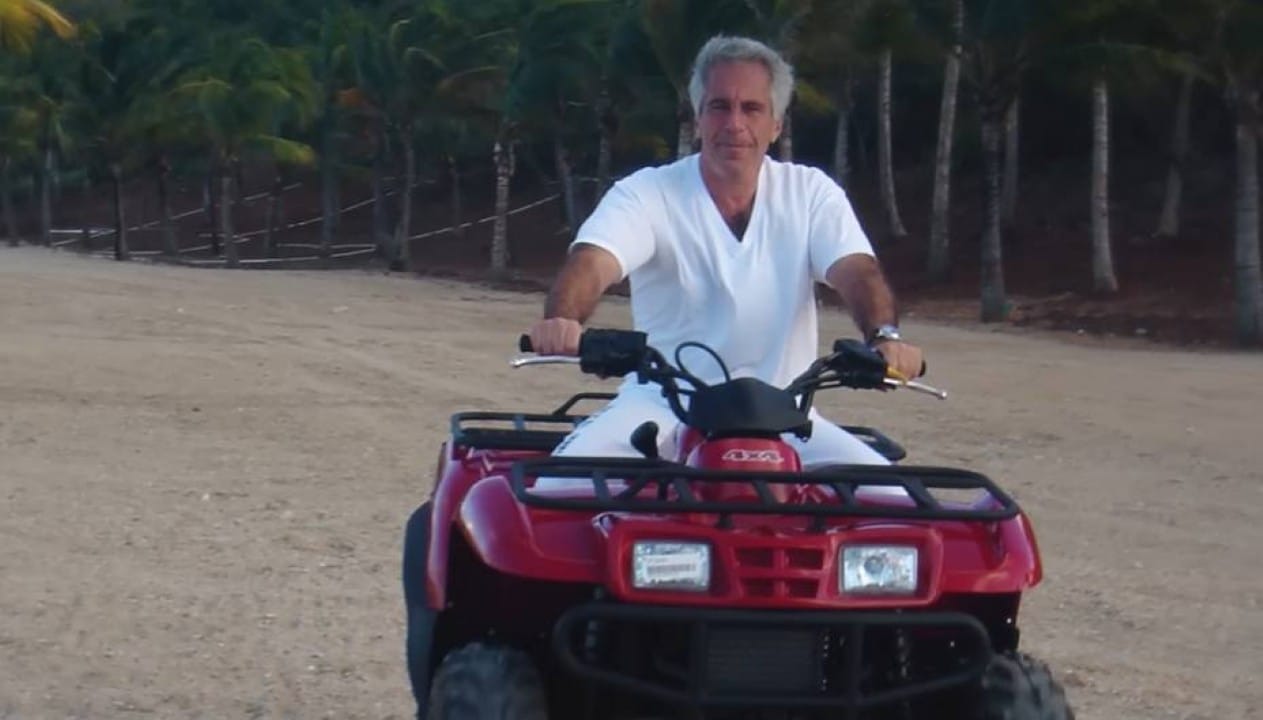
The recent opening of court files related to financier Jeffrey Epstein has brought to light a series of visual and documentary records involving prominent figures from various sectors, including the scientific community. Entre The materials that gained immediate repercussion include a photograph of the British physicist Stephen Hawking on an island in Caribe. The image, which portrays the scientist in a moment of rest next to people in bathing suits, raised questions on social media and in the international press, demanding an in-depth analysis of the context in which the recording was made.
The documents confirm that the presence of Hawking at the site occurred in March 2006, a date that coincides with a theoretical physics symposium financed by Epstein. The event brought together around 20 renowned experts to debate complex topics such as quantum gravity and black hole thermodynamics. The island Little St. James and the neighboring St. Thomas served as the basis for academic meetings and moments of fraternization between participants, a common scenario in high-level conferences that seek isolated environments to encourage concentration and networking.

Given the circulation of the photograph, the physicist’s representatives and family acted quickly to provide the necessary context, dispelling misinterpretations. The central explanation revolves around the complex health logistics that accompanied Hawking, a carrier of Esclerose Lateral Amiotrófica (ALS) for more than five decades. The condition required round-the-clock support, transforming any scientist’s deployment into a meticulously planned operation.
Support team and medical care
The image in question, which shows the physicist in a lounger being assisted, depicts, according to sources linked to the family, members of his nursing and personal care team. Devido due to the severity of his motor paralysis, Hawking needed constant assistance with basic vital functions, including feeding, hygiene and body positioning to avoid respiratory or circulatory complications.
The women who appear in the photo, dressed in clothes appropriate to the region’s tropical climate, were professionals hired to ensure the scientist’s well-being during the international trip. Hawking’s routine did not allow for improvisation; each trip required an entourage made up of qualified nurses and technical assistants responsible for maintaining his voice synthesizer and computerized wheelchair.
The relaxed atmosphere at Caribe, captured in the photo, reflects a break from academic activities, where the healthcare team also enjoyed the environment while keeping an eye on the patient. Especialistas in medical ethics and the physicist’s biographers reiterate that the presence of caregivers in informal attire in leisure places is standard practice and does not denote any professional irregularity, especially considering the heat and location of the event.
Logistical adaptations and the submarine tour
One of the most striking episodes of the 2006 visit, detailed in reports at the time and remembered now, was Hawking’s participation in a submarine dive. The operation demonstrated the level of logistical effort used to ensure the inclusion of the scientist in the proposed activities. An underwater vehicle was specifically modified to accommodate the physicist’s wheelchair, allowing him to observe the marine life of the Ilhas Virgens.
Reports from other scientists present indicate that the experience was one of the highlights of the trip to Hawking. The opportunity to see the bottom of the ocean was described by the physicist himself, through his computer, as a liberating experience. Esse type of activity reinforces the character of the event as a meeting that mixed scientific rigor with unique sensory experiences, financed by the infrastructure made available by the host at the time.
The adaptation of the submarine involved precision engineering to guarantee the safety of a passenger with zero mobility. Rampas of access, fixation systems and oxygen monitoring were reviewed, showing that the organization’s focus was on providing full accessibility to the guest of honor, treating their physical limitations not as impediments, but as challenges to be overcome by technology.
Analysis of internal communications
The release of court documents also shed light on email exchanges involving Jeffrey Epstein and his associate Ghislaine Maxwell. In a message dated 2015, Epstein explicitly mentions Stephen Hawking, but in a defensive context. The financier requested help to refute allegations that attempted to link the physicist to inappropriate behavior, classifying such rumors as unfounded.
This correspondence is seen by legal analysts as important exculpatory evidence. The fact that the event organizer himself internally discussed the falsity of rumors against Hawking reinforces the thesis that the scientist’s participation was strictly academic. Não, in thousands of pages of documents analyzed by the North American authorities, there is any evidence, testimony or record that places the physicist in compromising or illegal situations.
The separation between the scientific agenda and the illicit activities that took place on the island at other times seems clear in the case of Hawking. Sua physical condition, which prevented absolute privacy due to the constant presence of nurses, serves as a factual alibi, making it practically impossible for him to participate in secret acts without the knowledge of his dedicated medical team.
Impact on science funding
The case reignited a global debate about the ethics of funding scientific research. The revelation that big names in science accepted invitations and resources from controversial figures like Epstein sparked conduct reviews at prestigious institutions. Universidades as well as Cambridge and Harvard have implemented stricter “due diligence” protocols to verify the origin of donations and patron history.
The academic community argues that in 2006, the full extent of Epstein’s crimes was not public knowledge, and he was seen in many circles as an eccentric philanthropist interested in frontier science. However, the association, even if involuntary, today serves as a case study on the reputational risks that researchers run when seeking private funding outside traditional government channels.
Despite the peripheral controversy, the consensus is that the intellectual work produced or debated at these meetings remains valid. The theories discussed at the 2006 conference contributed to the advancement of understanding about Hawking radiation and the entropy of black holes, pillars of modern physics that are independent of the source that paid for the scientists’ plane tickets or accommodation.
Unshakable scientific legacy
Stephen Hawking passed away in 2018, leaving a legacy that transcends posthumous controversies. Sua’s ability to popularize science through best-sellers such as “An Breve História of Tempo”, combined with his fundamental theoretical contributions, solidified his place in history. The release of current photos and documents is seen by most biographers as a footnote that clarifies the logistics of his life, but does not alter the magnitude of his work.
– Radiação Hawking: The revolutionary proposal that black holes emit radiation and can evaporate.
– Singularidades: Mathematical work, often in partnership with Roger Penrose, on the beginning of the universe.
– Divulgação Científica: The ongoing effort to make cosmology concepts accessible to the lay public.
– Superação: The example of resilience in living decades with a degenerative disease, contrary to all medical prognoses.
The family and foundations named after Hawking continue to focus on promoting scientific education and researching treatments for motor disorders. The episode ultimately serves to highlight the scientist’s physical vulnerability and the complex network of human support that allowed his brilliant mind to continue exploring the universe until his final days.



